SPECIAL OFFER BUY 3 JERSEYS = GET 1 FREE

How to Get a Football Shirt Printed: Flex, Flock, and Embroidery Explained
A practical breakdown of the three main techniques for getting a football shirt printed, including heat-press vinyl, flock, and embroidery. Covers cost, durability, where to go, and how to choose the right name and number for your jersey.
In this article6 sections
- The Three Main Football Shirt Printing Techniques
- How Much Does Football Shirt Printing Cost, and How Long Does It Last?
- Where to Get Your Football Shirt Printed in 2026
- Choosing the Right Name and Number: Practical Advice
- FAQ: Getting a Football Shirt Printed
- Getting the Print Right Is What Finishes the Shirt
Your jersey arrives. It fits right. The colors are sharp. But the back is blank, and blank feels unfinished. Getting a football shirt printed with the right name and number is the step that turns a nice piece of kit into something personal, something that actually means something when you wear it to a match.
The problem is that not every print job is equal. A name that peels off after ten washes is a waste of money and, frankly, an insult to a good shirt. So before you hand your jersey over to anyone, it helps to know exactly what technique they’re using, what it costs, and how long it will hold up.
Here’s what you actually need to know.
The Three Main Football Shirt Printing Techniques
The three main techniques for getting a football shirt printed are heat-press vinyl (flex), flock, and embroidery, and choosing correctly between them depends on your fabric type, the era of the shirt, and how long you need the finish to last. Each method produces a completely different look and lifespan, so understanding the difference upfront saves you from a costly mistake on a jersey you genuinely care about.
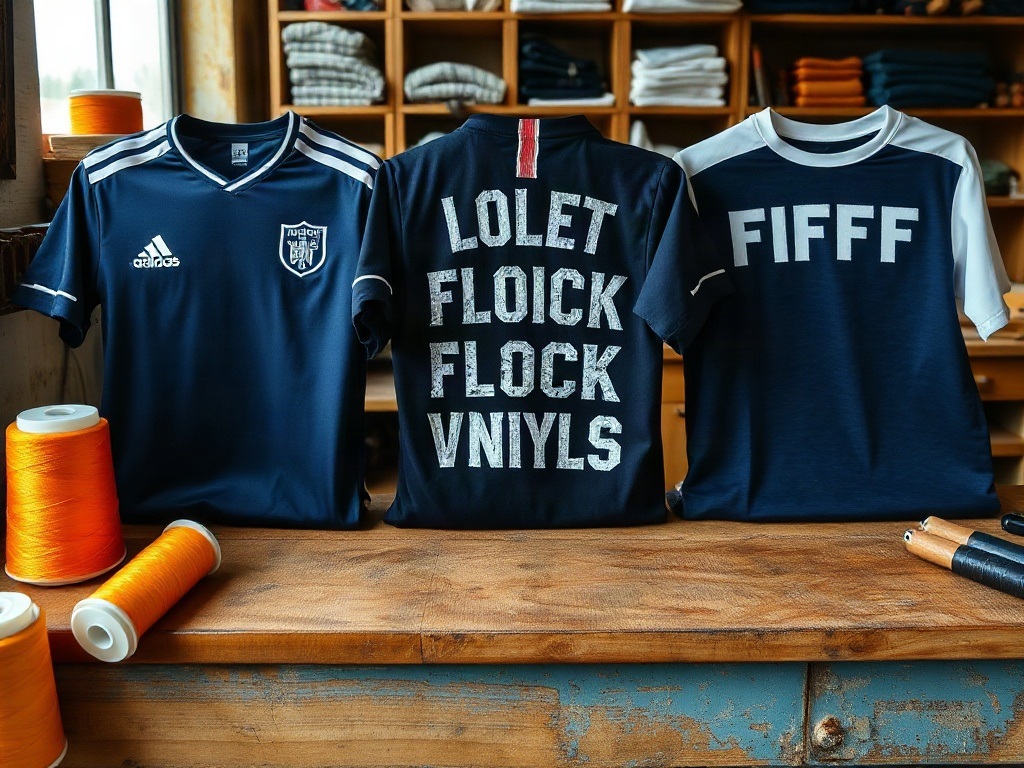
Walk into any serious kit customization shop and they’ll offer you a choice between three methods: heat-press vinyl (called flex), flock, and embroidery. Each one produces a different look, feel, and lifespan. Knowing the difference saves you from the wrong choice.
Heat-Press Vinyl (Flex): Fast, Clean, and Widely Available
Flex printing is by far the most common method for football shirt lettering and numbering. A sheet of colored vinyl is cut into your chosen letters and numbers using a precision plotter, then pressed onto the fabric with a heat press at around 150-160°C for 10 to 15 seconds. The result is a smooth, flat, slightly glossy finish with crisp edges.
This is what most official club shops and online providers use for standard squad number applications. It’s fast, consistent, and relatively affordable, usually between $10 and $25 for a full name and number set depending on letter count and provider.
- Durability: 30 to 50 washes before any lifting at the edges, if applied properly and washed cold inside-out. Cheap flex applied at the wrong temperature degrades much faster.
- Look: Clean and modern. Slightly raised but thin. The finish catches light in a way that reads as professional.
- Best for: Replica kits, match-worn look, polyester and technical fabrics, anything you’ll actually play in.
- Watch out for: Low-quality vinyl providers who use generic craft flex rather than the sport-specific formulations. The difference in elasticity across washes is significant.
Flock: The Velvet Texture That Defines a Generation
Flock printing adds a raised, soft, almost velvety texture to the letters. Tiny fibers are electrostatically bonded to an adhesive base, then heat-pressed onto the fabric. The result is thicker and more tactile than standard flex, with a matte finish that reads closer to the lettering styles you’d have found on Premier League shirts through the late 1990s and early 2000s.
If you’re restoring or customizing a vintage replica, flock is almost always the more authentic choice. It’s the finish that era actually used. Pick up a 1999-00 Manchester United shirt and run your hand over the back: that raised, slightly rough texture is flock.
- Durability: Slightly less robust than quality flex over many washes. The fibers can thin and lose density around 25 to 40 wash cycles if not cared for correctly.
- Look: Textured, matte, retro-feeling. Thicker than flex, noticeably different to the touch.
- Best for: Vintage replicas from the mid-1990s to early 2000s, collector pieces, shirts you won’t wash every week.
- Price range: $15 to $35 typically, slightly higher than flex due to the specialized material and application process.
Embroidery: The Premium Finish Worth Waiting For
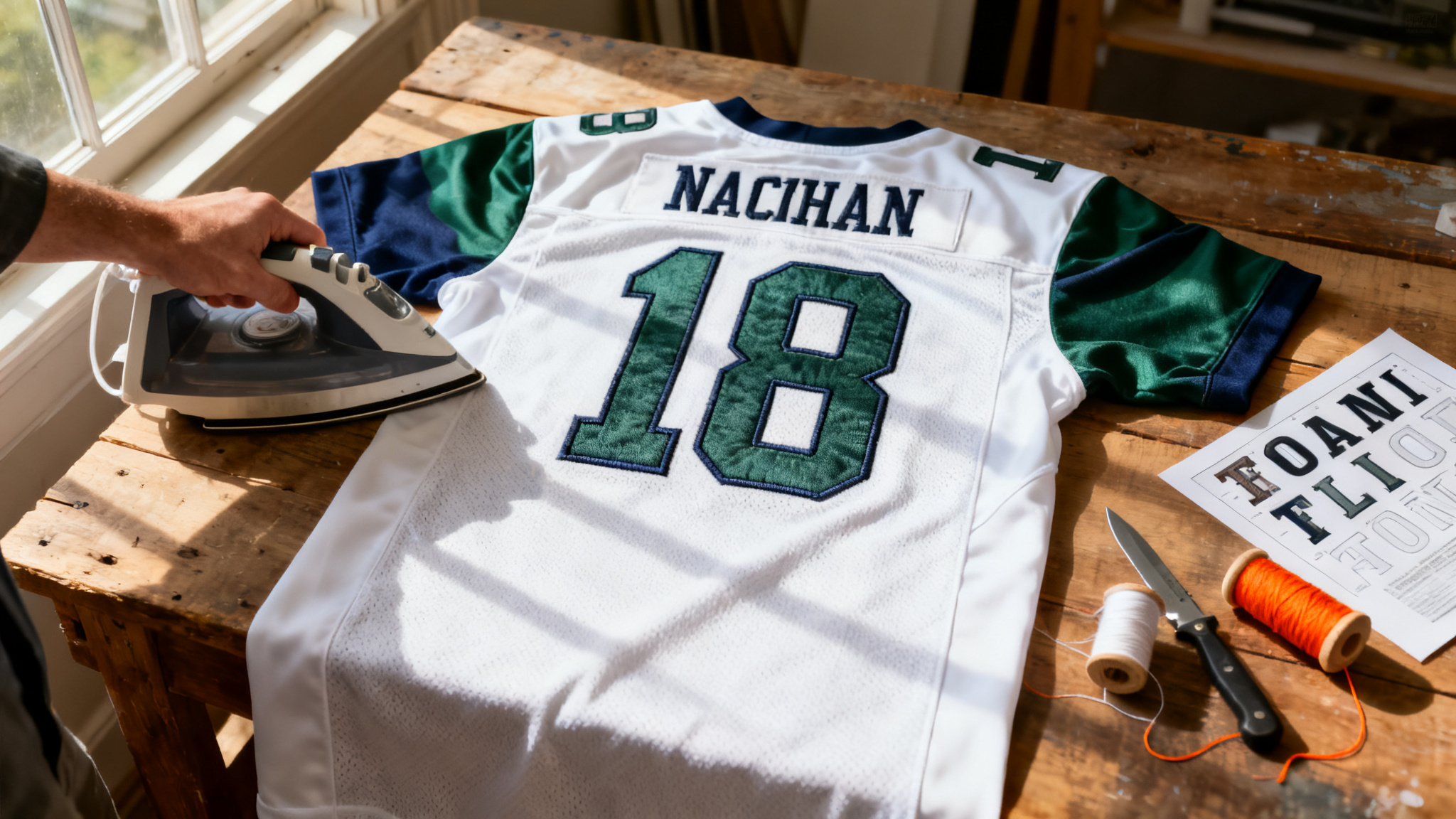
Embroidery uses actual thread stitched directly into the fabric by a machine guided by a digitized pattern. No adhesive, no vinyl, no heat bonding. The lettering becomes part of the garment at a structural level. Thread into fabric.
The result is heavier, richer, and frankly in a different category altogether. You can see the individual stitches. Under good light, the color depth is different from anything a heat press produces. It also lasts as long as the shirt itself, because there’s nothing to peel.
I held a 1994 Fiorentina shirt once where someone had added an embroidered number years after purchase. Thirty years later, the number was cleaner than the original badge. That’s what real stitching does.
- Durability: Indefinite when done properly. The thread may fade slightly over decades but will not peel, crack, or delaminate.
- Look: Raised, textured, rich. Reads immediately as high quality. Works especially well on heavier cotton or cotton-blend fabrics.
- Best for: Premium concept jerseys, heavyweight cotton shirts, collector pieces meant to last, gifts meant to be kept.
- Price range: $30 to $80 depending on letter count, thread complexity, and provider. Setup fees can add cost for short runs.
- Lead time: Typically 3 to 10 business days, longer for complex or multi-color designs.
How Much Does Football Shirt Printing Cost, and How Long Does It Last?
Football shirt printing costs range from around $10 for a basic flex name-and-number set to $80 or more for complex embroidery, and the lifespan of the finish can span anywhere from 25 washes to the full lifetime of the garment depending on the technique and the quality of materials used. Price alone is not the right guide; the vinyl brand and application temperature matter as much as the headline cost.
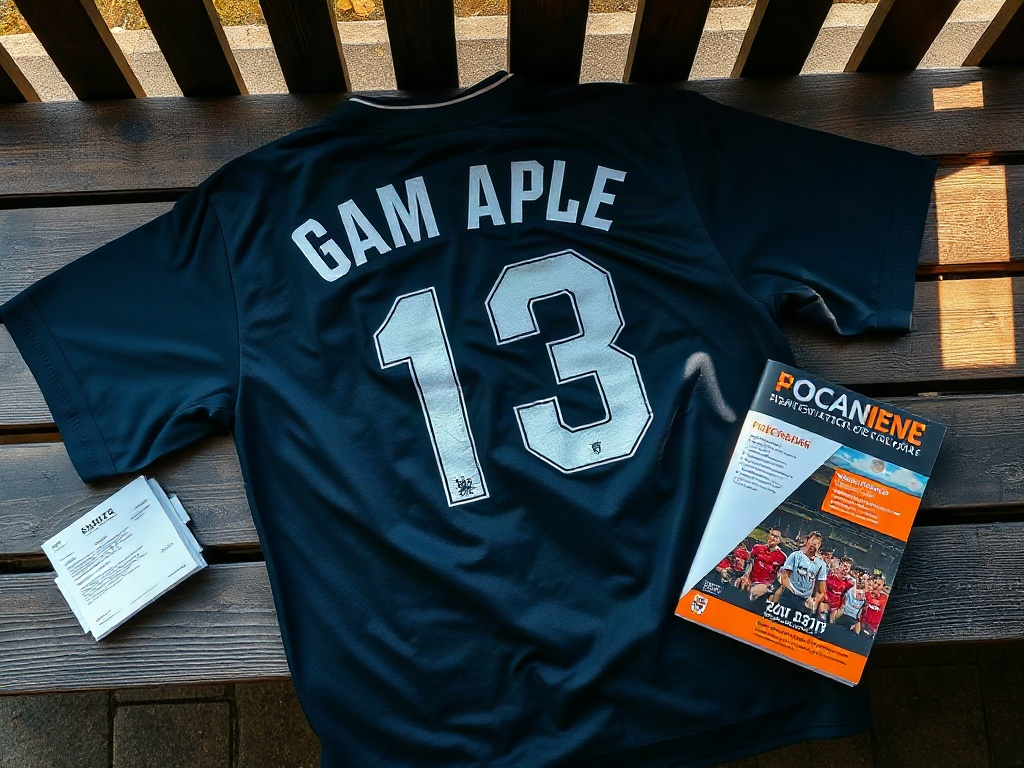
Here’s a straightforward comparison to help you weigh the options:
| Technique | Avg. Cost (name + number) | Expected Lifespan | Wash Resistance | Best Fabric Match |
|---|---|---|---|---|
| Flex (heat-press vinyl) | $10 – $25 | 30-50 washes | Good (cold wash, inside-out) | Polyester, technical knit |
| Flock | $15 – $35 | 25-40 washes | Moderate (hand wash preferred) | Polyester, cotton-poly blends |
| Embroidery | $30 – $80 | Indefinite | Excellent | Cotton, heavyweight fabrics |
One thing the table doesn’t capture: the quality gap between providers using the same technique is enormous. A $12 flex job done with sport-grade vinyl at the correct temperature will outlast a $20 flex job done carelessly with inferior material. Price is not the only signal. Ask the provider which vinyl brand they use; names like Stahls’, Siser, and Poli-Flex are industry standards with published durability specifications.
Where to Get Your Football Shirt Printed in 2026
Your three realistic options for getting a football shirt printed are the official club shop, a specialist jersey retailer, and an independent online provider, and each suits a different type of jersey, budget, and timeline. The right choice depends as much on the shirt you already have as on the technique you want applied to it.
Official Club Shops
For current-season replica kits bought directly from the club, the official shop is the obvious route. They’ll use the licensed font, the correct number format, and the approved colors. For major clubs, this matters: the exact typeface for a Liverpool number is noticeably different from a knockoff version, and regulars in the stands notice.
The downside is that official shops only service current-season kits. They won’t touch a 2004 jersey. Turnaround times can stretch to two weeks during peak periods (pre-season, post-transfer window), and premium options like embroidery are rarely offered.
Concept Jerseys and Specialist Retailers
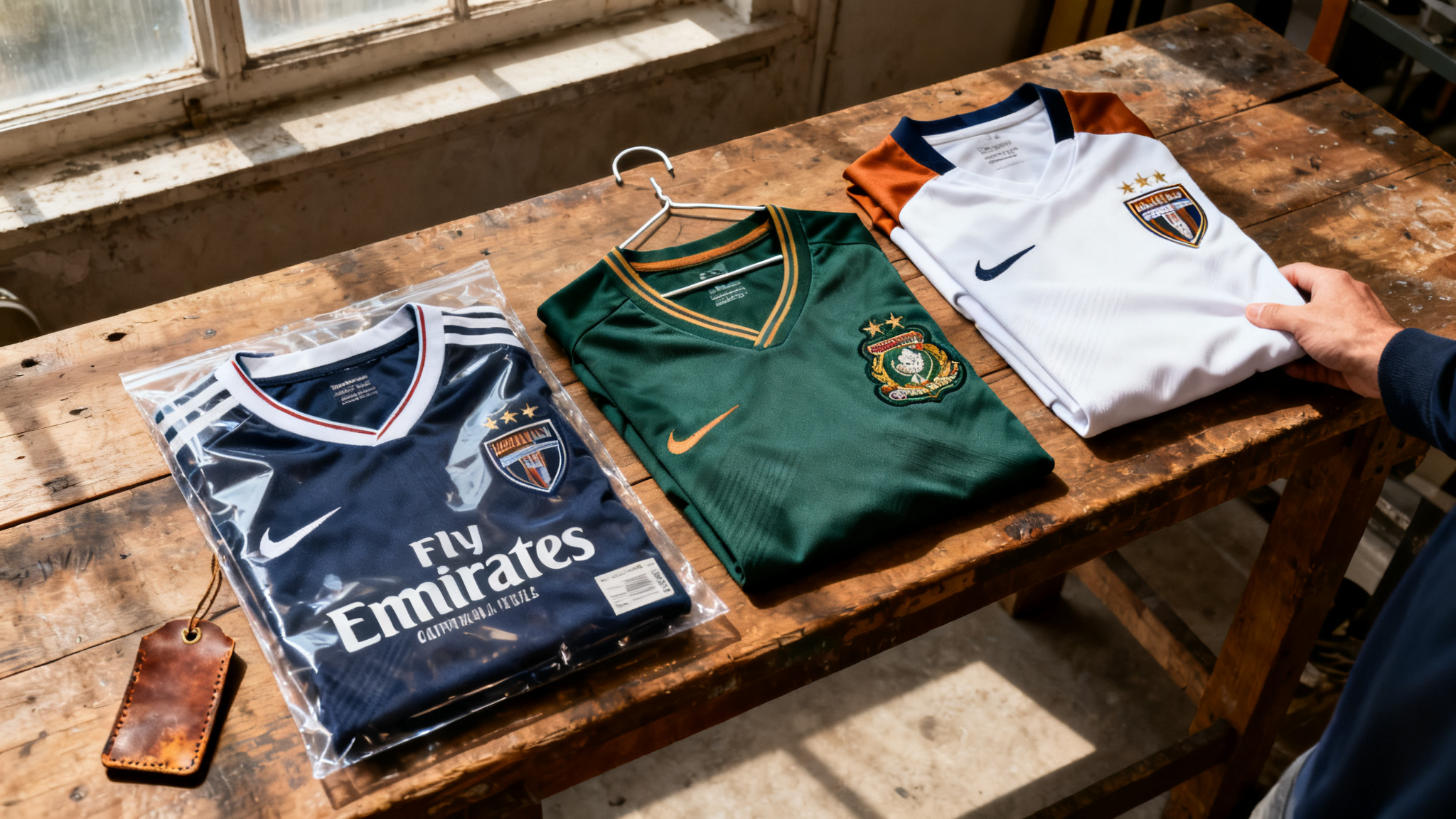
A specialist retailer who stocks both current replicas and concept jersey designs brings something official shops don’t: genuine flexibility on technique, fabric, and era. When you buy a jersey from a shop that actually cares about the product, the conversation about printing technique is part of the service, not an afterthought bolted on at checkout.
At Concept Jerseys, we match the technique to the fabric rather than offering a one-size-fits-all menu: embroidery as standard on our heavyweight cotton pieces because those fabrics demand it, flex on technical polyester kits because that’s where it performs best. The fit between technique and fabric matters more than most buyers realize until the first wash.
Featured
Custom Football Jerseys with Personalization
Heavyweight cotton and technical polyester options, each available with flex, flock, or embroidery printing matched to the fabric. Real technique advice included with every order.
See personalization options
Independent Online Printing Providers
Services like Kitbag, Pro:Direct, and various Etsy-based custom jersey printers offer fast turnaround on flex and occasionally flock. Prices are competitive, and for a straightforward current-season replica with a squad number, many deliver perfectly well. The honest caveat is that quality varies significantly across this category, and the gap only shows up after a dozen washes, not in the unboxing photo.
Before ordering from any online provider, ask for:
- A sample photo of finished work (not a mockup render, an actual finished shirt)
- The vinyl brand and specification they use
- Their wash guarantee or return policy if letters lift within a stated number of washes
A provider who can’t answer those three questions quickly is not the right choice for a jersey you care about.
Choosing the Right Name and Number: Practical Advice
The details you put on the shirt matter as much as the technique used to apply them: the wrong era font, an anachronistic squad number, or a color mismatch that reads fine on screen but looks wrong on fabric can undermine even a perfectly executed print job. Getting these decisions right is what separates a personalized shirt from a professional one.
Font and Number Style Must Match the Era
A modern block sans-serif number on a 1997 replica looks wrong immediately. Not wrong in a subtle way, in a “someone’s cousin did this at a print shop” way. If you’re having a vintage shirt printed, research the original squad font for that season. Many clubs have changed their official lettering style multiple times. Resources like Historical Kits and Football Kit Archive have documented original fonts for most top clubs going back to the early 1990s.
Squad Numbers vs. Shirt Numbers
Before squad numbers became standard in England from 1993 onwards, players wore 1-11 based on position. If you’re personalizing a shirt from before that era, a three-digit squad number looks anachronistic. Consider either a traditional 1-11 position number, or skip the number entirely and go name-only, which carries its own clean appeal.
Back Length and Letter Count
Most standard flex and flock print setups accommodate names up to 14 characters comfortably at the standard arc format. Longer surnames (Trossard, Trincao, Ziyech) can require tighter letter spacing or a reduced font size. Always confirm maximum character count with your provider before ordering. Some providers limit to 12 characters at standard sizing; anything beyond that may require a custom quote.
Color Matching on Dark Shirts
White lettering on a white shirt, or navy on black, are two common errors people don’t notice on a screen mockup but spot immediately on the real garment. Get a physical swatch or an actual photograph of the print on a similar colored shirt before approving the job.
Shop the Range
Football Shirts Across Eras and Styles
From technical polyester replicas to heavyweight cotton concept pieces built for embroidery. Each shirt comes with clear guidance on the right printing technique for that fabric.
Browse all football shirts
FAQ: Getting a Football Shirt Printed
Can I get an old jersey printed with a player name after buying it second-hand?
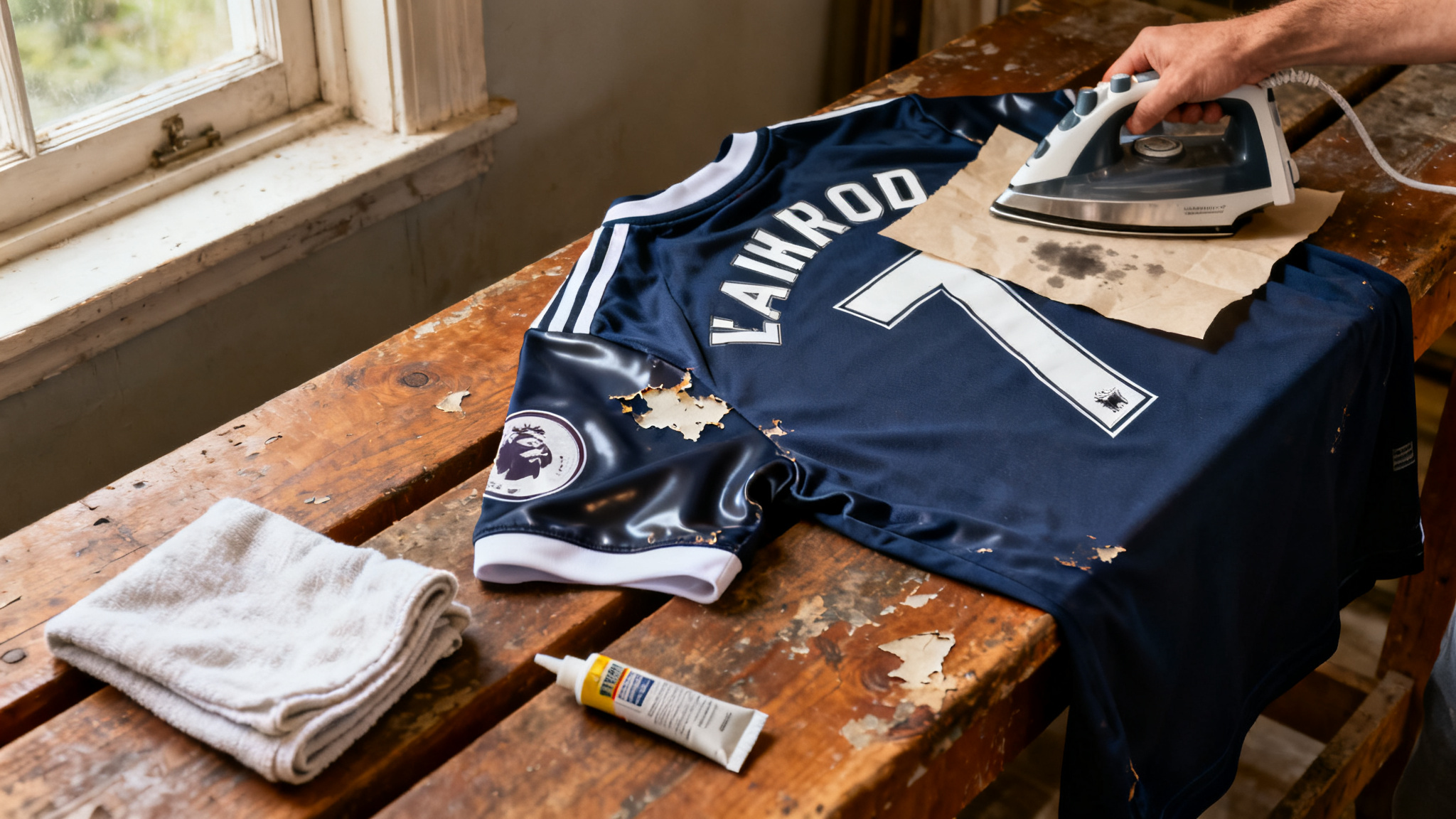
Yes. Any blank vintage jersey can be printed or embroidered after purchase, as long as the back panel is undamaged and hasn’t been previously printed in a way that left residue. Some providers will also remove old lettering carefully, with a heat gun and careful peeling, before applying new, though success depends on the original technique used and fabric type.
What’s the best way to wash a jersey after it’s been printed?
Turn the shirt inside-out, wash at 30°C or lower, no tumble dryer, no iron directly on the print. For flock, hand wash is safest. For embroidery, standard machine washing is fine; the thread won’t lift. These aren’t overly cautious rules, they’re the actual difference between a print that lasts two seasons and one that lasts ten.
Is embroidery suitable for all types of football shirts?
Not for very thin, lightweight technical polyester (like most modern match-day replicas). Embroidery requires some fabric weight to anchor properly without puckering. On jerseys thinner than around 120 gsm, flex is the more reliable choice. On cotton or heavyweight blends above 150 gsm, embroidery is not just suitable, it’s the better option in almost every way.
How long does it take to get a jersey printed?
Flex and flock: typically same-day or next-day at a local shop, two to five business days online. Embroidery: three to ten business days depending on provider workload and design complexity. Factor in this lead time if you need the shirt for a specific match or event.
Can I print a concept jersey design with a name and number, or only official replicas?
Any jersey can be printed, official replica or concept design. The technique choice depends on the fabric weight and your intent for the piece. Many buyers of premium concept football jerseys opt for embroidery precisely because the garment is designed as a display-quality collector piece, not a wash-every-week wearable. The printing is part of making it yours.
How do I know if a printing provider is using quality vinyl?
Ask them directly which brand they stock. Industry-standard names like Stahls’, Siser, and Poli-Flex all publish durability specs and are widely recognized in the professional print trade. If a provider uses generic unbranded vinyl and can’t tell you the heat-press temperature they apply, that’s a reliable signal to keep looking.
Getting the Print Right Is What Finishes the Shirt
A good jersey paired with the wrong print job is a waste of both the garment and the money spent on it; taking five minutes to choose the right technique, confirm the vinyl brand, and verify font accuracy is what separates a shirt that looks sharp for a decade from one that starts peeling after a summer. The details you ask about before placing the order are the ones that show up every time you pull the shirt out of the wardrobe.
Flex is fast and reliable for modern replicas. Flock belongs on anything from that mid-1990s to early-2000s era, and it brings that texture back honestly. Embroidery is the right choice when the shirt is meant to last decades and the fabric can carry it.
Take the time to ask the right questions before handing your jersey over. The print is the part you see every time you pick up the shirt. It should be done right. If you’re starting with the jersey itself before thinking about printing, our full range of football shirts covers options across eras and styles, with personalization guidance included. ⚽
The shop
Find your jersey
Clubs, national teams, concept and retro designs. With your name and number, if you like.
- Free shipping from $65
- 3 jerseys = 1 free
- 14-day returns