SPECIAL OFFER BUY 3 JERSEYS = GET 1 FREE

How to Get Blood Out of a Football Jersey (Without Ruining the Fabric)
Blood on a football jersey happens. Cold water, the right treatment, and a bit of patience save even your best kit from permanent staining. Kit Henderson shares the methods that actually work, from cold water flush to enzyme cleaners, with fabric-specific advice for polyester, cotton, and embroidered crests.
In this article8 sections
- Why Cold Water Is the Only Starting Point
- The 5 Methods That Actually Remove Blood Stains from a Football Jersey
- Fabric-Specific Rules: Polyester vs. Cotton vs. Embroidered Crests
- What Not to Do (Common Mistakes That Ruin Jerseys)
- When the Stain Has Been There for Days
- Keeping Your Kit in Match-Ready Shape Between Washes
- FAQ
- The Jerseys Worth Taking Care Of
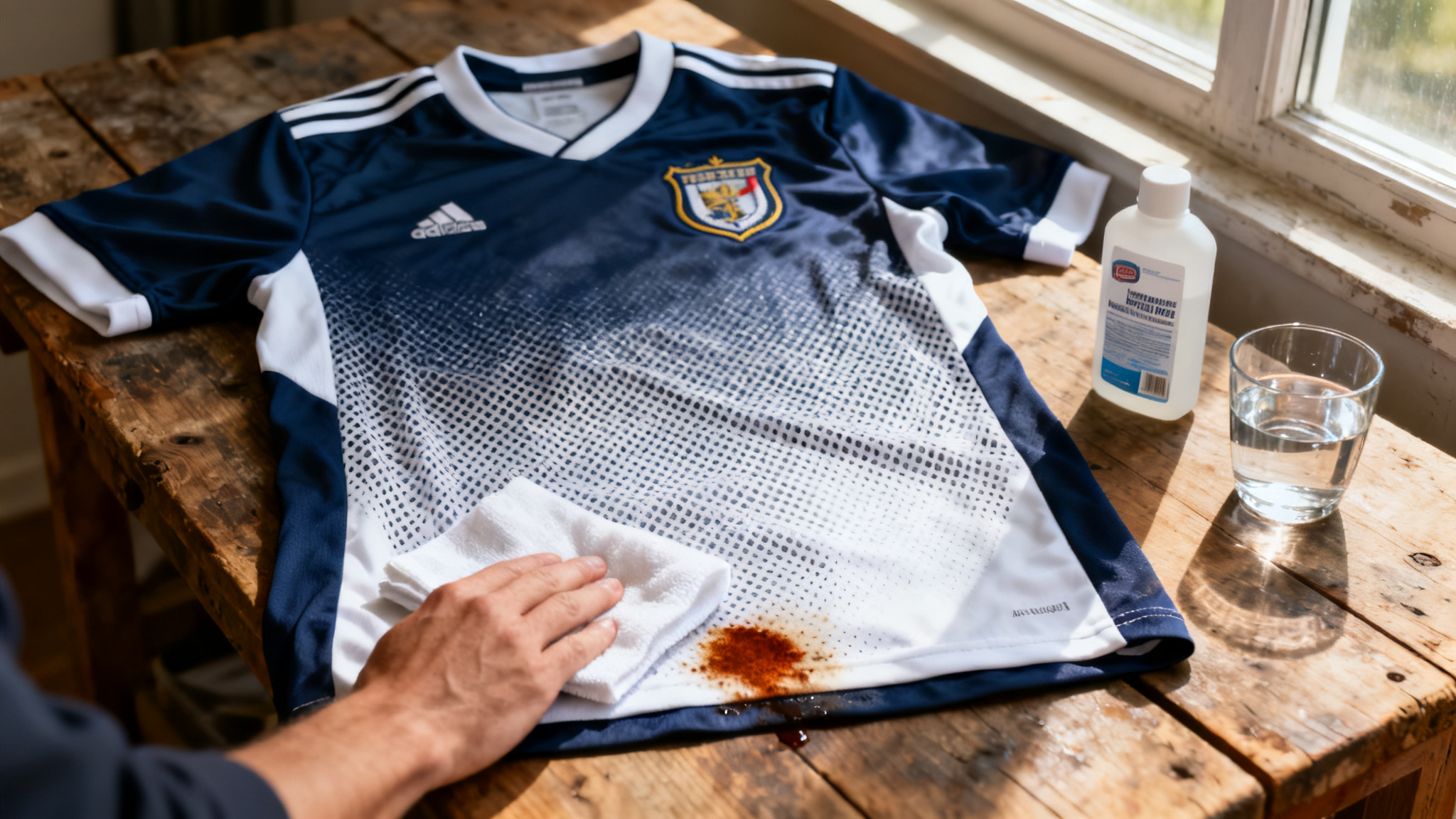
It happened before you even got home. A clash of heads, a split lip from a diving header, a nosebleed that started on the bench and ended on your collar. Getting blood out of a football jersey is one of those things every serious fan eventually has to deal with, and the difference between a jersey that survives and one that doesn’t usually comes down to what you do in the first ten minutes.
I’ve been handling kits for over two decades. Some of the most valuable pieces I’ve seen come through have had stains on them. Blood is not a death sentence for a jersey. Heat is. The wrong cleaner at the wrong moment is. Panic is. Knowing the actual chemistry behind what you’re doing gives you a real edge.
Why Cold Water Is the Only Starting Point
Cold water is the single most important first step because blood is a protein stain, and proteins permanently bond to fabric fibers the instant they meet heat, turning a removable stain into an irreversible one within a single wash cycle. That matters more than anything else in this article.
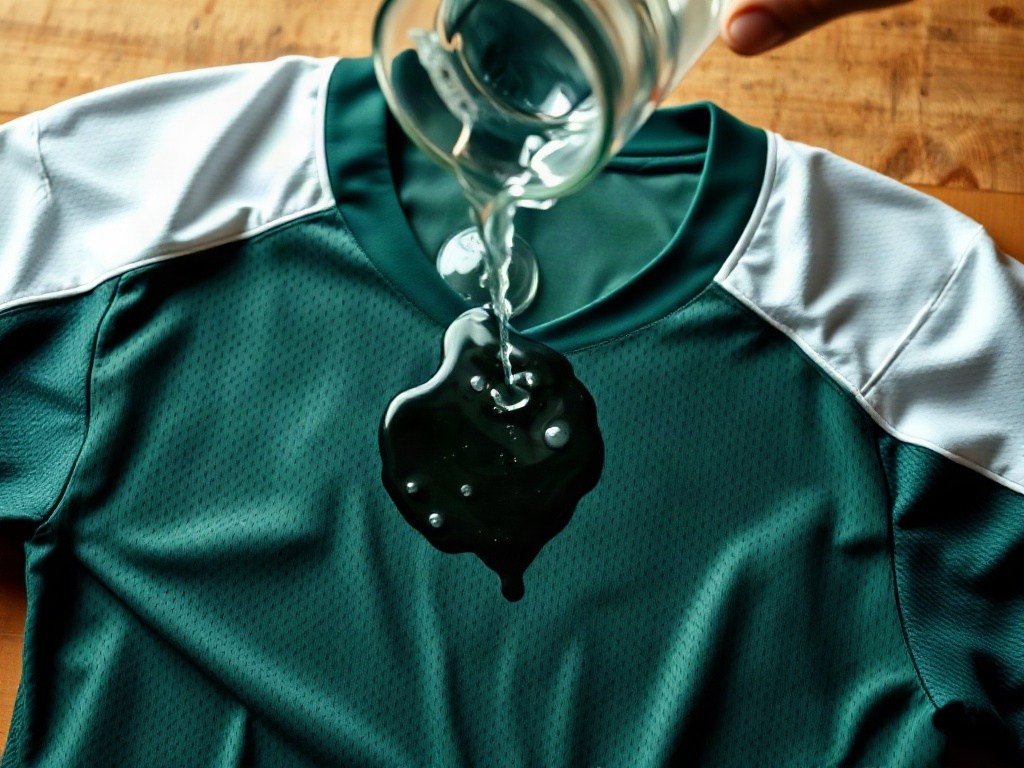
The moment you spot blood on a jersey, your first move is cold water. Not lukewarm. Not “room temperature.” Cold, running water from a tap, ideally flushed through the back of the fabric so the stain pushes out rather than deeper in. Hold the reverse side of the fabric under the tap for 60 to 90 seconds.
If the blood is still wet, this step alone can remove the vast majority of it in the first minutes. Textile science research on protein stains consistently shows that cold-water flushing within two minutes is the highest-leverage action you can take. Dried blood needs more work, but cold water still starts the process. Never rub the stain at this point. Blot, press, rinse. Rubbing spreads the stain laterally and forces the proteins into more fibers.
The 5 Methods That Actually Remove Blood Stains from a Football Jersey
Once you have done the cold water flush, five proven methods can finish the job: hydrogen peroxide for light kits, cold salt water for color-safe gentle lifting, enzyme-based cleaners as the best all-round solution, dish soap as an emergency field fix, and white vinegar as a pre-treatment for dried stains. Which one fits depends on how old the stain is, what fabric your jersey is made from, and what you have on hand right now.
| Method | Speed | Efficacy | Color Risk | Best For |
|---|---|---|---|---|
| Hydrogen peroxide (3%) | Fast (2-3 min) | Excellent on fresh stains | High on dark/colored fabric | White or light kits only |
| Cold salt water soak | Slow (5-10 min) | Good on fresh/partial stains | Very low | All colors, cotton kits |
| Enzyme-based cleaner | Medium (15-30 min) | Best overall, dissolves protein | Very low | All jersey types |
| Dish soap + cold water | Fast (5 min) | Moderate (emergency use) | Negligible | Away from home, fresh stains |
| White vinegar | Medium (5-10 min) | Good as pre-treatment only | Very low | Dried stains, pre-enzyme prep |
1. Hydrogen Peroxide (3% solution)
This is the go-to for white or light-colored kits. Standard 3% hydrogen peroxide from any pharmacy works by oxidizing the blood proteins. Apply a small amount directly to the stain, let it bubble for two to three minutes, then blot and rinse with cold water. Repeat if needed.
One firm warning: do not use hydrogen peroxide on dark or color-saturated jerseys. It is a bleaching agent. A single application can fade navy, red, or green fabric noticeably, and that damage is irreversible. For dark kits, skip to method three or four below.
2. Cold Salt Water Soak
Salt acts as a mild abrasive and draws moisture out of fabric, which helps lift protein stains that have partially dried. Dissolve one tablespoon of table salt in a cup of cold water, apply to the stain, and work it very gently into the fabric with your fingertip. Leave it for five to ten minutes, then rinse thoroughly with cold water.
This method is safe on virtually every fabric and color combination, making it a reliable fallback when you are unsure how a kit’s dye will react to stronger chemistry. It is slow compared to enzyme cleaners, but it carries almost no risk of damage on cotton kits or jerseys with uncertain dye stability.
3. Enzyme-Based Stain Remover (Best Overall Method)
Enzyme-based cleaners designed for protein stains are the most reliable solution across all jersey types. Products like Bio-Kleen, Puracy Natural Stain Remover, or the enzyme pre-soak option in Persil Bio work by breaking down the protein chains in blood at a molecular level. The stain doesn’t just lift, it dissolves.
Apply directly to the stain. Work it in gently with a soft-bristle toothbrush or your fingertip. Let it sit for fifteen minutes minimum, up to thirty for dried stains. Rinse with cold water. If a shadow remains, repeat once before machine washing.
For machine washing after treatment, use the lowest temperature setting the jersey’s care label allows, never above 30°C (86°F), and always a gentle cycle.
4. Dish Soap + Cold Water Paste
If you’re away from home and have nothing else on hand, standard dish soap works better than most people expect. The surfactants in dish soap break down organic matter. Apply a small amount directly to the wet stain, work it into a lather with cold water, blot, and rinse.
This won’t fully remove a set dried stain, but it’s a solid emergency measure. Use it as a first step and follow up with an enzyme cleaner once you’re home.
5. White Vinegar (For Set, Dried Stains)
White distilled vinegar is mildly acidic, which helps break down dried blood proteins that have already bonded with fabric fibers. Apply directly, let it sit for five minutes, then rinse with cold water. The smell disappears completely once the jersey dries.
White vinegar works best as a pre-treatment before enzyme cleaning on stains that have been left for several hours or overnight. It won’t work alone on a fully dried stain from days ago, but it softens the protein layer and makes the follow-up enzyme cleaner more effective.
Fabric-Specific Rules: Polyester vs. Cotton vs. Embroidered Crests
Modern football jerseys are almost universally polyester or polyester-blend technical fabrics, and each fabric type responds differently to treatment: polyester needs enzyme cleaners and minimal agitation, cotton tolerates gentle soaking and soft-brush work, and embroidered crests demand targeted application with a cotton bud rather than any direct soaking.
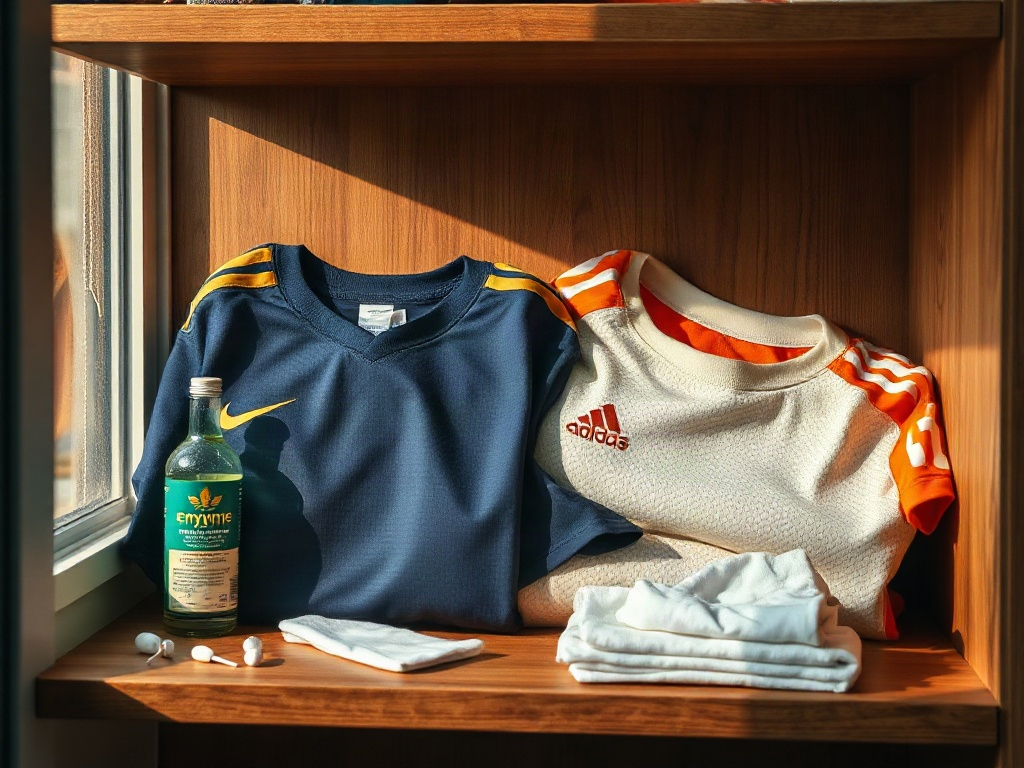
Vintage and retro kits from the 1970s through early 1990s lean toward cotton or cotton-polyester mixes. The treatment logic differs.
Polyester and Technical Fabric Jerseys
Polyester doesn’t absorb liquid the way cotton does, which is both good and bad news for stain removal. Blood sits more on the surface initially, making a fast cold water flush especially effective. But once a stain dries and bonds to synthetic fibers, it can be stubborn to fully lift.
Use enzyme cleaners on polyester. Avoid vigorous scrubbing, which can damage the weave and dull the outer face of technical fabric. Never use a hot iron to “dry out” the treated area. The gentle cycle at 30°C handles machine washing once the stain has been pre-treated and lifted.
Cotton and Cotton-Blend Vintage Kits
Cotton absorbs stains more deeply, but it also responds well to soaking. Cold salt water or enzyme pre-soaks work well here. Cotton can tolerate slightly more mechanical agitation than polyester, so a soft brush on the stain is fine after the pre-treatment has had time to work.
The bigger risk with vintage cotton kits is color fastness. Older dyes, particularly reds and yellows from the 1970s and 1980s, can bleed when soaked. Test a hidden seam before soaking the whole garment.
Embroidered Crests, Badges, and Name-and-Number Printing
This is where most people go wrong. Embroidery holds moisture in the thread and underneath the backing material. Hydrogen peroxide applied directly to an embroidered crest can discolor the backing and weaken the thread. Heat applied after treatment can shrink or warp the embroidery patch.
When treating a stain near or on an embroidered area, apply the cleaner to the fabric around the embroidery first. Use a cotton bud to treat the embroidery itself with enzyme cleaner only, working carefully between the threads. Rinse by blotting with a damp cloth rather than running water directly over the crest.
Heat-pressed name-and-number prints are even more sensitive than embroidery. High-temperature water and aggressive scrubbing can lift the edges of a heat transfer. Treat these areas with cold water and dish soap only, never enzyme soaks directly on the print itself.
What Not to Do (Common Mistakes That Ruin Jerseys)
The most damaging mistakes when treating blood stains on a football jersey are using hot water at any stage, rubbing the stain outward, and putting the jersey in a hot dryer before the stain is completely gone: each one takes a recoverable situation and makes it permanent.
- Hot water at any stage. This is the number one error. Protein stains bond to fibers under heat. If you’ve already rinsed in hot water, switch to cold immediately and treat with an enzyme cleaner before it dries.
- Rubbing the stain outward. Always blot and press inward. Rubbing spreads the stain and embeds it deeper.
- Putting the jersey in a hot dryer before the stain is fully gone. Even a faint shadow of a stain will set permanently in a tumble dryer. Air dry flat after treatment and check the stain is fully gone before machine drying.
- Using bleach on colored kits. Chlorine bleach destroys fabric dyes and weakens polyester fibers over time. Even “color-safe” bleach can alter shades on darker jerseys. Reserve bleach-based products for white fabric only, and even then, dilute carefully.
- Skipping a second treatment on partially lifted stains. If a stain is 80% gone after the first round, run the enzyme cleaner again before machine washing. That remaining 20% will set in the wash if you skip it.
When the Stain Has Been There for Days
A blood stain that has dried for days is harder to remove but not impossible: the key is to rehydrate the dried protein layer first with a cold soak and vinegar pre-treatment before applying an enzyme cleaner for a long dwell, keeping the area moist throughout the process.
Start with a fifteen-minute cold water soak to rehydrate the dried stain. Apply white vinegar for five minutes to begin breaking down the protein layer. Then apply an enzyme-based cleaner and let it work for thirty minutes, keeping the area moist by covering it with a damp cloth. Rinse with cold water and check the result before machine washing on a gentle cycle at 30°C.
For very old stains on a valuable vintage or collector’s jersey, consider a specialist fabric cleaner. Services that handle archival sports textiles exist in most major UK and US cities. For a jersey with real monetary or sentimental value, that investment makes more sense than risking the fabric yourself.
Keeping Your Kit in Match-Ready Shape Between Washes
Proper day-to-day kit care directly reduces how often you face serious stains: washing inside out on a cool gentle cycle with an enzyme-containing detergent lifts trace protein residue from every wash, so stains never get the chance to build up and set over time.
Fold or hang clean, dry jerseys away from direct sunlight, which fades polyester dyes over time. If your jersey has an embroidered crest, store it flat or folded on the crest side so the embroidery doesn’t snag. Wash it inside out to protect the outer weave and any printing from friction in the machine drum.
When you’re washing a kit regularly after training or matches, using a sports-specific detergent that contains enzymes (many Bio or Active formulas do) keeps the fabric fresher for longer and means any trace of protein staining from sweat or minor contact gets lifted in every regular wash. It’s the same principle as the targeted stain treatment, running all the time in the background.
If you’re serious about keeping your jersey looking like it did out of the box, also consider a wash bag or laundry net. A laundry mesh bag prevents abrasion against the drum and against other garments, which is what causes that gradual dulling of polyester over dozens of washes. Small detail, real difference.
FAQ
Can I use hot water if the blood is very fresh?
No. Fresh blood is actually easier to remove precisely because it hasn’t dried yet, and cold water alone can lift most of it in the first few minutes. Hot water causes the proteins in blood to coagulate immediately on contact with fabric, turning a simple fresh stain into a set one. Always use cold water, regardless of how fresh the stain is.
Will hydrogen peroxide damage my navy or red jersey?
Yes, it can. Hydrogen peroxide is a mild bleaching agent and will fade color-saturated fabric, particularly darker blues, reds, and greens. Use it only on white or very light-colored fabric. For colored jerseys, enzyme-based cleaners or cold salt water are safer choices that won’t risk altering the dye.
The stain is gone but there’s a faint yellow-brown shadow. What is that?
That shadow is oxidized hemoglobin residue left in the fabric after the main stain has been lifted. It responds well to a second round of enzyme cleaner followed by a cold water rinse. If it persists after two treatments, a 3% hydrogen peroxide application (on white fabric only) or a targeted enzyme soak of thirty minutes usually finishes the job. Never tumble dry until the shadow is completely gone.
Is it safe to wash a blood-stained jersey in the washing machine straight away?
Only if you’ve already pre-treated the stain and it’s visibly gone or nearly gone. Machine washing without pre-treatment, even on a cold cycle, doesn’t generate enough targeted cleaning action to fully remove a blood stain. The machine dilutes and spreads the stain across the fabric rather than lifting it. Pre-treat first, then machine wash as the final rinse step.
How do I treat blood near or on the embroidered club crest?
Avoid applying liquid cleaners directly over embroidery in volume. Use a cotton bud dipped in enzyme cleaner to work between the threads carefully. Blot the backing material gently with a damp cloth to rinse rather than running water directly over the crest. Never apply heat to an embroidered area after treatment. Air dry flat, with the embroidery face up, away from direct sunlight.
How long can I wait before treating a blood stain?
The sooner the better, but do not panic if you find a stain hours later. Fresh stains treated within two minutes come out most easily. Stains left for a full day need a cold soak and vinegar pre-treatment before enzyme cleaning. Stains left for several days require the full multi-step sequence described in the section above, and very old stains on valuable kits may warrant a professional archival textile service.
The Jerseys Worth Taking Care Of
These methods work across every jersey type and stain age, and they have saved kits that most people would have written off: the actual difference between a ruined jersey and a clean one is usually just the right sequence, applied calmly.
The reason to care about getting this right goes beyond the stain itself. A football jersey holds something: the match it was worn to, the season it represents, the person who wore it. That’s worth the fifteen minutes of proper treatment.
If you’re building a collection or wearing your kit season after season, the fabric that survives careful handling tells its own story. Take care of your kit and it takes care of you. The fabric doesn’t lie, and neither does the result when you hold a clean jersey up to the light and see it looking like itself again. ⚽
The shop
Find your jersey
Clubs, national teams, concept and retro designs. With your name and number, if you like.
- Free shipping from $65
- 3 jerseys = 1 free
- 14-day returns