SPECIAL OFFER BUY 3 JERSEYS = GET 1 FREE

How to Fix Peeling Lettering on a Football Shirt (And Actually Make It Last)
Peeling lettering on a football shirt is frustrating, but it's fixable. This guide covers every realistic repair method: heat-press reactivation with parchment paper, textile adhesive for lifting edges, full flocking replacement, and when to call in a professional printer. Includes common mistakes that make the peel worse.
In this article8 sections
- Why Football Shirt Lettering Peels in the First Place
- Method 1: Re-Pressing with Parchment Paper (Best for Early-Stage Peeling)
- Method 2: Textile Adhesive for Stubborn or Larger Lifts
- Method 3: Professional Re-Press or Replacement at a Print Shop
- When the Damage Is Too Far Gone: Honest Assessment
- How to Stop the Lettering From Peeling Again
- Frequently Asked Questions about Fixing Peeling Football Shirt Lettering
- The Broader Point About Kit Longevity
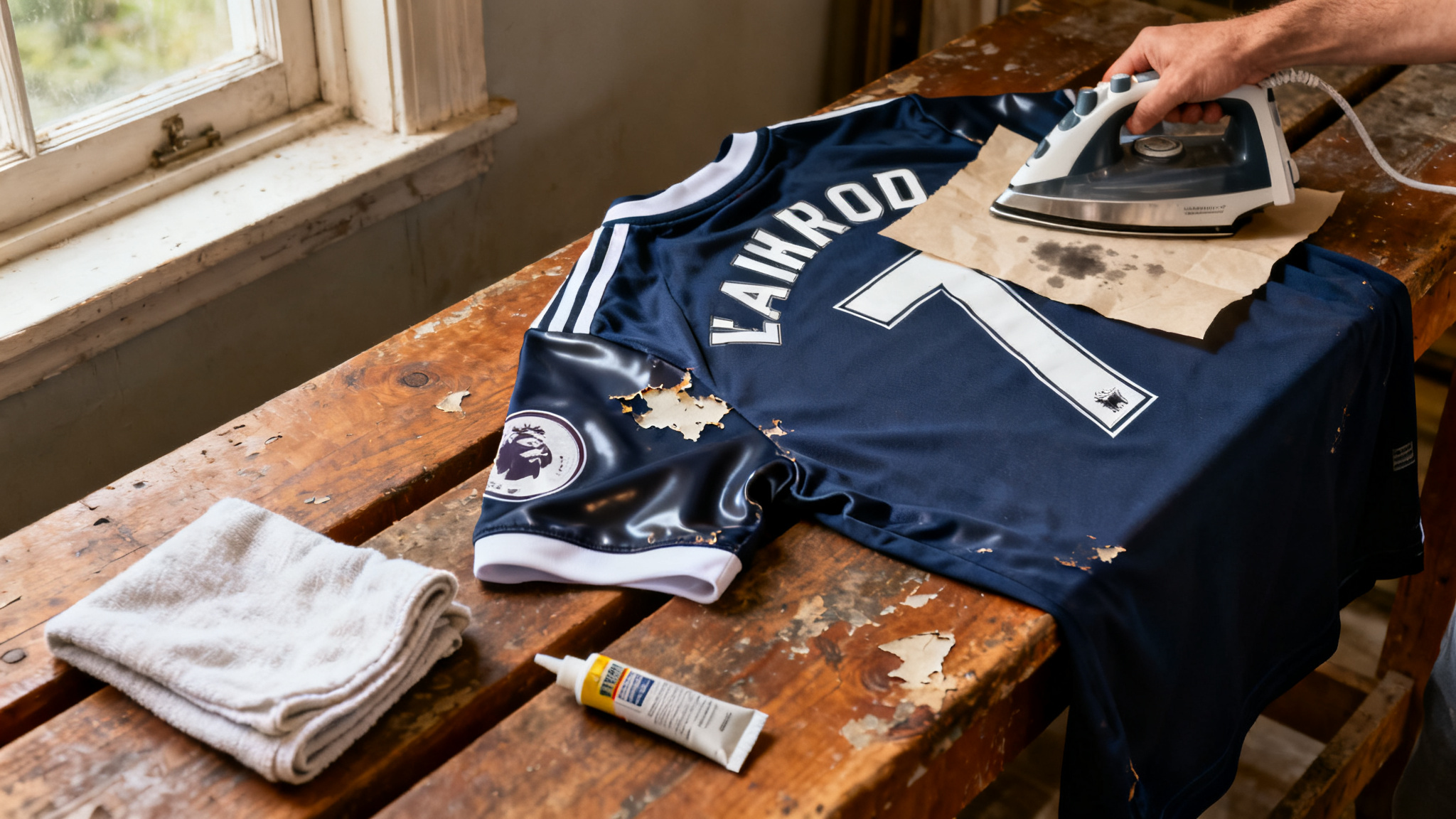
You pull your shirt from the drawer the morning of the match and find it: a corner of the “A” in your striker’s name has curled back, lifting away from the fabric like it’s trying to leave. The rest of the lettering still sits clean, but that one peel is enough to ruin the look. Fixing peeling lettering on a football shirt is entirely possible at home, and in most cases you do not need to send it anywhere.
What you do need is the right method for the type of peel you are dealing with. Push the wrong approach, and you make it worse. This guide breaks it down clearly.
Why Football Shirt Lettering Peels in the First Place
Football shirt lettering peels because the thermoplastic adhesive bonding the transfer to the fabric gradually weakens under heat, mechanical friction, and moisture, three forces that work against every wash cycle and tumble-dry session you put the shirt through. Understanding the cause tells you which fix will actually hold.
Most modern name-and-number sets use one of three application types: heat transfer vinyl (HTV), flocked lettering, or sublimated printing baked directly into the fabric. Sublimated prints do not peel at all; if color is fading on a sublimated shirt, that is a separate problem. The peeling you are dealing with comes from HTV or flock.
- Heat transfer vinyl (HTV): a thin plastic film bonded to the fabric by heat and pressure. The adhesive layer between the film and the fabric weakens over time, especially under repeated washing, tumble drying, or if the original press temperature was slightly off.
- Flocked lettering: a velvet-textured finish created by bonding tiny fibers to a carrier sheet, then heat-pressing the whole thing. Flock tends to peel at the edges first, and once it starts it moves fast.
The most common culprits for early peeling are washing the shirt inside-out but still at too high a temperature (40°C is the absolute ceiling for HTV), tumble drying on any setting other than low or no-heat, and pressing the shirt directly with an iron over the letters without a protection layer. Each of those habits weakens the adhesive bond a little more with every cycle, and the damage is cumulative.
| Type | Feel | Main cause of failure | Symptoms | Best fix |
|---|---|---|---|---|
| Heat Transfer Vinyl (HTV) | Smooth, slightly plasticky | Heat + wash friction softening adhesive layer | Edge lifting, corner curl, full letter separation | Re-press with parchment paper or textile adhesive |
| Flocked lettering | Soft, velvety, textured | Tumble drying flattening fibers; edge delamination | Edge peeling, fiber rubbing away from carrier sheet | Low-heat re-press first; adhesive as backup |
| Sublimated printing | Flush with fabric, no raised edge | Does not peel; dye is infused into fibers | Fading only, never lifting | Not applicable (fading is a separate issue) |
Method 1: Re-Pressing with Parchment Paper (Best for Early-Stage Peeling)
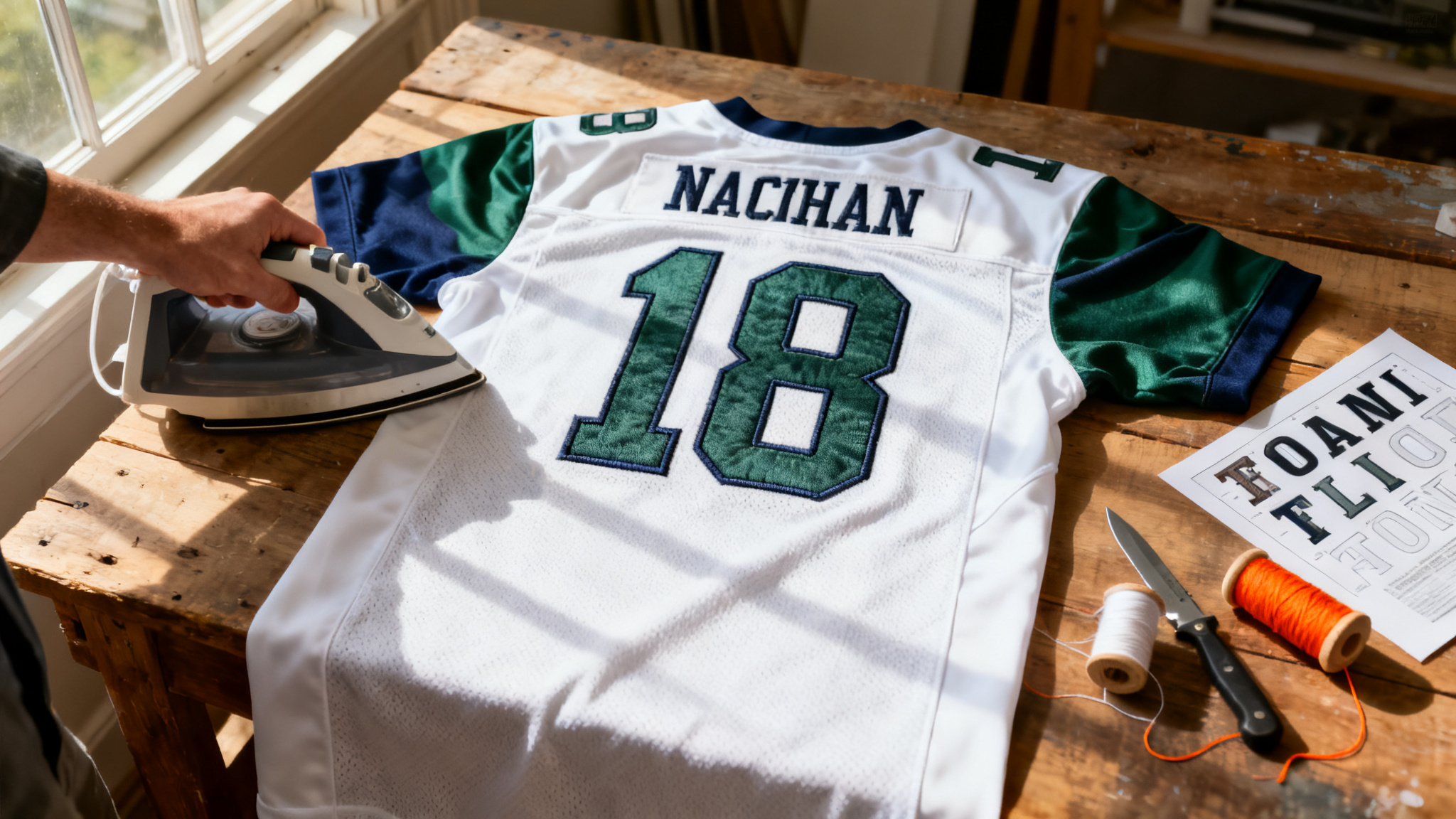
Re-pressing with a domestic iron and parchment paper is the best first response to early-stage HTV peeling: the thermoplastic adhesive softens under heat, re-adheres under pressure, and firms back up as it cools, often producing a bond as strong as the original. You are essentially re-activating a bond that was never fully broken.
If the lettering is lifting at the edges but still largely bonded to the shirt, this method is often all you need. The adhesive in HTV responds well to a controlled second heat cycle when the film itself is still intact.
What you need
- A domestic iron set to medium heat (cotton setting without steam, roughly 150°C)
- Parchment paper (baking paper from any supermarket), cut larger than the lettering area
- A firm, flat surface: a wooden table is better than a padded ironing board here because you need resistance
- A damp cloth to lay under the shirt, to protect the front side of the fabric
The process
- Lay the shirt flat on the firm surface, lettering face up.
- Lay the parchment paper over the letters. This is non-negotiable: direct iron contact melts HTV immediately and ruins it permanently.
- Press the iron down firmly for 10-15 seconds. Do not move the iron around. Hold it still with firm pressure.
- Lift the iron. Leave the parchment paper in place until everything cools completely, at least 30-45 seconds. The cooling phase is when the adhesive re-sets.
- Peel the parchment paper back slowly. If a corner of lettering starts to lift with it, press down again immediately and let it cool longer.
For flock lettering specifically, use slightly lower heat and a little more time: 130-140°C for 20 seconds. Flock fibers can flatten permanently under excessive heat, destroying the velvet texture that makes flock lettering so distinctive.
Method 2: Textile Adhesive for Stubborn or Larger Lifts
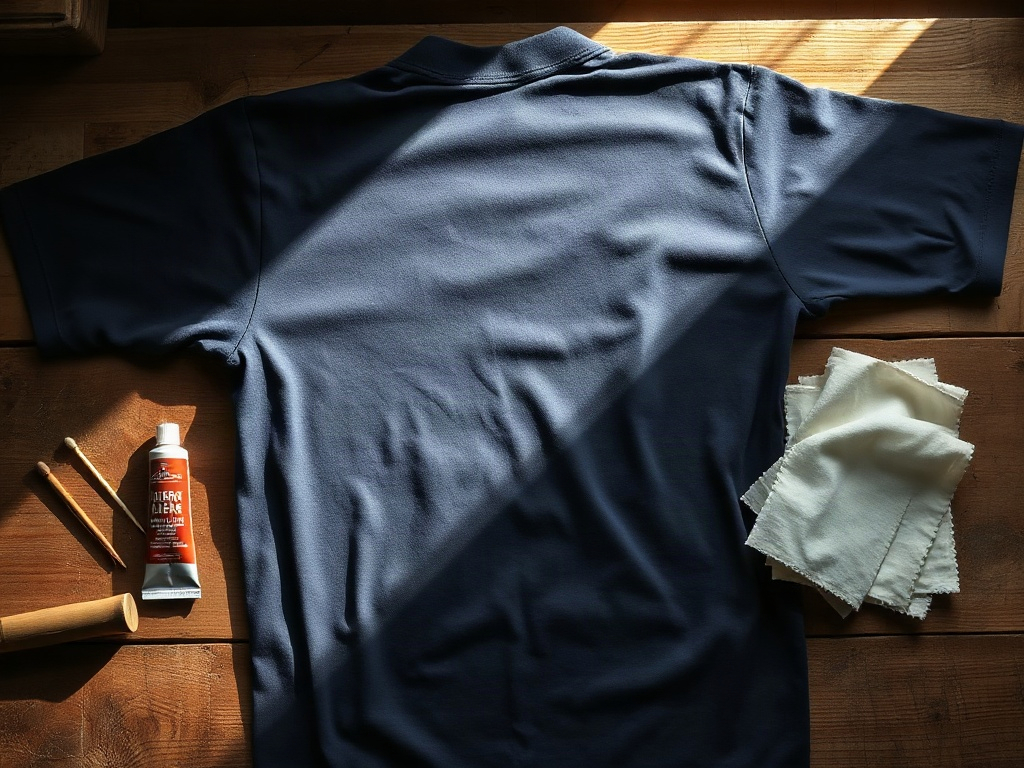
When heat alone cannot re-bond a letter that has largely separated, a specialist textile adhesive designed for heat transfer repairs is the right next step: products like HeatnBond Ultra, Bostik Fabric Glue, or Copydex fabric adhesive create a flexible, wash-resistant bond that standard superglue can never match. Standard cyanoacrylate (superglue) leaves the vinyl brittle and the bond cracks under flexion after a few weeks.
How to apply correctly
- Clean the underside of the peeling letter with a dry cotton bud to remove any dust, lint, or detergent residue. Even a thin film of residue prevents the glue from bonding.
- Apply the smallest usable amount of textile adhesive to the peeling underside. A thin, even coat bonds far better than a heavy blob, which seeps out from under the edges when pressed and dries visibly around the letter outline.
- Press the letter back down firmly with your fingers for at least 60 seconds. Then lay the parchment paper over and apply the warm iron for 10 seconds to seat it fully.
- Let it cure for the time specified on the adhesive packaging, usually 24 hours before washing.
For very small lifts at letter corners, a toothpick gives you the control needed to get glue only where it belongs.
Recommended product
HeatnBond Ultra Hold Iron-On Adhesive
The go-to fabric bonding tape for HTV lettering repairs. No-sew, wash-resistant bond, works with parchment paper and a domestic iron. Available in strip rolls for precise edge application.
Recommended product
Copydex Fabric & Craft Adhesive
A latex-based fabric adhesive with excellent flexibility. Ideal for flock lettering repairs where you need the bond to move with the shirt rather than crack under flexion. Water-resistant when fully cured.
Method 3: Professional Re-Press or Replacement at a Print Shop
When more than 30-40% of a letter has separated, or the carrier film has cracked rather than simply lifted, a licensed print shop running a commercial heat press is the right call: they apply precise temperature and uniform pressure across the entire letter surface in a way no domestic iron can replicate.
Most sports print shops that handle heat transfer vinyl applications can re-press individual letters or full name sets. A professional re-press typically costs between $8-$15 per letter, depending on the shop and your location. Marcus, a kit collector from Manchester, had a full 2006 World Cup shirt name set professionally re-pressed for £30 total at a local print shop, and it came back looking like it had just been applied at the factory.
If the letters are beyond re-pressing, a full name-and-number replacement is usually $25-$60 for a complete set. Many shops can source matching fonts for major clubs, though exact font matching on older kits from the late 1990s and early 2000s can be tricky. If the kit matters to you as a collector’s piece, always ask to see a printed font sample before committing to a full replacement. If the shirt itself is a limited run or a vintage piece worth preserving, take it to a specialist rather than an everyday print shop.
For serious collectors
Mini Heat Press for Garments
A compact heat press delivers the consistent pressure and temperature control a domestic iron cannot. Worth the investment if you are maintaining more than a couple of shirts per season. Precise temperature settings (most allow 110-200°C) mean no more guesswork on flock vs HTV settings.
When the Damage Is Too Far Gone: Honest Assessment
Some peeling cannot be undone at home: cracked vinyl film, heat-stressed fabric underneath the letter, or fully rubbed-away flock fibers are signs that replacement rather than repair is the honest path forward. Here is how to read the situation clearly.
Signs the DIY route will not work
- The vinyl film itself has cracked across the face of a letter (not just lifted at the edge). Cracked film cannot be re-bonded; the structural integrity is gone.
- The fabric underneath the letter has changed texture or color from repeated heat exposure or improper ironing. Re-pressing onto already heat-stressed fabric produces a weak bond that fails quickly.
- The original application used a low-quality transfer: very thin, paper-like feel with no elasticity. Some budget printing operations use single-use transfers that simply cannot be re-activated.
- Flock lettering where the fiber layer has rubbed away to expose the carrier sheet. The tactile surface is gone, and no repair method restores it at home.
In those cases, complete replacement is the honest path. Some embroidery and textile restoration services handle vintage football shirt repair, and embroidered replacements, while more expensive than vinyl, will outlast the shirt itself and add genuine collector value to a heritage piece.
How to Stop the Lettering From Peeling Again
The single most impactful habit for preventing lettering from peeling is washing the shirt inside-out at or below 30°C and air drying flat: those two steps remove the mechanical friction and the heat that together cause the vast majority of adhesive failures. The repair is only worth the effort if the new bond lasts.
- Wash the shirt inside-out, every single time. The mechanical action of the washing machine drum is the primary cause of edge lifting over time.
- Keep the wash temperature at or below 30°C for HTV, 40°C absolute maximum. Hot water softens the adhesive layer during the wash cycle and weakens the bond incrementally.
- Air dry flat, or hang to dry. Skip the tumble dryer entirely; the heat cycle and tumbling action together are the fastest route back to a peeling shirt.
- Never iron directly over the letters. Always use parchment paper or a pressing cloth, even for a quick freshen-up.
- Store the shirt flat or hanging rather than folded through the lettering. A sharp fold crease running through a letter stresses the adhesive at that exact point with every fold.
If you are buying a new jersey and longevity matters to you, look for shirts where the numbers and name are applied with a full heat seal across the entire letter surface, not just the edges. You can test this by pressing gently on the center of a letter: any give or soft spot indicates a less thorough application.
Frequently Asked Questions about Fixing Peeling Football Shirt Lettering
Can I use a hairdryer instead of an iron to re-press peeling letters?
A hairdryer does not generate enough focused, even heat to reactivate the adhesive properly. It may temporarily soften the vinyl enough to press a corner back down, but the bond will fail again within a few washes. Use an iron with parchment paper for a result that actually lasts.
My shirt’s lettering is cracking rather than peeling. Is that the same problem?
Cracking and peeling have different causes. Peeling is an adhesion failure between the vinyl and the fabric. Cracking is a breakdown of the vinyl film itself, usually from age, repeated heat cycles, or low-quality original materials. Cracking cannot be fixed by re-pressing; the only solution is full letter replacement at a print shop.
Will textile glue work on flock lettering?
Yes, but flock is more forgiving of re-pressing than it is of glue. Textile adhesive can seep slightly into flock fibers and leave a stiff, shiny patch where the letter was repaired. If the flock is lifting, try the parchment paper re-press method first. Only move to adhesive if re-pressing has not held.
How much does it cost to replace name and number lettering at a print shop?
Prices vary widely. A single letter re-press typically runs $5-$15. A full name and squad number replacement is usually $25-$60 depending on the shop, the font complexity, and whether they need to source or cut custom letters. Always ask for a quote and a font sample before committing.
Does washing inside-out really make a difference?
It makes a significant difference. The drum of a washing machine acts like sandpaper against anything on the outer surface of a jersey: every spin cycle subjects lettering edges to friction and flexion. Turning the shirt inside-out removes nearly all of that mechanical stress from the transfer surface. The difference in longevity is not marginal; it is the single most impactful care habit you can build.
How do I know if my shirt uses HTV or flock lettering before I start a repair?
Run a fingertip lightly across the letter surface. HTV feels smooth and slightly plasticky, with a clean edge and no texture. Flock feels soft and velvety, almost like a suede patch. The distinction matters because flock requires lower heat during any re-press and is more vulnerable to adhesive seeping into the fibers.
The Broader Point About Kit Longevity
A football shirt is not a disposable item: the best ones carry match memories, club seasons, and specific moments you want to hold onto, and the repair methods in this guide exist precisely so you do not have to choose between a peeling shirt and an empty drawer.
When lettering starts to go, the impulse is to bin the shirt and buy a new one. Even a shirt that has seen three seasons of hard wear, match days, and a few misguided tumble-dry cycles can come back with the right approach and a bit of patience.
The fabric of a good jersey does not lie: you can feel when the base material is still solid even if the transfer has given up. When the shirt itself is worth keeping, it is always worth attempting the football shirt lettering repair before writing it off.
The shop
Find your jersey
Clubs, national teams, concept and retro designs. With your name and number, if you like.
- Free shipping from $65
- 3 jerseys = 1 free
- 14-day returns