SPECIAL OFFER BUY 3 JERSEYS = GET 1 FREE

Thailand jersey vs official jersey: everything you need to know before buying
Thai jersey or authentic jersey: what are the actual differences in fabric, finishing, price, legality, and on-field performance? Everything you need to know before buying in 2026.
In this article9 sections
- Thai Jersey vs. Official Jersey: The Debate That Divides Soccer Fans
- What Exactly is a Thai Jersey?
- The Criteria That Distinguish an Official Jersey from a Thai One
- Comparison table: Thai jersey vs official vs concept jersey
- Thai jersey vs official: on-field performance
- The Legal Question: Is Buying a Thai Jersey Risky?
- Official Jersey Player Version vs Fan Version: A Third Category to Know
- Frequently Asked Questions About the Difference Between Thai and Official Jerseys
- Choosing your soccer jersey with the right criteria in 2026
Thai Jersey vs. Official Jersey: The Debate That Divides Soccer Fans
“`html
You’re holding a jersey in your hands. The price is tempting, the fit seems perfect, the colors of your club are there. But something is off. Is it a Thai jersey, an official replica, or an authentic football jersey sold by the manufacturer? The difference isn’t obvious at first glance, yet it’s real, tangible, and it matters depending on what you’re really looking for.
This guide breaks down every criterion point by point: material quality, finishes, price, legality, and on-field comfort. No beating around the bush. Whether you’re a collector, a casual player, or just a fan, you’ll find the keys to making an informed choice between a Thai jersey and an official one.
What Exactly is a Thai Jersey?
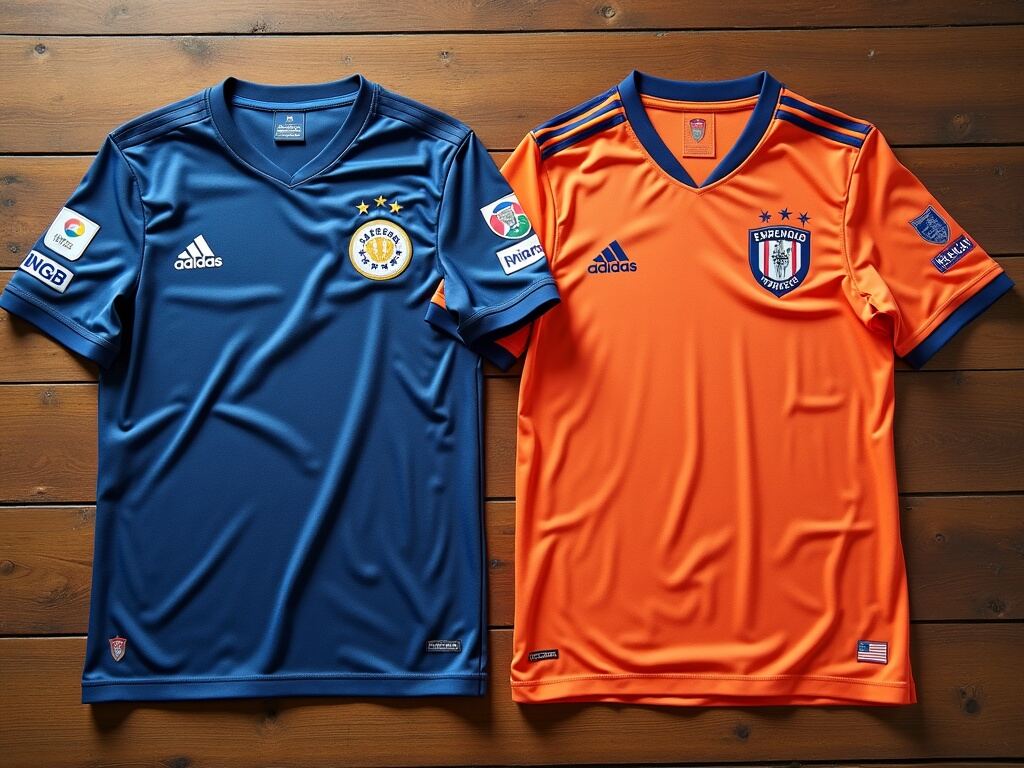
The term Thai jersey refers to an unauthorized copy produced mostly in Southeast Asia, especially Thailand, China, and Vietnam. These workshops replicate the designs of major clubs without an official license. The result: a product that visually resembles the original soccer jersey, sold for a fraction of the suggested retail price.
A Thai jersey typically sells for between $17 and $40. An authentic official jersey from the Premier League, MLS, or Serie A runs around $103 to $148 in 2026. The price gap is massive. This gap is explained by more than just brand margins.
Manufacturing and Real Origin of Thai Copies
These clandestine workshops use generic polyester fabrics, often lacking the proprietary technologies of official sportswear brands. No Dri-FIT from Nike, no Heat.RDY from Adidas, no HeatGear from Under Armour. The fabric looks like the original from a distance, but the difference is immediate to the touch: a heavier hand, less stretch, reduced breathability.
The embroidery and prints are made with less precise equipment. Club crests are often glued on, occasionally stitched, but rarely in the right spot with the correct proportions. On some models, the numbers and names start peeling after five washes.
The most sophisticated copies, sometimes labeled “grade 1:1” or “master copy,” use polyester with a slightly higher weight to mimic the feel of authentic kits. Even in these cases, the complete lack of textile certification and quality control remains the fundamental marker that sets them apart from the official product.
The Criteria That Distinguish an Official Jersey from a Thai One
Here are the elements to systematically examine before buying, whether you’re shopping in a physical store or online.
The Fabric and Fit
Official sportswear brands invest millions in textile R&D. Nike uses high-performance recycled fabric for its 2025-2026 kits. Adidas integrates ventilation zones mapped according to players’ sweat areas. This level of precision doesn’t exist in a Thai jersey.
- Official fabric: lightweight, breathable, four-way stretch, often recycled.
- Thai fabric: basic polyester, sometimes excessively shiny, less stretchy.
- Official Player Version (PV) fit: ultra-tight to the body, seamless sides on some models.
- Thai fit: varies by supplier, often looser or poorly proportioned.
The Tags, Holograms, and Official Markings
Every official jersey carries an authenticity hologram, a tag with a scannable QR code, and precise textile composition. Nike stamps its unique style number (format “FJ####-###”). Adidas includes a QR code that links to its official product page. These elements are either absent or crudely imitated on copies. A simple test: scan the QR code on a Thai jersey; it will go to an error page or a generic site, never to the brand’s official catalog.
Flip the jersey. The inner label must show the actual country of manufacture (often Vietnam, Bangladesh, or Cambodia for official Nike and Adidas gear), the exact fabric composition, and a minimum ten-digit product code.
Emblem and logo finishes
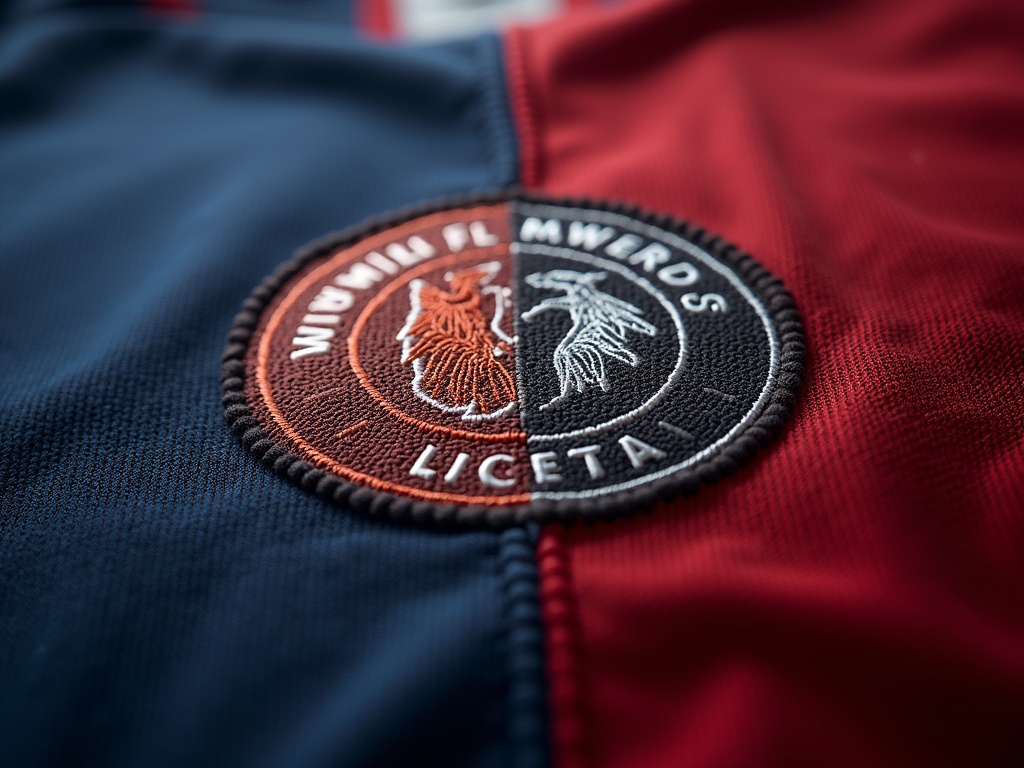
On an official jersey, the club emblem is embroidered with millimeter precision: exact Pantone colors, clean relief, flawless thread. On a Thai jersey, the emblem is often a heat-pressed patch. Gently pull at the edges: if it peels off, that’s a clear sign. Premier League clubs like Manchester City or Arsenal use certified embroidery threads with Pantone references contractually defined by the manufacturers. No Thai workshop replicates that spec sheet.
Price as an indicator (context matters)
A jersey sold for $29 with “Mbappé” printing shipped from a shop with no physical address in the US: the odds of it being a Thai copy are close to 100%. Real-world example: In 2025, an “Authentic” Real Madrid 24/25 kit was listed at $159 on the official Adidas site. That same kit was circulating on Asian marketplaces for between $20 and $32. The cost difference between certified Climacool fabric and generic polyester partly explains this gap. But beware, some high-end replicas, sometimes called “AAA” or “top quality thai,” sell for $57 to $68. That’s still not official.
Official soccer jerseys bought from an authorized Nike, Adidas, or Puma retailer have a price floor that doesn’t drop below $80, except in documented promotional sales.
Comparison table: Thai jersey vs official vs concept jersey
To clarify differences between the three main market categories at a glance, here’s a summary table based on the criteria you just read.
| Criteria | Thai jersey | Official Fan Version | Official Player Version | Concept Jersey |
|---|---|---|---|---|
| Indicative price | $17–$57 | $80–$108 | $125–$160 | $34 |
| Official license | No | Yes | Yes | Original design |
| Textile technology | Generic polyester | Semi-technical | High performance | Quality polyester |
| Hologram / QR code | Missing or fake | Present | Present | Own label |
| Wash durability | Low (6–12 months) | Good | Excellent | Good |
| Legality of purchase | Gray area | Fully legal | Fully legal | Fully legal |
| Official store printing | Refused | Accepted | Accepted | Free provider |
| Design originality | Exact copy | Official kit | Official kit | Exclusive |
Thai jersey vs official: on-field performance
If you only wear the jersey in the stands or for a photo, the difference in textile performance won’t affect you directly. But if you play, it matters.
Breathability and Moisture Management
Dri-FIT (Nike) or AEROREADY (Adidas) technologies actively wick sweat away from the fabric to the outside. You feel the result within 30 minutes of exertion: the jersey stays dry against your skin. A standard Thai polyester jersey absorbs and holds moisture. In hot weather, the comfort difference is stark.
Wash Durability
An official jersey withstands hundreds of wash cycles at 30°C without losing its shape or colors. Thai jerseys show signs of fading as early as the tenth wash, and lettering begins to crack after six to twelve months of regular use. On an official Nike player kit, color treatment uses pigments sublimated at high temperatures that resist machine chlorine; this step simply doesn’t exist in the copy production chain.
Size and Fit
Official Nike, Adidas, and Puma size charts are standardized and tested. An official S corresponds to a precise build. Thai sizes are often based on Asian sizing: smaller in the shoulders, longer in the back. Order a Thai in M if you normally wear a European S.
The Legal Question: Is Buying a Thai Jersey Risky?
Yes. Possessing a counterfeit item for personal use is rarely prosecuted in the US, but importing bulk lots and reselling are criminal offenses. As an individual buyer, you typically won’t face penalties in most cases. But your packages can be seized by customs, with no refund possible.
On the ethical side, the margins of sportswear brands partially fund club licensing rights, youth academies, and women’s teams. It’s not an absolute truth for every dollar spent, but the economic ecosystem of professional soccer is partly fueled by official merchandise sales.
For those seeking a cheaper but fully legal alternative, official replica jerseys (also called “fan version”) are sold around $80-$100. They use slightly less technical fabric than the player version, but remain licensed products with tags and warranty.
Official Jersey Player Version vs Fan Version: A Third Category to Know
A lot of confusion arises here. There are actually two categories of official jerseys:
- Player Version (PV) or Authentic: the exact kit worn on the field. Ultra-high-performance fabric, athletic slim fit, price between $125 and $160.
- Fan Version or Replica: same design, less technical fabric, more relaxed fit, price between $80 and $110. This is the jersey you see in most stands.
The Thai jersey tries to mimic the Player Version, but without the materials or certifications. This positioning sometimes earns it a reputation as the “best value-for-money option,” which is questionable once you examine the materials up close.
If you want a quality soccer jersey at a reduced price legally, go for a Fan Version at the end of the season: clearance stock lets you find official jerseys around $50-$70 on authorized platforms.
To explore exclusive designs that break away from standardized reproductions, check out our limited edition concept jersey collection, crafted for fans who want to wear something you won’t see anywhere else.
Frequently Asked Questions About the Difference Between Thai and Official Jerseys
Everything you’re wondering (click to expand).
How can I spot a Thai jersey when ordering online?
Check the seller’s address: if the store is registered outside the US, without a verifiable physical address or business registration, and the price is under $55 with lettering included, you’re most likely looking at a Thai jersey. Also, see if the site offers multiple brands (Nike, Adidas, Puma) in the same catalog: no official retailer holds licenses for all manufacturers simultaneously. Finally, be wary of shipping times listed as 15 to 30 days from Southeast Asia: that’s a reliable indicator of origin.
Can a Thai jersey be good quality?
Some batches, called “AAA grade” or “top Thai,” use better fabrics than low-end copies. The stitching is more precise, and the badges are better embroidered. It’s still a counterfeit without the proprietary technologies from the sportswear brands. For casual wear or standing in the stands, the experience can be satisfying. For playing in a match, the differences in breathability and durability become quickly noticeable. No Thai jersey truly matches an official Player Version in terms of technical performance.
Does a Thai jersey shrink in the wash?
More often than the official ones, yes. The uncertified polyester fabrics used in Thai copies are less dimensionally stable. Wash in cold water (max 68°F), inside out, with no spin cycle to limit this. Avoid the dryer at all costs: heat accelerates cracking of prints and collar deformation.
What is the price difference in 2026 between a Thai and an official jersey?
A Thai jersey runs between $17 and $57 depending on the batch quality. An official Fan Version jersey costs between $80 and $108. An official Player Version (Authentic) jersey is priced between $125 and $160. So the difference ranges from $34 to $137 depending on the categories compared. For a legal and affordable alternative, check out the concept jerseys in our store, starting at $34 with exclusive designs you won’t find anywhere else.
Can you get a Thai jersey customized at an official store?
No. Official club stores and sportswear brand customization sections refuse to customize items not purchased from them or an authorized retailer. So any customization on a Thai jersey has to be done through independent providers, often with less precise results and weaker adhesion guarantees.
What legal alternative exists between a Thai jersey and an official one?
Concept jerseys are the ideal middle ground. They are original creations, neither copies nor replicas, produced without reproducing officially licensed kits. No risk of customs seizure, no legal gray area. Exclusive designs, accessible prices around $34, and controlled finishing quality. It’s the choice picked by thousands of fans who refuse to pay $148 for a kit or risk a copy with hit-or-miss quality.
Choosing your soccer jersey with the right criteria in 2026
The choice between a Thai jersey and an official one depends on your use, your budget, and your values. For a collector who wants their club’s colors at a low price for a photo, a Thai may seem sufficient. For someone who plays twice a week, wants a durable product with real textile technologies, and wants to support their club’s ecosystem, the official one is the right call.
If the official version is out of your budget, end-of-season discounted fan versions, vintage official soccer jerseys in good condition, or exclusive in-house editions are great ways to balance a reasonable budget with authenticity.
To go deeper on choosing sizes, custom lettering, or special editions available on our site, the complete soccer jersey buying guide covers all these criteria with size charts and fit tips for different body types. You can also check out our guide to spotting a player version jersey or our comparison of the top jersey sites in 2026 to fine-tune your choice.
The shop
Find your jersey
Clubs, national teams, concept and retro designs. With your name and number, if you like.
- Free shipping from $65
- 3 jerseys = 1 free
- 14-day returns