SPECIAL OFFER BUY 3 JERSEYS = GET 1 FREE

Why Brazil Have 5 Stars on Their Shirt: The Story Behind Every World Cup
Brazil's 5-star shirt is the most recognizable jersey in world football. Here's the real story: which World Cups earned each star, how the tradition started, and how Brazil's total compares to Germany, Italy, Argentina, and England.
In this article8 sections
- The Yellow Shirt That Carries Five Gold Stars
- How the Star System Works in International Football
- The Five Stars: Every Victory Explained
- How Brazil’s Five Stars Compare to Other Nations
- The Shirt Design: How Stars Changed the Look of the Brazil Kit
- Why Brazil Have Not Won a Sixth Star Since 2002
- FAQ
- What Those Five Stars Say About the Shirt You Wear
The Yellow Shirt That Carries Five Gold Stars
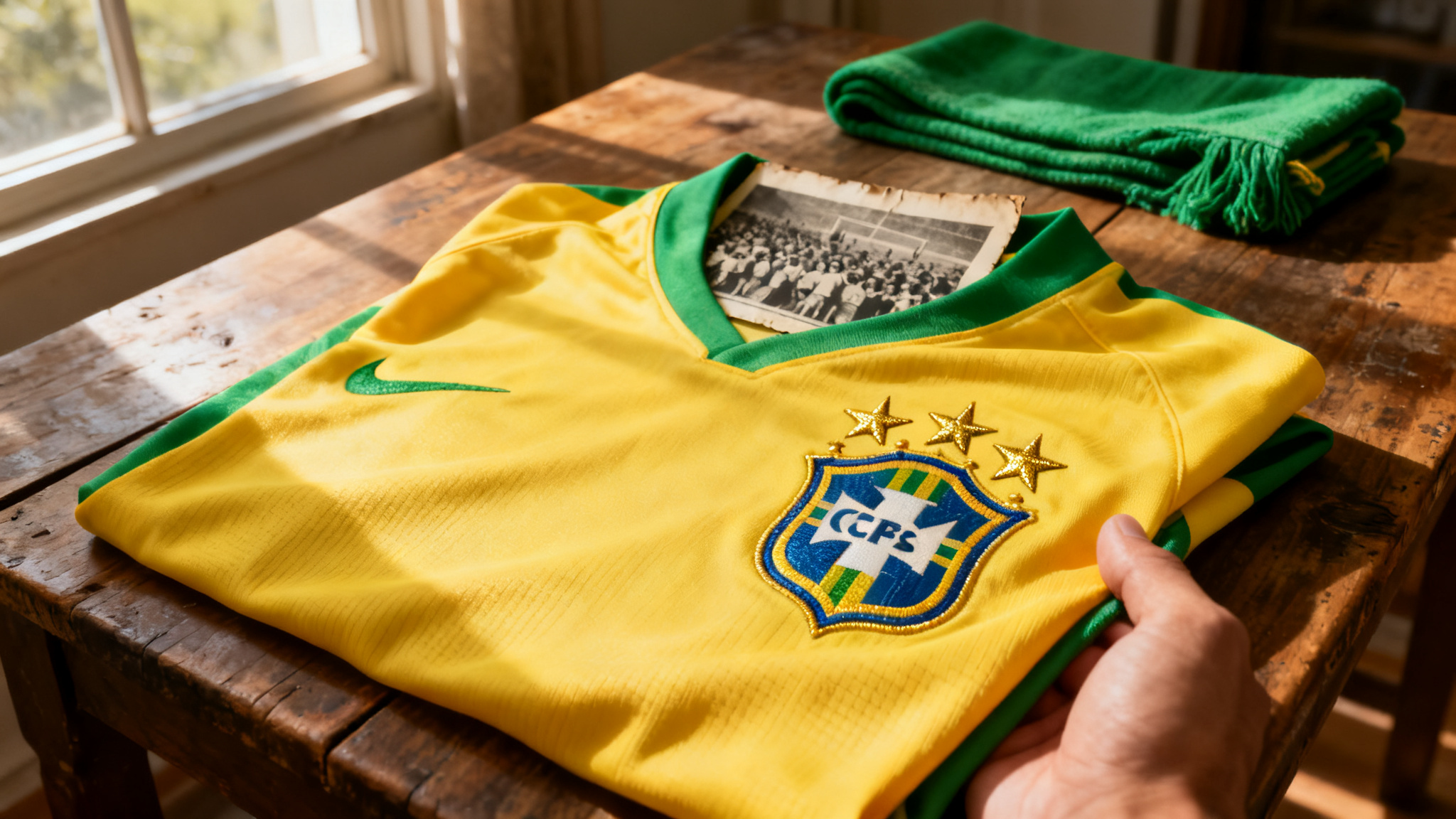
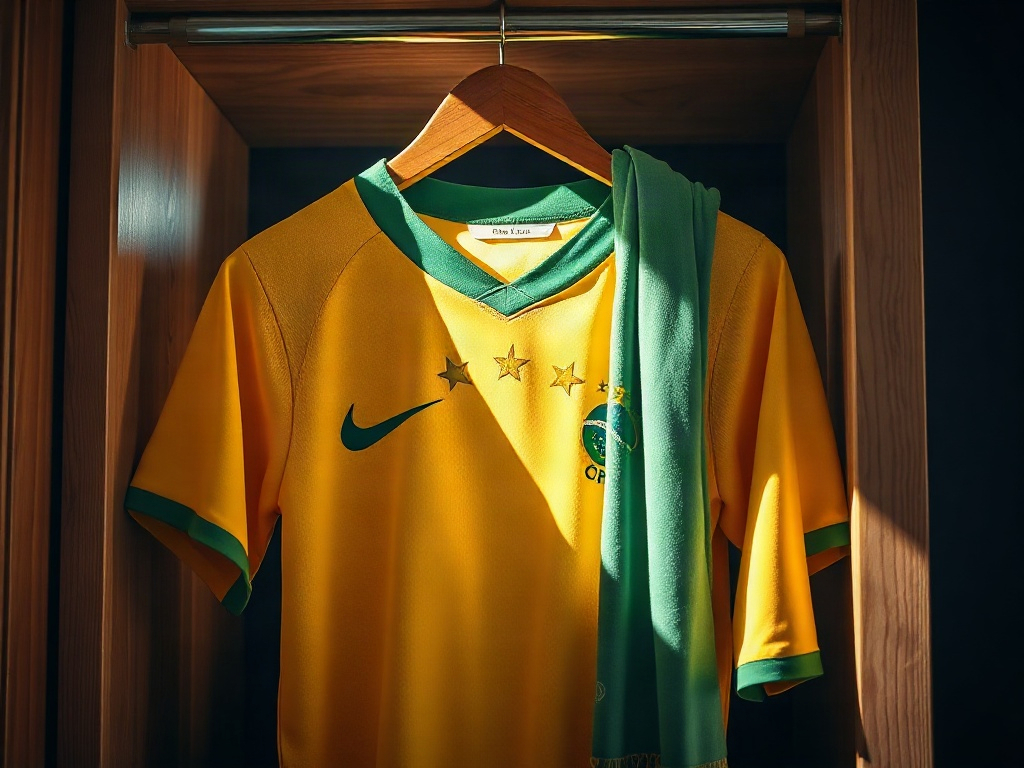
Brazil’s football shirt carries five gold stars above the CBF crest because the Seleção won the FIFA World Cup five times across four decades, a record no other nation has matched, and those stars are embroidered, not printed, into every authentic jersey. Pick up any Brazil shirt and hold it to the light. Above the CBF crest, five gold stars sit in a tight row. No other national team on the planet wears that many. For any collector or serious supporter, those stars are not decoration. They are a record: five FIFA World Cup victories, spread across 44 years of football history.
Each star was added to the shirt after a new title. The fabric doesn’t lie, and neither do the numbers.
This article digs into each of those victories, explains when the stars actually appeared on the kit, and puts Brazil’s record in honest context against Germany, Italy, Argentina, and England. If you own a national team football jersey or you’re thinking about buying one, understanding what those stars represent changes the way you wear it.
How the Star System Works in International Football
FIFA does not mandate exactly how nations display their World Cup titles, but the global convention is one gold star per title, embroidered above the national federation crest, and most major football associations follow it voluntarily even though no official rulebook requires it. The exact position, size, and shade of gold varies from kit to kit and era to era, which is part of what makes comparing shirts across generations genuinely interesting.
Brazil’s football confederation, the CBF, adopted the practice and has kept it consistent across generations of kits. When Nike took over as kit supplier in 1997, they inherited a shirt already carrying three stars. When the fourth was added after 1994 and the fifth after 2002, the design team had to rework the chest layout to keep the row balanced and legible. Stars are embroidered, not printed, on authentic jerseys. Run your finger across them and you feel the raised thread. That texture is the first thing I check when a shirt comes across the workbench on a Thursday morning.
The Five Stars: Every Victory Explained
Each of Brazil’s five World Cup victories tells a different story, and understanding those stories transforms the shirt from a piece of sportswear into a garment carrying sixty years of football history on its chest. Below is the full account, title by title, star by star.
1958 – Sweden: Brazil’s First Star
The first star came from the 1958 tournament in Sweden. Brazil beat the host nation 5-2 in the final on June 29, 1958, ending years of near-misses that included the devastating home defeat to Uruguay in 1950 at the Maracanã. A 17-year-old Pelé scored twice in the final. Garrincha was unplayable. The team played with a 4-2-4 formation that most of Europe had never encountered, and it is worth pausing on that because the tactical context matters. Before 1958, European sides dominated with rigid defensive structures. Brazil’s 4-2-4 used two wide attackers and two central strikers supported by two mobile midfielders, creating overloads that conventional defenses had no answer for. The Swedish press called it “football from another planet.” The star earned was not yet on the shirt immediately; the CBF introduced it on subsequent kits as the practice of marking titles became standard.
Collector’s Pick
Brazil 1958 Retro Jersey
The shirt that started everything. Clean yellow ground, simple green v-collar, Seleção crest centered. The design that introduced 4-2-4 football to the world, now reproduced with period-accurate embroidered detailing.
Browse retro Brazil jerseys →
1962 – Chile: The Second Star Without Pelé
Four years later, Brazil defended their title in Chile. Pelé was injured after the second group game and took no further part, making this the title that proved Brazil were a team, not a single genius. Garrincha stepped up and carried the squad almost single-handedly, winning the tournament’s best player award despite playing through his own knee discomfort. Brazil beat Czechoslovakia 3-1 in the final. This second consecutive title cemented Brazil as the dominant force in world football. It also tested a different kind of character: can you win without your best player? In 1962, the answer was yes. Two stars.
Collector’s Pick
Brazil 1962 Retro Jersey
The forgotten title. Garrincha’s tournament. A slightly narrower collar than 1958, lighter cotton weave suited to the Chilean altitude. Collectors who know the story rate this one above the more famous 1970 shirt precisely because it wins arguments in the pub.
Browse retro Brazil jerseys →
1970 – Mexico: The Star That Defined Football
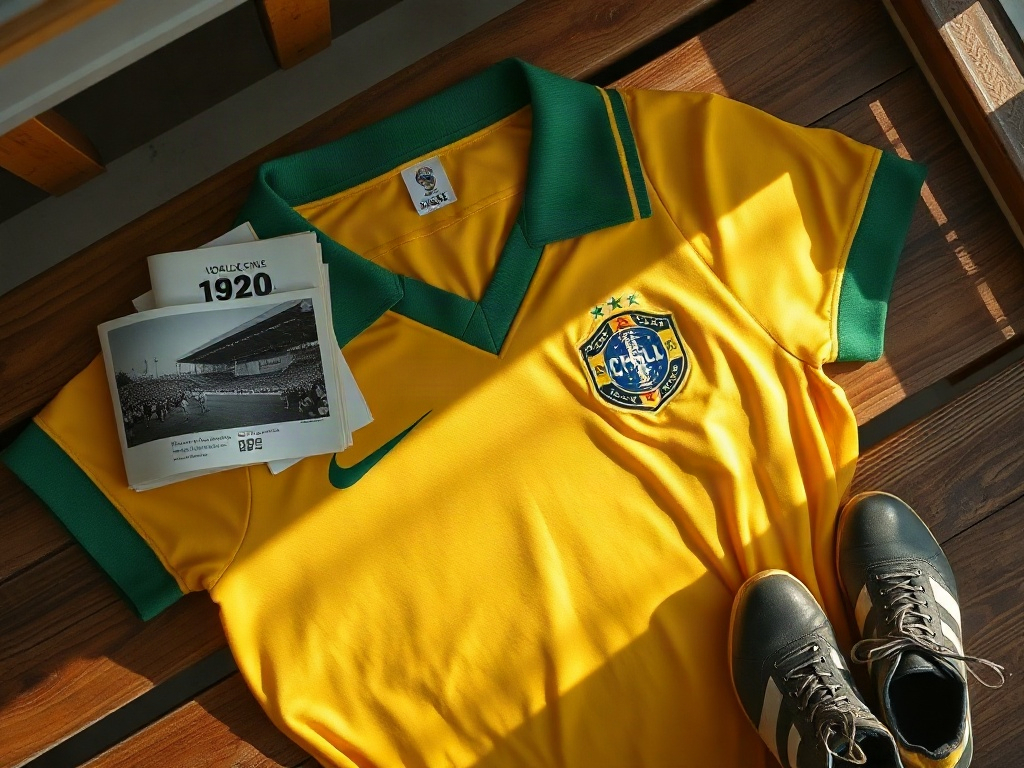
The 1970 World Cup in Mexico produced what most historians regard as the greatest international football team ever assembled, and Brazil’s 4-1 final victory over Italy remains the standard against which every subsequent tournament squad is measured. Pelé, Jairzinho, Tostão, Rivellino, Carlos Alberto: a starting eleven where every position had a world-class performer in peak form. Brazil won every single match they played. Carlos Alberto’s last goal against Italy remains the most replayed team goal in football history, a flowing combination involving almost the entire squad before the captain arrived at full pace onto a perfectly weighted pass from Pelé. Jairzinho scored in every game, a feat never matched before or since at a World Cup. That third title triggered the permanent Jules Rimet custody. Three stars.
This is the shirt that collectors chase hardest. An authentic 1970 Brazil jersey, even a period reproduction, commands serious money on the secondary market. The design from that era, yellow with a simple green collar and CBF crest in the center, is one of the most copied kits in history for good reason. It is also the shirt where the embroidery quality of modern reproductions varies most widely: genuine raised thread versus cheap flat print is the difference between a display piece and a drawer filler.
Most Wanted
Brazil 1970 Retro Jersey
The benchmark. Yellow ground with a narrow green crew collar, heavyweight cotton feel, embroidered CBF crest, and the three stars that players wore at the tournament. See how collectors and buyers rate this era before you commit to a version.
See how collectors rate this era →
1994 – USA: The Penalty Shootout Star
Brazil’s 1994 title was the hardest-earned of the five, coming after a 24-year drought that included a 1982 squad widely considered among the best never to win the tournament, and ending in a penalty shootout decided by a single Italian miss. The gap matters enormously for understanding the shirt. Four consecutive tournaments without the trophy had genuinely shaken Brazilian football confidence. The 1982 side of Zico, Sócrates, and Falcão played the most beautiful football of any team that tournament and still lost to Italy 3-2 in the second round. The 1986 squad reached a quarter-final and lost on penalties to France. By 1994, the weight of expectation on Romário and Bebeto was immense. Those two had a partnership that felt instinctive: Romário the predator working tight spaces, Bebeto the runner exploiting depth. Brazil reached the final against Italy and drew 0-0 after 120 minutes. Roberto Baggio stepped up for Italy’s fifth penalty, needing to score to keep the shootout alive. The ball went over. Brazil had their fourth title. The 1994 jersey design reflected the commercial era arriving: a slightly busier collar treatment, the CBF crest now flanked by sponsor positioning, the yellow a touch brighter. Four stars.
Collector’s Pick
Brazil 1994 Retro Jersey
The drought-breaker. Romário and Bebeto’s jersey. Brighter yellow, the early Nike-era collar detail, four stars above the crest. For supporters who know what 24 years without a title actually felt like, this shirt carries a different kind of weight.
Browse retro Brazil jerseys →
2002 – South Korea and Japan: Ronaldo’s Star
The fifth and most recent star belongs to 2002 and to Ronaldo, whose eight goals including two in the final against Germany completed one of football’s most remarkable individual redemption stories. Four years earlier in France, Ronaldo had suffered a mysterious seizure on the eve of the 1998 final and was a shadow of himself that night. Brazil lost to France 3-0. The explanations were never fully satisfying and the story followed him for years. In 2002, he answered every question with goals. The haircut alone made headlines, but his performances were genuinely extraordinary: pace, power, finishing, and a composure that made big-game situations look routine. Brazil won 2-0 in the Yokohama final. The fifth star was embroidered above the crest on subsequent Nike kits and has stayed there ever since.
That 2002 Brazil home shirt is one of the most iconic jerseys in the modern era. The darker gold-yellow shade, the clean lines, the CBF crest with four stars above it at the tournament (the fifth was added post-victory): it is the shirt a generation grew up watching, and retro football jersey collectors treat it with real reverence.
Icon Era
Brazil 2002 Retro Jersey
Ronaldo’s shirt. The deeper gold-yellow, the streamlined Nike silhouette, four stars at the tournament and five on every post-2002 version. The jersey a generation watched win the fifth title in Yokohama. Embroidered stars, not printed. That detail matters.
See how collectors rate this era →
How Brazil’s Five Stars Compare to Other Nations
Brazil leads the all-time World Cup winners table with five titles, ahead of Germany and Italy on four each, and that gap is real and meaningful, though the distance between the top nations is smaller than the star counts suggest once you account for the different eras in which each country dominated. Context matters. Five is the record, but the gap between the top nations is smaller than the star count suggests when you factor in history, population, and football culture.
| Nation | Stars | Years Won |
|---|---|---|
| Brazil | 5 | 1958, 1962, 1970, 1994, 2002 |
| Germany | 4 | 1954, 1974, 1990, 2014 |
| Italy | 4 | 1934, 1938, 1982, 2006 |
| Argentina | 3 | 1978, 1986, 2022 |
| Spain | 1 | 2010 |
| England | 1 | 1966 |
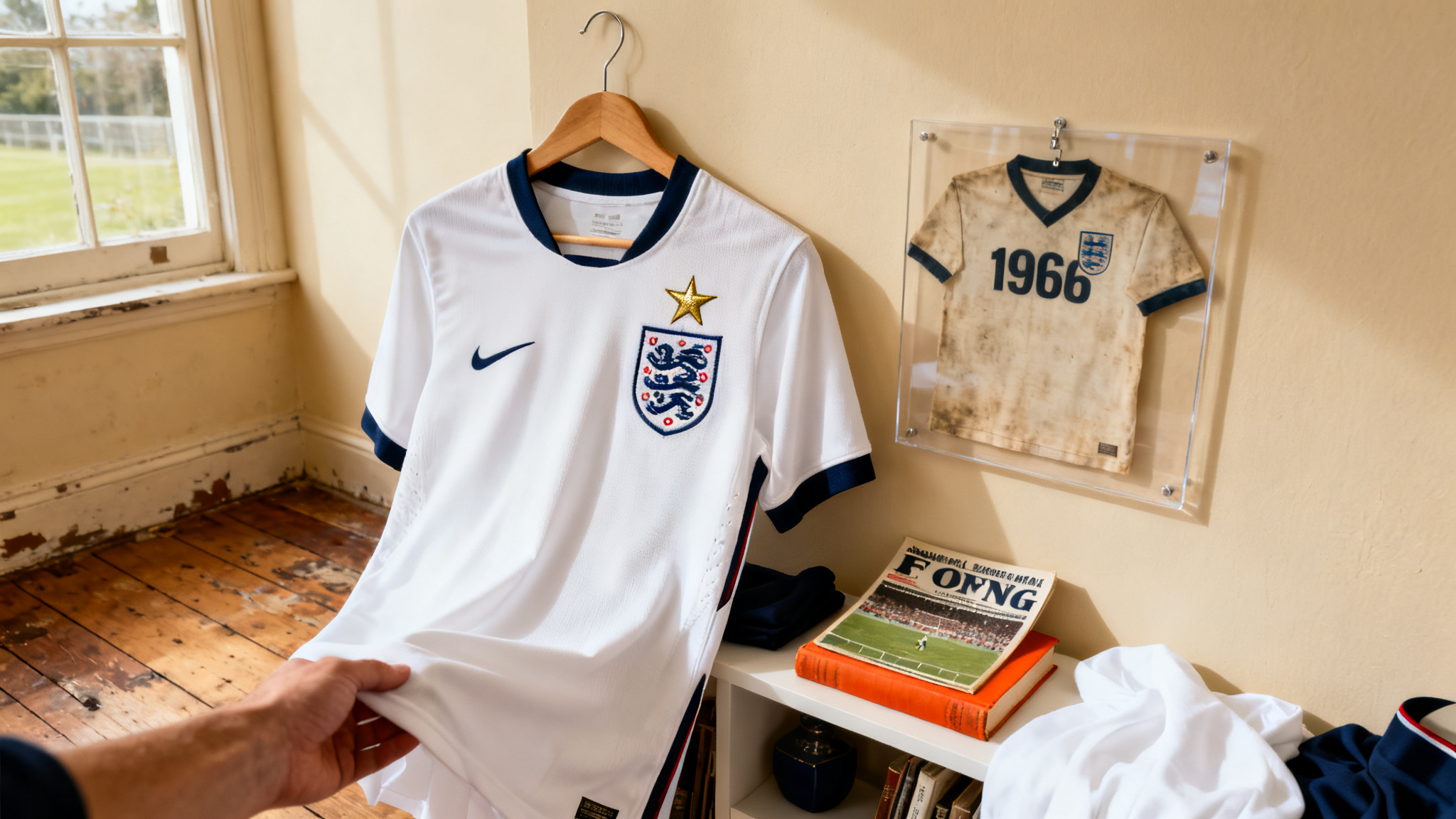
Germany and Italy both carry four stars and are legitimate football powerhouses with deep winning pedigrees. Argentina moved to three stars after their 2022 Qatar title, which is why the Adidas kits Messi wore that winter now carry three stars above the AFA crest. England’s single star sits above the Three Lions badge, won at Wembley in 1966. One star, but it defines an entire national football identity: anyone who has owned an England shirt knows exactly how much weight that single star carries in conversation.
Brazil’s fifth star is not just a number. It represents the only nation to have won the tournament on three separate continents: Europe in 1958, North America in 1970 (Mexico), and Asia in 2002. No other country has matched that geographic spread of victories. Germany came closest with wins in Europe (1954, 1974, 2014) and North America (1990 in Italy, which is Europe), so the continental spread argument belongs to Brazil alone.
The Shirt Design: How Stars Changed the Look of the Brazil Kit
Five stars in a horizontal row above the CBF crest is a genuine design challenge, and the most successful Brazil kits have handled it by widening the star spacing slightly and keeping the surrounding chest area clean rather than competing with textured fabric patterns. Stars change the visual balance of a shirt. One star sits neatly centered. Two requires minor adjustment. Five in a horizontal row requires real design discipline.
The pre-1994 kits had three stars and a relatively simple embroidered crest. The chest area breathed. After the fourth star in 1994, the row began to feel more prominent. After the fifth in 2002, the design team widened the spacing slightly to keep the stars from clustering. On the 2006 Germany World Cup shirt, those five stars read cleanly from five meters away. On some of the more recent kits where Nike has experimented with textured fabrics and sublimated patterns, the stars can get slightly lost against the yellow ground: a subtle gold-on-gold contrast problem.
The most aesthetically successful versions of the five-star Brazil shirt tend to be the cleaner silhouettes: the 2006 and 2010 home kits strike that balance best, where the CBF crest sits centered and the five stars above it feel proportional rather than crowded. These details matter if you are considering a vintage or retro Brazil shirt as a display piece or a wearable collector’s item. The ConceptJerseys.com store carries a curated selection of Brazil-inspired designs where these proportions have been carefully considered.
Why Brazil Have Not Won a Sixth Star Since 2002
Brazil have not won a sixth World Cup star in 24 years despite consistently producing elite talent, and the honest explanation is that tournament football punishes even the best squads with single-game variance that no amount of quality can fully insure against. They have reached two semi-finals (2014 on home soil, where the 7-1 defeat to Germany stands as one of football’s most brutal single results) and two quarter-finals since 2002. Talent has not been the issue: Ronaldinho in 2006 was at the peak of his powers, Neymar has been consistently elite, and the player pool has never dried up.
Tournament football at the World Cup level is volatile. A single bad game, a penalty miss, an injury at the wrong moment, all of it can end a campaign. The 7-1 semi-final in 2014 is the sharpest illustration: Neymar injured before the game, captain Thiago Silva suspended, and Brazil fell apart in eleven minutes against a German side that had prepared specifically to exploit the space Brazil’s attacking full-backs left. It was not a failure of talent. It was a failure of structure meeting a prepared opponent. Germany, Italy, and Argentina know this dynamic equally well.
The fifth star is not a guarantee of a sixth. It is simply proof that Brazil got everything right five separate times across five different decades. For collectors tracking the evolution of the shirt, that potential sixth star is part of what makes current Brazil kits feel unfinished in a particular way. Every tournament since 2002 has been a chance to change the chest. That story is still open.
FAQ
Why do Brazil have stars on their football shirt?
Each star represents one FIFA World Cup victory. Brazil have won the tournament five times: 1958, 1962, 1970, 1994, and 2002. The stars are embroidered above the CBF federation crest on the front of the shirt. Most national football associations follow the same convention, adding one gold star per title, though no FIFA rule formally requires it.
When was the fifth star added to the Brazil jersey?
The fifth star was added after Brazil’s 2002 World Cup victory in South Korea and Japan. Kits worn during the tournament itself only showed four stars above the CBF crest. Post-tournament shirts and all subsequent Brazil kits from late 2002 onward display the five-star configuration we recognize today.
Which nation has the most World Cup stars on their shirt?
Brazil holds the record with five stars. Germany and Italy are next with four each. Argentina wear three stars following their 2022 title in Qatar. England and Spain each carry one star. No nation has won six World Cups.
Do the stars on a Brazil shirt mean the same thing on every version of the jersey?
Yes. Whether it is an official Nike match shirt, a licensed replica, or a retro reproduction, the five stars represent the same five World Cup victories. The difference between versions lies in how the stars are produced: genuine embroidered raised thread on authentic kits versus printed or heat-transfer stars on lower-quality replicas. The embroidered version has visible raised texture; a flat print does not.
Is buying a Brazil replica shirt with five stars authentic if Brazil only had four stars during a specific tournament?
It depends on the era you are replicating. If you want a historically accurate 1970 or 1994 tournament shirt, it should show three or four stars respectively, matching what the players wore at the time. Modern retro reproductions sometimes add the current five-star configuration for commercial reasons. For strict collectors, the correct star count for the year matters. For supporters who simply want to wear the current national identity, five stars is the right choice.
How do I spot a fake Brazil shirt by checking the stars?
Hold the shirt up sideways to a window. On an authentic embroidered jersey, the stars cast a micro-shadow because the raised thread lifts them slightly off the fabric surface. A printed star sits completely flat. On genuine Nike-produced shirts from 1997 onward, the gold thread also has a slightly matte sheen: shiny metallic stars are almost always a replica tell. Count the stars too: some very low-quality fakes get the number wrong, particularly on older retro reproductions.
What Those Five Stars Say About the Shirt You Wear
Owning a Brazil shirt with five gold stars above the crest means wearing a garment that references Pelé in 1958, Garrincha in Chile in 1962, Carlos Alberto’s final goal in Mexico City, Romário and Bebeto in the United States heat, and Ronaldo’s redemption in Yokohama: five separate moments across four decades where a squad of footballers got everything right under maximum pressure.
That kind of track record shapes how a jersey feels when you put it on. The fabric carries history in a way that most shirts simply do not. And for anyone building a serious collection of international football shirts, the Brazil five-star shirt is not optional. It belongs in the conversation alongside the most iconic concept jersey designs in the sport, because it represents the closest thing football has to a definitive standard: five gold stars earned on pitches across four decades, stitched above a badge, and worn by generations of supporters who know exactly what they mean. ⚽
The shop
Find your jersey
Every Brazil jersey, with your name and number on the back if you like.
- Free shipping from $65
- 3 jerseys = 1 free
- 14-day returns