SPECIAL OFFER BUY 3 JERSEYS = GET 1 FREE

Remove a Grass Stain from a Soccer Jersey: The Complete Guide
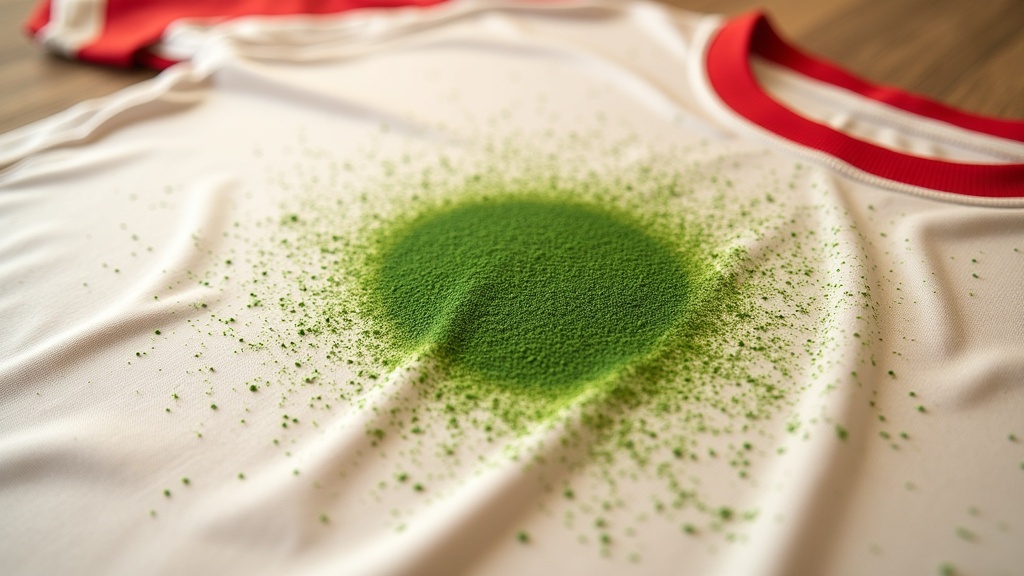
Chlorophyll embedded in polyester, stains dried for days, delicate kits with lettering: removing a grass stain from a soccer jersey requires the right moves and the right products. This complete guide covers all methods (enzymatic, vinegar-baking soda, alcohol, hydrogen peroxide), special cases of natural grass vs. synthetic turf, and machine settings to never damage a soccer jersey.
In this article7 sections
- Why Grass Stains Stick So Much on Soccer Jerseys
- The Golden Rules Before Treatment: What Saves (or Ruins) a Jersey
- Effective Methods for Removing Grass Stains from a Soccer Jersey
- Special Cases: Mixed Stains, White Jerseys, and Flocked Kits
- The right machine cycle to finish the treatment
- Frequently asked questions about removing grass stains from a soccer jersey
- Caring for Your Jersey Over the Long Haul
Why Grass Stains Stick So Much on Soccer Jerseys
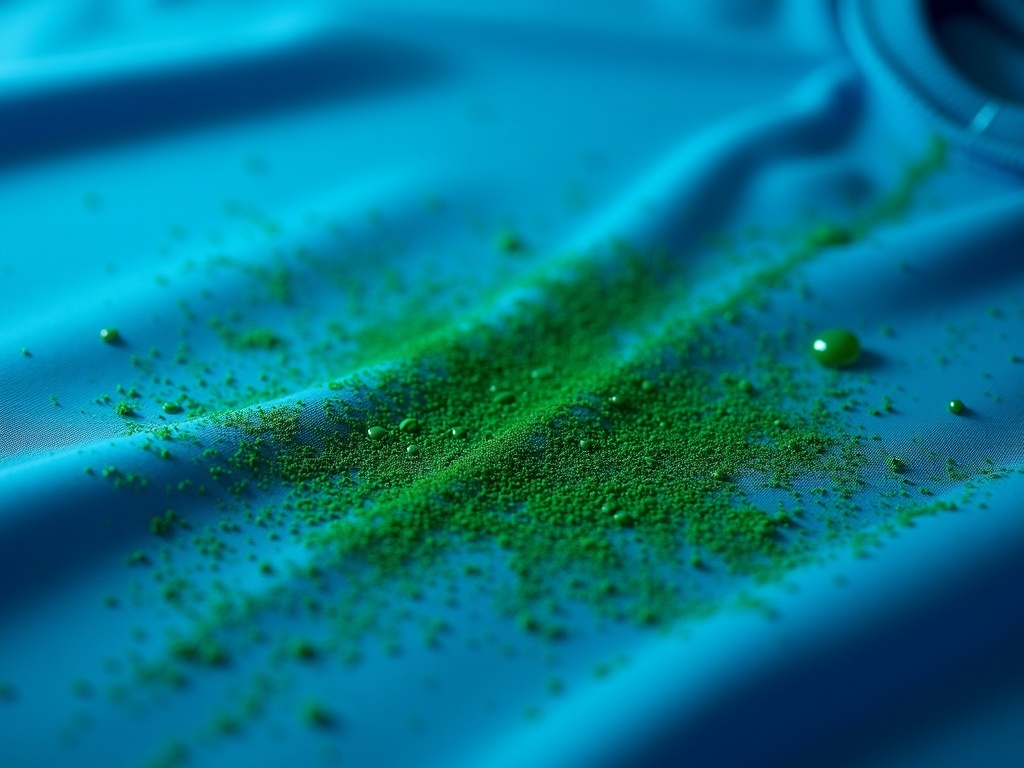
A slide tackle, a lunging tackle, a keeper’s dive: the grass leaves stubborn marks on the technical fabrics of soccer jerseys. It’s no accident. Removing grass stains from a soccer jersey is trickier than it looks, because chlorophyll, the green pigment in plants, chemically bonds to the polyester and polyamide fibers used by Nike, Adidas, Puma, or Hummel.
Chlorophyll is a fatty, highly stable plant pigment. Unlike mud, it won’t rinse out with cold water. It quickly penetrates the fabric’s structure, especially when the heat from friction speeds up the set. The result: if you let it dry without acting, the stain turns a greenish-yellow and sets in for good.
Polyester, the dominant material in over 85% of modern jerseys, also holds onto the natural oils present in the plant. That’s why you get that greasy, faded look if you just give it a quick rinse. This is exactly why removing grass stains from a soccer jersey needs a targeted approach, not just a machine cycle.
The Golden Rules Before Treatment: What Saves (or Ruins) a Jersey
Before you start treating, here are a few habits to adopt every time.
Act Within 30 Minutes
This is the critical window. A fresh chlorophyll stain can be treated in 10 minutes with minimal effort. The same stain, dry for 12 hours, needs an enzymatic detergent and multiple cycles. The same stain, dry for 48 hours, can leave a permanent halo on some light colors.
Right after the game or practice, take off the jersey and soak it in cold water. Cold, not hot. Heat sets vegetable pigments into the fiber and makes the stain nearly permanent.
Never Rub Dry
Dry rubbing spreads the stain and pushes the pigments deeper. Always dab, never rub back and forth. Moving from the edge toward the center prevents a ring.
Check the Tag
Official club jerseys from the Premier League, La Liga, or Serie A often have a tag recommending a max of 30°C, no heavy spin, no dryer. A single wash at 60°C can warp heat-pressed sponsor logos or shrink the collar. Follow the care symbols: it’s non-negotiable if you want the jersey to look good for multiple seasons.
Effective Methods for Removing Grass Stains from a Soccer Jersey
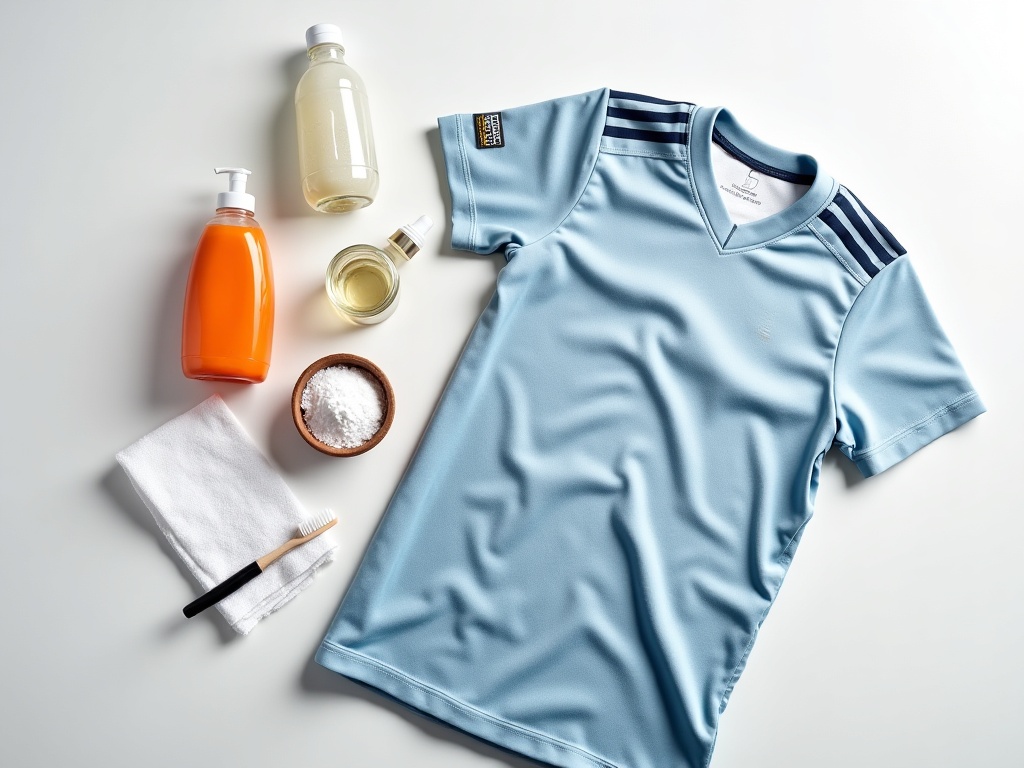
Several approaches work. The choice depends on how old the stain is, the jersey’s color, and what products you have on hand. To help you choose at a glance, here’s a comparison table of the three most common stain removers:
| Product | Effectiveness (Fresh Stain) | Effectiveness (Dried Stain) | Risk to Printed Details | Best For |
|---|---|---|---|---|
| Enzymatic Detergent (Vanish, Biotex) | ⭐⭐⭐⭐⭐ | ⭐⭐⭐⭐⭐ | Low | All stains, all colors |
| White Vinegar + Baking Soda | ⭐⭐⭐⭐ | ⭐⭐⭐ | Very Low | Jerseys with printed names/numbers, bright colors |
| Isopropyl Alcohol 70° | ⭐⭐⭐⭐ | ⭐⭐⭐⭐ | Moderate (test first) | Mixed grass + mud stains, light fabrics |
Method 1: Full-Strength Liquid Detergent (Fresh Stains)
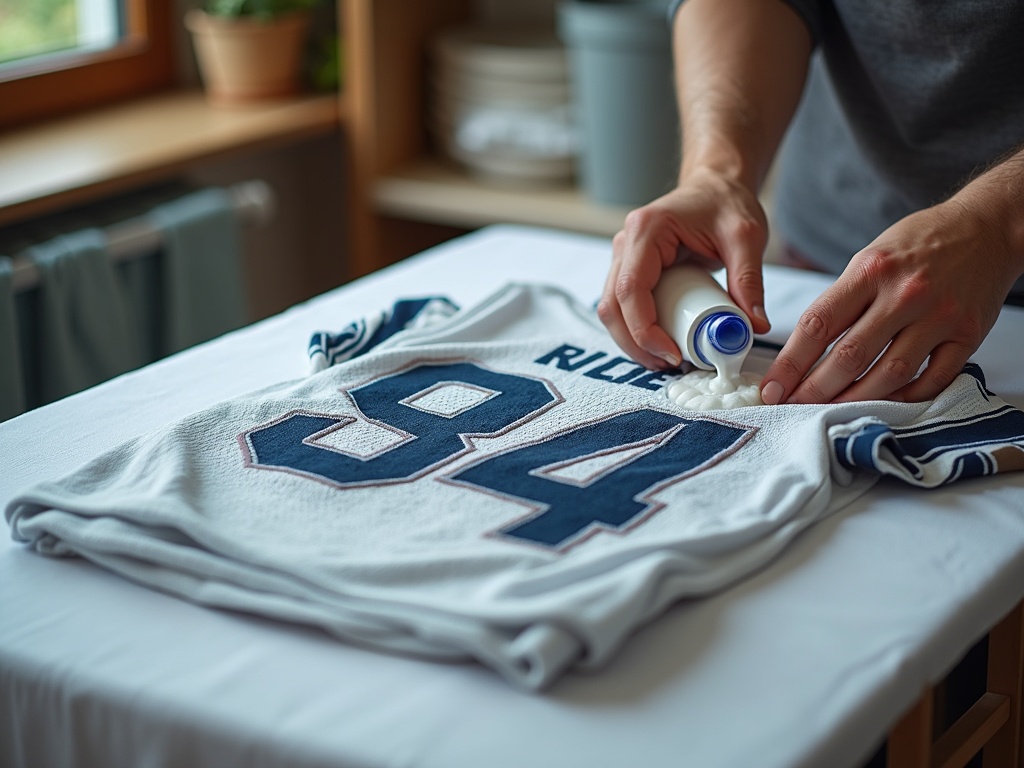
- Apply a dab of concentrated liquid laundry detergent directly onto the stain, undiluted.
- Let it sit for 5 to 10 minutes. The active agents will start loosening the pigments.
- Dab with a soft toothbrush (light circular motion from the edge toward the center).
- Rinse with cold water. If the stain is gone, run a machine wash at 30°C.
- If a trace remains, move to Method 2 before the machine wash.
This method works in about 70% of cases with fresh grass stains on dark or medium-dark polyester.
✅ Pro tip: Always keep a small amount of concentrated liquid detergent in your gym bag. Pre-treating within 20 minutes of the game, even quickly, cuts cleaning time at home by two-thirds.
Method 2: Enzyme Pre-Treatment (Dried Stains)
Enzyme-based products (Vanish, Tide Pods “enzyme action”, Biotex) contain cellulases and proteases that break down the bonds of plant pigments. This is the most effective method for dried grass stains on soccer jerseys.
- Dampen the stain with cold water.
- Apply a generous layer of enzyme gel. Cover the edges well.
- Let it sit for 30 minutes to 1 hour (no more than 2 hours on colored fabric: slight fading risk).
- Gently dab with a soft brush.
- Run a machine wash at 30°C (86°F) with a normal dose of detergent.
For white jerseys (Real Madrid, Juventus style, white third kits), you can go up to 40°C (104°F) if the care label allows.
Method 3: White Vinegar + Baking Soda (Chemical-Free Solution)
A no-harsh-chemicals alternative, ideal for delicate jerseys with digital prints or name and number heat press vinyl.
- Mix 2 tablespoons of white vinegar with 1 teaspoon of baking soda. Wait for the fizzing to stop.
- Apply the mixture to the stain with a clean cloth.
- Let it sit for 15 to 20 minutes.
- Rinse with cold water and check.
- Run a machine cycle at 30°C (86°F).
This method is gentler on print inks and better preserves bright colors (red, yellow, electric blue) often found on modern soccer kits. It’s also suitable for personalized soccer jerseys with heat press vinyl, where overly chemical products can damage the lettering adhesive.
Method 4: 70% Rubbing Alcohol (Tough Stains on Light Fabrics)
70% isopropyl alcohol dissolves plant oils without saturating the fabric with water. It works well on mixed grass + mud stains, common on the knee and hip areas.
- Soak a cotton ball or clean cloth in the alcohol.
- Dab the stain without rubbing, from the edge towards the center.
- Switch to a fresh cotton ball as soon as it turns green.
- Rinse with cold water, then a regular wash at 30°C (86°F).
Caution: Test on a hidden area (inside seam) first, as alcohol can slightly dull some fabrics dyed bright red or fluorescent yellow.
⚠️ Absolutely avoid: bleach (even diluted), the dryer before the stain is completely gone, hot water on first contact, and dry rubbing. These four mistakes turn a recoverable stain into a permanent one.
Special Cases: Mixed Stains, White Jerseys, and Flocked Kits
Grass + Dried Mud Stain
Do not wet a fresh mud stain. Let the mud dry completely first, then crumble it off with your fingers. Vacuum off any residue or brush dry before applying any liquid. If you add water to fresh mud, you’ll spread it into the fibers. Only then apply the enzyme treatment to the remaining green part.
White or Very Light Jerseys
For white kits, hydrogen peroxide (3% hydrogen peroxide, available at drugstores) is your ally. Apply directly to the damp stain, let it sit for 20 minutes, then rinse. Do not exceed 5 minutes on areas with screen printing. Hydrogen peroxide is a gentle whitening agent, much more respectful of polyester fibers than bleach, which degrades elastomers and erodes the colors of logos on white soccer jerseys.
Bleach is strongly discouraged, even when diluted, on modern soccer jerseys. It attacks the polyester and causes irreversible yellowing over time.
Jerseys with name and number printing
Heat-pressed printing (velvet or polyurethane) reacts poorly to strong solvents and high temperatures. Avoid pure vinegar directly on the print, concentrated alcohol above 70%, and any product containing acetone. Treat the stain by working around the print, or use only mild liquid detergent applied directly to the fabric around the number. You’ll find more care tips for this type of jersey on our page dedicated to soccer jersey care tips.
The right machine cycle to finish the treatment
Even after a good pre-treatment, picking the right machine cycle matters. Here are the settings that protect your jersey while removing any stain residue.
| Setting | Recommended option | Why |
|---|---|---|
| Temperature | 30°C (40°C max on white) | Protects synthetic fibers and prints |
| Cycle | Delicate / Synthetics | Reduces mechanical agitation that warps collars and seams |
| Spin speed | 600 RPM maximum | Limits deep creases and protects collar elastic |
| Detergent | Liquid, no fabric softener | Fabric softener clogs polyester micropores and reduces sweat wicking |
| Laundry bag | Required if jersey has stripes or patches | Protects badges and heat transfers from the drum |
After washing, take the jersey out of the drum immediately. An hour left in a damp drum is enough to create hard-to-remove creases and, worse, a slight musty odor that polyester holds onto for a long time.
Frequently asked questions about removing grass stains from a soccer jersey
Everything you’re wondering (click to expand).
Can I use dish soap to treat a grass stain on a soccer jersey?
Yes, concentrated dish soap works on fresh stains. It contains degreasing agents that break down the lipids in chlorophyll. Apply it full-strength, let it sit for 5 minutes, dab, and rinse with cold water. It’s less effective than an enzyme detergent on dried stains, but handy if you have nothing else on hand after a game.
The stain has been there for days — is it still salvageable?
Often yes, but it takes two or three rounds of enzyme treatment. Apply Vanish or Biotex gel, let it sit for 1 hour, rinse, repeat before running the machine wash. If after three attempts a faint yellow halo remains, 3% hydrogen peroxide can whiten that residue on light areas. On dark fabric, a slight residual halo is sometimes unavoidable with very old stains.
My jersey came out of the machine but the stain is still visible. What should I do?
Whatever you do, don’t put it in the dryer. Start over with a targeted enzyme pre-treatment on the remaining area, let it sit for 45 minutes to 1 hour, and run another machine cycle at 30°C. The dryer’s heat would have permanently set whatever was left — that’s the most common and costly mistake on soccer jerseys.
Does the type of grass (natural vs. artificial) change the nature of the stain?
Yes. On natural grass, the stain is mostly vegetable chlorophyll. On artificial turf, the green stain can contain rubber particles (black infill granules) mixed with the green plastic pigments. These require a stronger solvent, sometimes alcohol or a multi-purpose stain remover, before the regular wash cycle. Black granules on light fibers are especially stubborn.
Can you prevent grass stains on a soccer jersey before a game?
Not entirely on the playing area, but you can treat the jersey with a light textile waterproofing spray (like Nikwax) that slows pigment penetration into the fiber. It’s not perfect, but it buys you treatment time after the game. Just be careful not to waterproof the sweat-wicking zones under the arms — that would reduce thermal comfort during exertion.
What’s the difference between an enzyme pre-treatment and a regular detergent for grass stains?
A regular detergent mainly tackles surface dirt and simple greases. An enzyme pre-treatment contains specialized enzymes (cellulases, proteases) that break down the chemical bonds inside the plant pigment. On a grass stain that’s been dried for more than 6 hours, the difference in effectiveness is clear: enzyme treatment can handle stains that a regular detergent wouldn’t touch. That’s why brands like Vanish or Biotex are essential in the care kit for a regularly used soccer jersey.
Caring for Your Jersey Over the Long Haul
A well-maintained soccer jersey keeps its fit, colors, and detailing for three to five seasons, even with regular wear. The #1 enemy isn’t the grass stain itself—it’s the delayed reaction and wrong products. Act fast, treat with the right product for the stain type, wash at 30°C on a delicate cycle: this trio is enough to keep a kit looking like new.
And if you’re looking for a durable jersey where removing grass stains from a soccer jersey stays easy thanks to stain-resistant treated fibers, our selection is for you. Our official soccer jerseys are made with Dri-FIT or ClimaCool fabrics treated for stain resistance. Our limited edition concept jerseys are built to last, with print pigments that withstand repeated cycles. And if you want to compare materials and construction, our guide on how to choose your soccer jersey breaks down the differences between recycled polyester, mesh fabric, and double-layer jersey.
Caring for a jersey means caring for something that tells a story: a match, a season, a club. That deserves two minutes of pretreatment after every outing.
The shop
Find your jersey
Clubs, national teams, concept and retro designs. With your name and number, if you like.
- Free shipping from $65
- 3 jerseys = 1 free
- 14-day returns