SPECIAL OFFER BUY 3 JERSEYS = GET 1 FREE

New Brazil 2026 Jersey: Everything You Need to Know
Le new Brazil 2026 jersey captures the anticipation of an entire nation ahead of the World Cup. Design, Nike technology, players to watch, and buying tips: everything you need to know before the official drop.
In this article7 sections
- The Yellow-Green is Back in the Global Spotlight
- Design and Colors: Nike’s Bold Choices for the Seleção
- Technology at the Service of the Brazilian Game
- Why This Jersey Is Already Generating Buzz Before Its Official Release
- Players to Watch Wearing This Jersey
- Frequently Asked Questions About the New Brazil 2026 Jersey
- Brazil 2026 Jersey vs. Legendary Historical Editions
The Yellow-Green is Back in the Global Spotlight
The 2026 World Cup is approaching. Three host countries, 48 national teams, and a football world holding its breath. Among all the jerseys that will flood the stadiums, one alone concentrates this particular intensity: the new Brazil 2026 jersey. Brazil doesn’t need to be introduced on the pitch. Five stars on the chest, a record no one has matched, and a yellow color recognizable from a hundred yards in any stand.
What’s different about this cycle is the combined sporting and symbolic stakes. The Seleção is thirsty for a sixth title. Nike, the Brazilian federation’s historic kit supplier since 1996, must deliver a jersey that carries this ambition. Here’s what we know, what we expect, and why this jersey is already one of the most scrutinized items in world football.
Antho has been following the evolution of this jersey since the first design rumors, just as he has dissected every generation of yellow kit since the 2000s. His verdict: the pressure on a supplier has never been this high for a Brazilian jersey. The whole world has its eyes fixed on this canary yellow.
Design and Colors: Nike’s Bold Choices for the Seleção
Nike renews its flagship national kits for every major tournament. For Brazil, the process is well-oiled: a dominant canary yellow at home, an off-white or royal blue for away. But the graphic choices reinvent themselves with each generation.
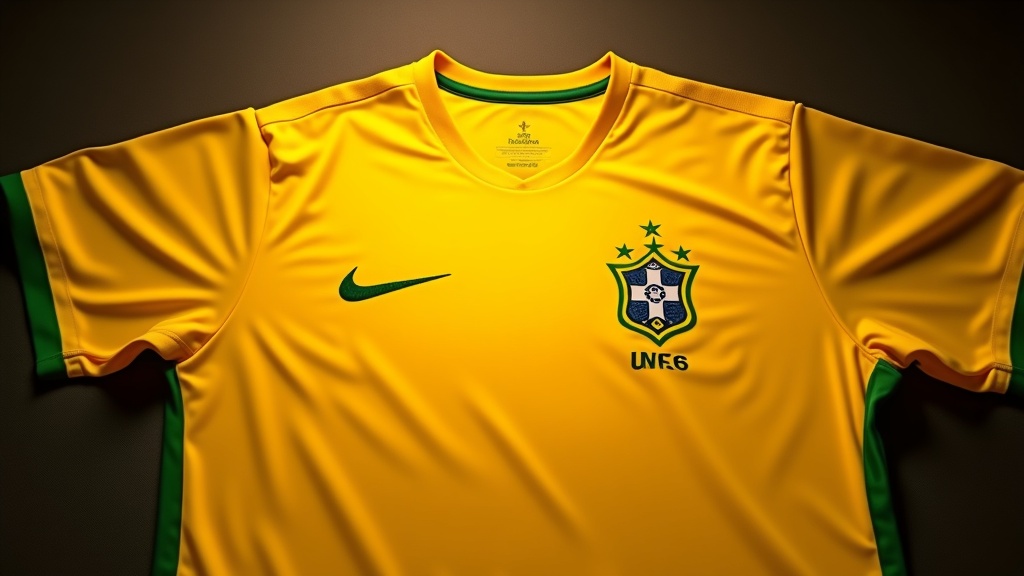
For the 2026 cycle, here are the standout points that distinguish the new kits from previous versions:
- A reworked collar treatment, closer to a stand-up collar than the traditional crew neck of recent editions.
- Micro-graphic details on the sides, inspired by Brazilian geometric patterns, recalling local craftsmanship without overloading the design.
- A deeper green on the shoulder stripes and stitching, contrasting with the bright yellow of the main body.
- Integrated Dri-FIT ADV technology: improved thermal management, ultra-lightweight fabric (around 130g for a size M), flatlock seams to minimize chafing.
The 2026 away jersey leans toward a navy blue with gold accents, a nod to the kits worn during the Copa América of the 1990s. A bold choice that should appeal to collectors and active supporters alike.
Technology at the Service of the Brazilian Game
A modern football jersey is no longer just a piece of fabric. For top-tier national teams, the supplier invests heavily in R&D. Nike talks about second skin for its latest generations of authentic jerseys: the fabric molds to the body without restricting movement, even during explosive efforts.
Practically, the authentic version of the Brazil 2026 jersey (the one worn by players on the pitch) has several technical differences from the supporter version:
- Slim athletic fit (more tailored to the shoulders and waist).
- High-performance, 100% recycled fabric made from post-consumer plastic bottles.
- Strategic ventilation under the arms and in the back to dissipate heat during outdoor matches (U.S. and Mexican stadiums in 90+°F June conditions).
- Premium finishes on the badges (embroidered, not printed).
The replica version, more accessible in price (around $103 to $125 in official stores), features the same colors and general lines but with a slightly thicker fabric and a more standard fit. For Antho, who has handled both versions over several Nike cycles, the difference is immediately noticeable to the touch: the authentic version glides on the skin, while the replica catches slightly. Both are great. The choice mainly depends on how you plan to use it.
Why This Jersey Is Already Generating Buzz Before Its Official Release
Brazil is one of three or four national federations whose jersey sells millions of copies per cycle. Demand always precedes supply. Leaks (unofficial photos published before the official drop) circulate on social media months in advance, sparking passionate debates over every detail: the exact shade of yellow, the shape of the crest, the font of the numbers on the back.
This frenzy around the Brazil 2026 World Cup jersey is also driven by the sporting context. Seleção hasn’t won the World Cup since 2002 in Japan and South Korea. Twenty-four years of drought for a nation that treats the world title as a cultural obligation. Each new jersey carries a rare symbolic weight: it’s meant to embody the reconquest.
Brazilian supporters in the diaspora, heavily present in the United States (the main host country in 2026), also fuel the commercial excitement around this kit. Owning the jersey means asserting belonging. It’s an identity statement as much as a sports purchase.
Players to Watch Wearing This Jersey
A jersey comes to life through those who wear it. For 2026, the Brazilian generation is undergoing a renewal. Vinicius Jr., Rodrygo, Endrick, Savinho: explosive profiles capable of moments of magic that go viral worldwide in seconds. They’re the ones who will make this yellow live on in memories.
Vinicius Jr. already wears the number 7 with natural authority. His spectacular playing style, speed, and dribbles make him the ideal candidate to become the face of this World Cup: what Pelé was in 1970, Romário in 1994, Ronaldo in 2002.
Endrick, born in 2006 and transferred to Real Madrid, could be one of the tournament’s revelations. Seeing a 19-year-old wear the yellow Seleção jersey in a World Cup quarterfinal or semifinal creates an image that already makes you want to hang the kit on the wall. Antho says it straight: if Endrick delivers, this jersey will sell out before the tournament ends.

Frequently Asked Questions About the New Brazil 2026 Jersey
Everything you’re wondering about the new Brazil 2026 jersey (click to expand).
When is the Brazil 2026 jersey officially released?
Nike typically schedules the official drop of national jerseys between 6 and 12 months before the tournament. For the 2026 World Cup (June-July 2026), the official reveal is expected no later than spring 2026, likely during an international friendly match window. First unofficial images often circulate months earlier via leaks on specialized social media channels.
What’s the difference between the authentic and replica Brazil 2026 jersey?
The authentic version is the jersey players wear on the pitch: athletic slim fit, ultra-lightweight Dri-FIT ADV fabric, embroidered crests, and premium finishes. It’s typically priced between $155 and $190. The replica version ($95 to $115) keeps the same colors and graphic lines with a thicker fabric, more standard fit, and slightly simplified details. For watching games or wearing the jersey around town, the replica is more than enough. For collecting or playing, the authentic version is the way to go.
Where to buy the Brazil 2026 jersey without risking fakes?
Official channels are still the safest bet: Nike.com, authorized Nike retailers, and specialized sites for official soccer jerseys like our selection of national team jerseys. Be wary of prices that are too low on unverified marketplaces — a brand new authentic jersey never goes below $95 outside of official sales. The embroidered CBF patch (not screen-printed) is the most reliable sign of authenticity on the physical product.
What price should I expect for the Brazil 2026 jersey?
Based on previous release cycles, the home replica version is available for around $95 to $115 at official retailers. The authentic player version sits between $155 and $190. Customized editions (name and number printing) add $17 to $28. Prices may vary depending on the retailer and any Nike promotional offers during the official launch.
What size should I get for the Brazil Nike jersey?
Nike national team jerseys generally run slim, especially the authentic version (athletic fit). If you normally wear a Large in everyday clothes, go for an XL in the authentic version. The replica has a more classic fit and follows standard sizes more closely. Check the Nike size guide on the product page to compare chest measurements and length.
Can I get the Brazil 2026 jersey customized with a player’s name?
Yes, most official retailers offer a personalization service (name + number printing) that meets CBF/FIFA standards. Expect to pay between $17 and $28 extra depending on the provider. Make sure the font matches the Brazilian federation’s official one for an authentic look. Popular numbers like 7 (Vinicius Jr.) or 9 (Endrick) are the most requested.
Brazil 2026 Jersey vs. Legendary Historical Editions
Brazil has produced some of the most iconic jerseys in soccer history. The yellow from 1970 (Pelé, Tostão, Rivelino) remains an absolute benchmark in all rankings of historic jerseys. The 1994 one with Romário and Bebeto, more structured, more defined in its green lines, left a mark on an entire generation of kids in the 1990s.
The 2002 jersey, less loved at the time of its release because of its very pronounced synthetic fabric, is today a sought-after collector’s item because it’s associated with Brazil’s last World Cup title. The lesson is clear: it’s the sporting context that makes a jersey legendary, not just its design.
The new Brazil 2026 jersey follows this tradition while seeking its own identity. Nike isn’t about to simply recycle past codes. The brand has to deliver something that stands on its own, recognizable thirty years from now without needing the year written on it. As Antho puts it simply: a great Brazilian jersey should make you feel the jogo bonito even before the whistle blows.
If you want to explore more iconic jerseys or compare them with our exclusive Concept Jerseys collection, you’ll find designs made for those who want to go beyond the official catalog.
For South American football fans, our selection also includes jerseys from other South American national teams: Argentina, Colombia, Uruguay—teams that will also be in the mix in 2026.
And if you’re looking to compare other standout tournament jerseys, check out our guide on 2026 World Cup jerseys for an overview of what the brands have lined up for that summer.
The shop
Find your jersey
Every Brazil jersey, with your name and number on the back if you like.
- Free shipping from $65
- 3 jerseys = 1 free
- 14-day returns