SPECIAL OFFER BUY 3 JERSEYS = GET 1 FREE

Real vs. fake Puma jersey: the ultimate guide to avoid getting scammed
You want to know if your Puma jersey is authentic or a fake? This guide covers all the specific checkpoints: logo, fabric, tag, customization, price, and secure purchase channels. Updated for 2026.
In this article9 sections
- A fake Puma jersey can look almost identical to the original
- The Puma Logo: First Checkpoint, First Trap
- Fabric, Texture, and Tech: What Fake Sellers Can’t Copy
- Inside tags: an open book if you know how to read it
- Letters and numbers: details that don’t lie
- Pricing: the two-thirds rule
- Where to Safely Buy an Authentic Puma Jersey
- Frequently Asked Questions About Real and Fake Puma Jerseys
- Red flags to memorize before any purchase
A fake Puma jersey can look almost identical to the original
You hold a jersey in your hands. The Puma logo is there, the club printing looks clean, the price was tempting. But something’s off. This feeling hits thousands of fans every year, and many end up stashing a counterfeit in their closet without ever knowing it.
By 2026, counterfeiters have reached a level of sophistication that makes visual detection much harder than in 2015. Fake Puma jerseys are flooding Asian marketplaces, small resale sites, and even social media accounts mimicking official stores. This guide breaks down the key checkpoints, fabric by fabric, stitch by stitch. Antho, our in-house expert with 20 years of collecting under his belt, has personally tested over 50 authentic vs. counterfeit pairs to build this checklist. You can trust him on this.
The Puma Logo: First Checkpoint, First Trap
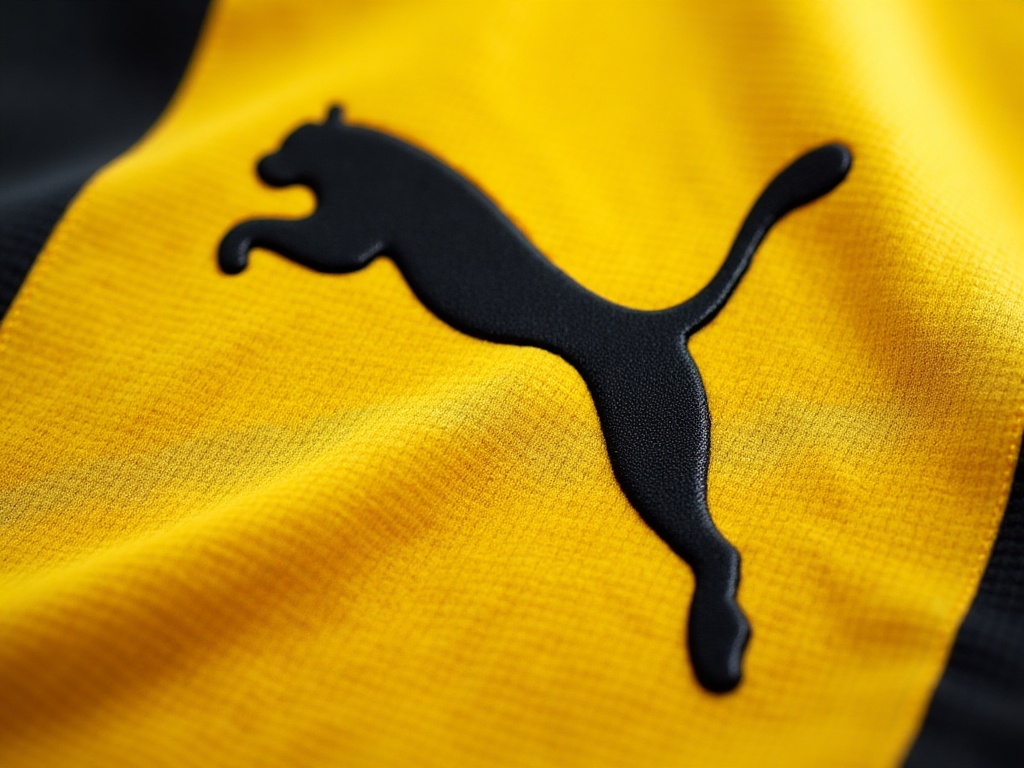
Puma’s leaping big cat isn’t that easy to reproduce faithfully. Look at the silhouette: on an authentic one, the leap is dynamic, the elongated front legs form a precise angle. On common counterfeits, the cat is either too stocky or too stretched out, sometimes almost upright. Antho recalls a test purchase in 2023 on a popular marketplace: the cat looked more like a sleeping pet than a predator mid-pounce. That sign never lies.
What You See on an Original
- Embroidery or heat transfer is sharp, with no blurring or pixel fuzz.
- Even line thickness across the entire silhouette.
- Centered and symmetrical positioning, about 0.8 to 1.2 inches above the left chest hem depending on the model.
- On embroidered versions (premium kits), the feel reveals a consistent relief, never flat like an inkjet print.
What You See on a Fake
- The cat may look “fat” or poorly proportioned.
- Printing sometimes feels sticky to the touch after washing.
- Logo color is slightly off (off-white instead of pure white, gray instead of deep black).
- The logo outlines often have a micro-blur visible under good light or with your smartphone’s magnifier.
Fabric, Texture, and Tech: What Fake Sellers Can’t Copy
The logo is the front window, but the fabric is the jersey’s soul. Puma uses proprietary materials depending on the line: dryCELL technology for sweat-wicking on player kits, and recycled polyester knits for replicas.
Take the jersey, rub it between your fingers. An authentic Puma soccer jersey has a slightly grainy texture on the inside. The outside is smooth with a micro-relief from the knit. The fake is often thicker, shinier on the surface, and the inside feels like basic discount sportswear. On authentic player kits (Authentic line), the fabric even lets air through perceptibly when you gently blow on it: the jersey’s mesh zones are real, not printed on.
30-Second Touch Tests
- The Light Test: Hold the jersey up to a window. The authentic one lets light through evenly—the fabric is thin and breathable. The fake is often opaque or unevenly thick.
- The Memory Test: Crumple a section in your fist, then release. The original snaps back to shape almost instantly. The fake holds creases for several seconds.
- The Weight Test: An authentic Puma replica jersey in size L weighs between 6.3 and 7.8 ounces depending on the version. Use a kitchen scale, not just a hand feel. Counterfeits often exceed 8.5 ounces due to denser, less refined fabric.
Inside tags: an open book if you know how to read it
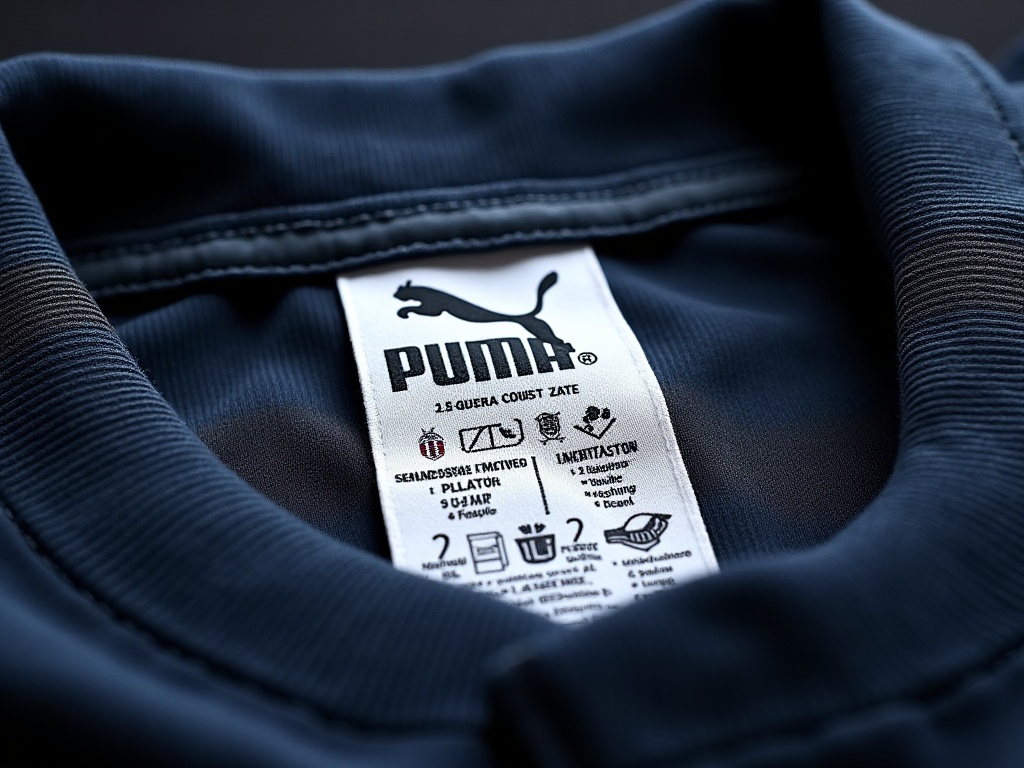
This is where fakes give themselves away most easily, because counterfeiters invest little in tags. Turn the jersey inside out, find the main tag. Antho often says the tag is the jersey’s ID card: impossible to fake perfectly when you know what to look for.
The 5 mandatory elements on an authentic Puma tag
- Puma logo at the top of the tag, clean and well-printed on a white or black background depending on the range.
- Precise textile composition: e.g., “100% recycled polyester” or “88% polyester / 12% elastane”. Fakes often list fake round percentages (e.g., “100% polyester” on a stretch fabric).
- Country of manufacture: Puma manufactures in several countries depending on the series (Cambodia, Bangladesh, Vietnam). It’s not proof on its own, but a tag without a country of origin is a red flag.
- Wash care instructions: standard ISO pictograms, legible and correctly oriented. On fakes, pictograms are sometimes upside down, blurry, or incomplete.
- Article code (SKU): a unique alphanumeric sequence. This code must match the product on the official Puma website. If the code doesn’t exist in the database, it’s a fake.
The secondary care label (often sewn on the side or bottom of the jersey) should replicate the same information in multiple languages. Counterfeits frequently omit it or glue it instead of sewing it. Gently pulling on the secondary label is often enough to feel if it’s glued (it resists differently) or sewn (slight, even elasticity).
Letters and numbers: details that don’t lie
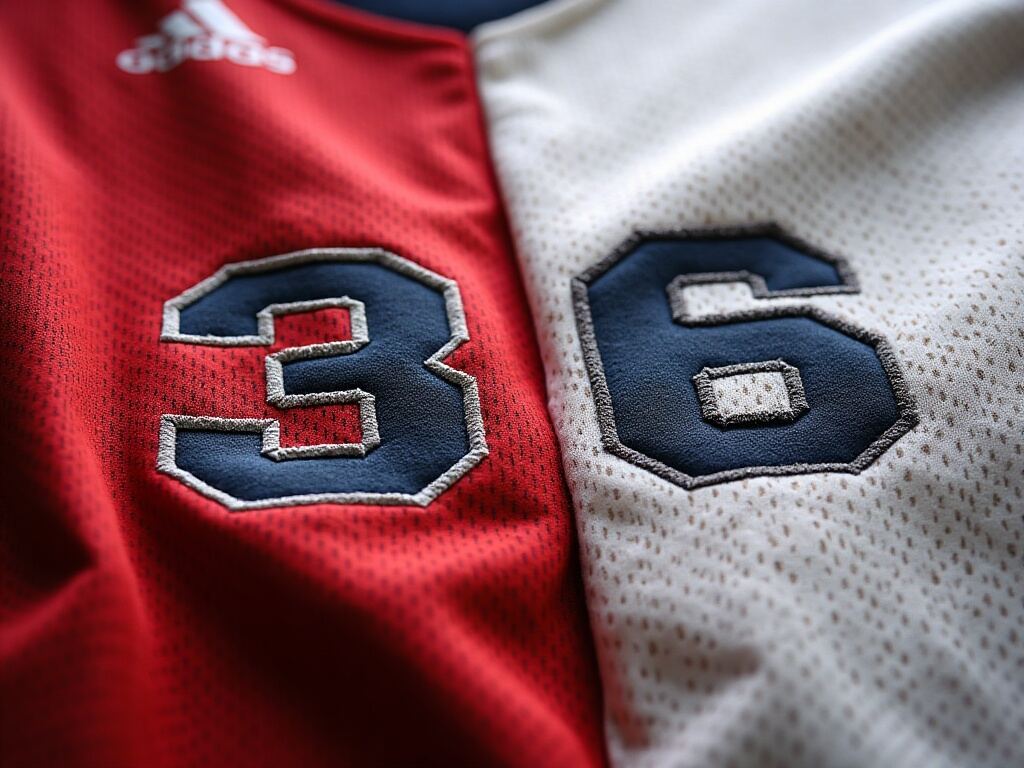
On an official club kit licensed by Puma, the lettering (name + number) follows strict typographic standards imposed by the club and approved by sports governing bodies. These standards change each season, making copies even harder. An official PSG lettering, for example, uses a proprietary font with specific kerning (spacing between letters) that counterfeiters rarely replicate accurately.
Authentic vs. counterfeit: lettering comparison
| Criterion | Authentic jersey | Common counterfeit |
|---|---|---|
| Application technique | Flock or multi-layer heat transfer | Single-layer flat print |
| Feel of letters | Clear relief, slightly raised | Flat or cracked after 1 wash |
| Alignment | Centered to the millimeter across the width | Sometimes off-center, slanted |
| Letter spacing | Kerning per club guidelines | Letters too tight or too wide |
| Durability | Lasts at least 30 washes at 30°C | Peeling after 3-5 washes |
Popular club jerseys like Borussia Dortmund or Manchester City under Puma license are among the most copied. Check out our selection of official Puma jerseys by club for reliable visual references.
Pricing: the two-thirds rule
An authentic Puma replica jersey (the retail version, not the player kit) typically costs between $91 and $125 in 2026 through official channels. The player kit (Authentic line, worn on the pitch) ranges from $148 to $182.
If a listing offers a Puma soccer jersey from a major club for $28, $34, or even $51, the likelihood of counterfeiting is very high. The two-thirds rule simply states: any price below 65% of the official retail price for a first-release product is a strong red flag.
Some fakes are sold for $57 to $63 to appear “too affordable but not suspicious.” This is the most common sales strategy on marketplaces in 2026. Also be wary of offers like “2-pack jerseys” at a steep discount or “end-of-line clearance” for current season jerseys. Antho has seen “2 for $68” packs popping up every summer, invariably filled with poor-quality counterfeits.
For second-hand purchases, the price is naturally lower. In that case, all the touch tests and label checks described above are even more important. Also find our tips for authenticating used soccer jerseys for additional verification.
Where to Safely Buy an Authentic Puma Jersey
The golden rule: buy from sources directly linked to Puma or official clubs. Our straightforward opinion: there’s no need to take any risk when reliable channels are well identified.
- puma.com: the brand’s official site, with the full range by club and season.
- Official Club Stores: Manchester City Store, BVB Fanshop, AC Milan Store. These shops have access to authentic stock and official customized kits.
- Authorized Puma Retailers: major sports chains (Dick’s Sporting Goods, Foot Locker, etc., depending on current contracts) and certified soccer specialty stores.
- Our Store: at conceptjerseys.com, all official jerseys are sourced directly from authorized distributors. Exclusive in-house concepts are made to order with material traceability.
On marketplaces like Amazon or eBay, caution is key. Even if the listing is “sold by Amazon” or a “Power Seller,” counterfeits regularly infiltrate these channels. Always check the SKU before purchase.
If you’re looking for an exclusive concept soccer jersey that major brands don’t offer, our limited-edition house designs are an authentic alternative, with transparent manufacturing specs. Our fake Puma jerseys simply don’t exist here: every concept piece is tracked from the workshop to your door.
Frequently Asked Questions About Real and Fake Puma Jerseys
Everything you’re wondering, answered by Antho (click to expand).
How to quickly check if a Puma jersey is authentic without tools?
Start with the inner label: check the SKU by typing it into puma.com. Next, test the fabric between your fingers (grained texture on the inside, quick shape recovery after crumpling). Look at the Puma logo, the cat should be dynamic and have correct proportions. These three checks cover 90% of cases and take no more than a minute.
Can a fake Puma jersey have a holographic label?
Yes. Some high-quality counterfeits (called “AAA” or “1:1” on resale forums) reproduce holograms or QR codes that redirect to fake verification sites. The only reliable QR code is one that redirects to an official puma.com page with corresponding product data. If the QR code’s URL isn’t an official puma.com domain, don’t trust it.
Are Puma jerseys sold on Asian sites always fake?
Not always, but the risk is very high. Puma has manufacturing plants in Southeast Asia, but products leaving these plants go through the brand’s official distribution channels. A site based in Asia offering prices 50 to 70% below the official retail price bypasses these channels, almost always meaning an unauthorized product.
Can a fake Puma jersey match the quality of an original?
No, not in the long run. The best 2025-2026 counterfeits look right at purchase. After 5–10 washes, the gaps become obvious: fading prints, peeling flocking, collar and sleeve distortion. Original Puma fabric retains its dryCELL properties throughout the garment’s normal lifespan.
Is buying a fake jersey illegal in the US?
Yes. Purchasing counterfeit products violates US law (15 U.S.C. § 1114, 1117, 1125). In practice, lawsuits mostly target dealers, but personal possession can lead to confiscation and, in some cases, fines. Buying authentic also avoids that legal risk.
How do you tell a Puma replica jersey from a player (Authentic) jersey?
The difference is visible and tactile. The Authentic player jersey has a lighter fabric, laser-cut (seamless) zones under the arms, and enhanced dryCELL tech. It weighs about 130–160g in size M. The replica weighs 180–220g, the fabric is slightly thicker, and seam finishes are more classic. Price directly reflects these differences: $90–125 for the replica, $150–180 for the player version.
Red flags to memorize before any purchase
A few simple reflexes are enough to filter out the vast majority of knockoff Puma jerseys before you even receive the package. Antho has condensed years of market monitoring into this short but sharp list.
- Price below 65% of the official retail price for a current-season jersey.
- Seller with no verifiable physical address or business registration.
- Blurry photos or images showing only partial details (never a full front-and-back view).
- No clear return policy or delivery time exceeding 20 days from a “US address” — sign of shipment from an Asian warehouse.
- Flocking offered at $0 on an already-flocked order: real official lettering/numbering costs an extra $11–23.
- No mention of dryCELL tech or the range (Replica, Authentic) in the product description: a real authorized seller always specifies these.
If you’re unsure about a jersey you already bought, compare it side-by-side with visual references on the Puma jerseys by club guide. A side-by-side photo often reveals differences your eye misses when examining a single piece. And if you want a creative, 100% transparent alternative regarding its manufacturing, explore our exclusive concept jerseys: unique pieces with no ambiguity about their origin.
The shop
Find your jersey
Clubs, national teams, concept and retro designs. With your name and number, if you like.
- Free shipping from $65
- 3 jerseys = 1 free
- 14-day returns