SPECIAL OFFER BUY 3 JERSEYS = GET 1 FREE

How Much Is a Signed Football Shirt Worth? Real Price Ranges Explained
Signed football shirts can sell for anywhere between $100 and $50,000 depending on who signed it, whether it was match worn, and how the signature is authenticated. This guide breaks down real price ranges by player tier, explains what a Certificate of Authenticity actually does for value, and shows you exactly what separates a shirt worth $200 from one worth $20,000.
In this article8 sections
- Player Tier: The Single Biggest Driver of Value
- Authentication: Why a COA Can Double the Price
- Match Worn vs. Retail: A Gap That Grows With History
- Condition: The Factor Sellers Underestimate
- Market Context: Where Signed Shirts Actually Sell in 2026
- Quick Reference: Signed Football Shirt Price Ranges
- Frequently Asked Questions about Signed Football Shirt Values
- Buying With Confidence: What Serious Collectors Check First
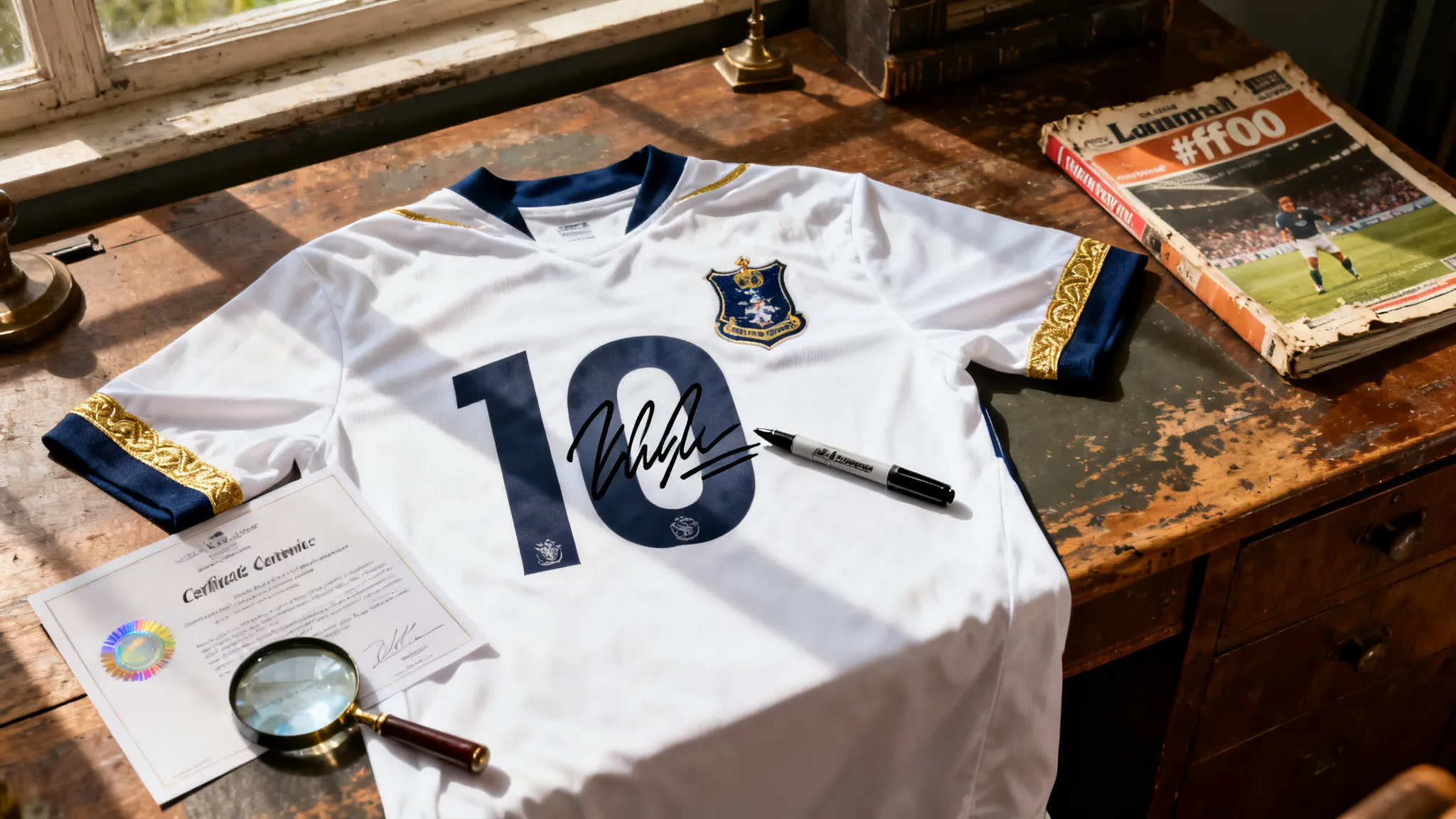
Someone hands you a shirt. Black marker signature across the number 7, slightly faded but legible. No paperwork. The seller says it’s genuine. How much is it actually worth?
That question is trickier than it looks, and the answer moves across a range that starts below $100 and can climb past $50,000 for the right player in the right context. The gap between those numbers is not random. It follows a logic you can learn, and once you understand it, you stop overpaying and start spotting value others walk past.
How much a signed football shirt is worth depends on four things working together: who signed it, what authentication backs that up, whether the shirt was actually worn in a match, and what condition the whole package is in. Pull one of those four factors out and the value often drops by half. Sometimes more.
Player Tier: The Single Biggest Driver of Value
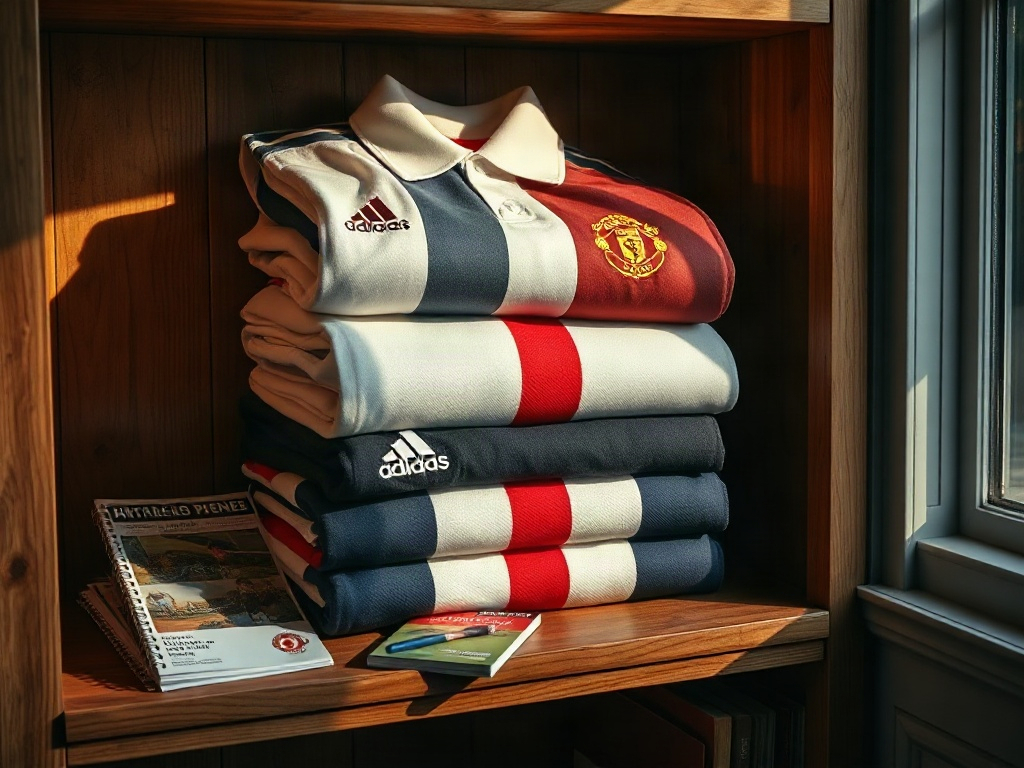
The player’s status sets the ceiling for everything else, and no other single factor moves the market more decisively: the same shirt signed by a club legend rather than a squad rotation player can be worth fifteen times as much, before condition or authentication even enter the conversation. The signature is what most buyers fixate on, and they are right to. But “famous player” is too vague a category to work with. Collectors and auction houses use tiers, and so should you.
Current Global Icons (Messi, Ronaldo)
Lionel Messi and Cristiano Ronaldo sit at the top of the signed shirt market right now. A clean retail shirt signed by either, with solid authentication, sells reliably between $1,500 and $4,000 at reputable auction houses in 2026. That is the base. Add match-worn provenance and you can push $8,000 to $15,000 without blinking. Add a historic fixture (a World Cup final, a Champions League winner) and the ceiling opens up well above $20,000.
Messi’s market got a significant boost after his 2022 World Cup win. Argentina shirts signed post-Qatar command a premium over pre-2022 items because the narrative shifted. Collectors care deeply about narrative.
Premier League Stars and Current Top 10 Players
Erling Haaland, Jude Bellingham, Harry Kane at Bayern, Bukayo Saka. For active players of this tier, signed retail shirts with COA (certificate of authenticity) land between $400 and $1,200 depending on the player’s current form, club, and how recently they signed. Signed shirts from a trophy-winning season command noticeably more than off-season pieces.
The Premier League name recognition gives English players a broader market, particularly in the US and Asia. A signed Bellingham England home shirt right now will find buyers faster than an equivalent from a less globally marketed league.
Club Legends Still Living
Thierry Henry, Steven Gerrard, Wayne Rooney, Frank Lampard. These players no longer produce new match moments, so the supply of new signatures is finite and declining. That matters. A clean, authenticated Henry Arsenal shirt sits between $600 and $2,000 depending on which era the shirt represents. A late 1990s Highbury-era shirt pushes higher than a replica bearing a modern font.
Historical Legends (Pre-2000, Deceased or Very Senior)
This is where values can reach the upper ranges of the market. A shirt signed by Diego Maradona during his playing years, authenticated properly, has sold above $30,000. Items connected to the 1970 Brazil squad, the 1966 England World Cup winners, or Pele from his Santos prime carry the weight of irreplaceable history. Supply is permanently closed. Demand from serious collectors does not fade.
Bobby Moore signed items in good condition now regularly reach $5,000 to $12,000. George Best signatures on vintage Manchester United shirts from the late 1960s sit comfortably above $8,000 at auction. These numbers are floor prices, not ceilings, for items with clean provenance.
Lower-League and Amateur Players
Be honest about this tier. A Championship or League One player’s signed shirt, without any special story attached, is worth $50 to $150 at most, and that is assuming a clean shirt and a buyer with a personal connection to the club. The sentimental value often exceeds the market value, which is fine. But know the difference before pricing something to sell.
Authentication: Why a COA Can Double the Price
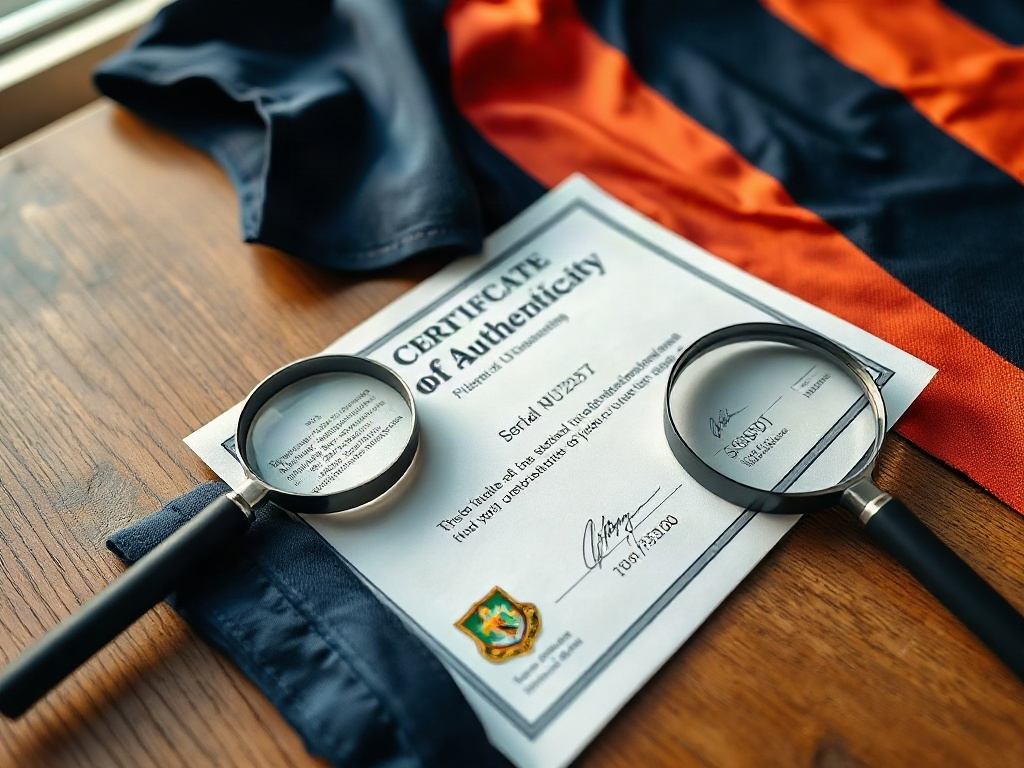
Authentication is not paperwork for its own sake: a recognized certificate of authenticity consistently doubles the realized price of a signed shirt compared to identical items sold without documentation, and for purchases above $500 it is the single most important thing you can verify before committing. For serious buyers, it is the difference between bidding and walking away. For you as a seller or collector, it is often the difference between full value and a 40-50% discount.
COA-backed signed shirts from respected authentication companies sell at a measurable premium over unsigned claims. The major names buyers trust in 2026 include PSA (Professional Sports Authenticator), Beckett Authentication Services (BAS), and JSA (James Spence Authentication). In the UK, Icons.com and Exclusive Memorabilia have established track records with club-signed items and use their own certification processes.
What Good Authentication Actually Involves
A reputable service does not just compare signatures against a database photo. They examine the ink type, the pressure patterns, the age of the marker, and cross-reference against known examples from the same period. Some use forensic ultraviolet analysis. The process can take days. That rigor is exactly what you are paying for when you buy a certified item, and it is exactly what lifts the resale value years later.
Hologram stickers without documentation are not authentication. A photo of the player holding the shirt is good supporting evidence but not standalone proof. A handwritten letter from “my uncle who was a kitman” is anecdote, not authentication. Buyers know this, and they price accordingly.
Club-Authenticated vs. Third-Party Authenticated
Many Premier League clubs now sell signed merchandise directly through their official channels, often with their own COA. These carry strong market credibility because the chain of custody is clean from the moment the player signed. Arsenal Direct, Liverpool FC’s official store, and Manchester United’s Official Merchandise all operate this way. Items sourced through club channels typically sit at the higher end of the retail-price-to-resale-value ratio.
Match Worn vs. Retail: A Gap That Grows With History
A match-worn shirt is not simply a used shirt: it is a garment documented as having been on the player’s body during a specific fixture, and that traceable provenance typically adds 100 to 300 percent to the value of an equivalent retail-signed edition for active players. This distinction matters enormously and is often misunderstood by casual buyers.
For current players, the premium for match worn over a retail signed shirt runs roughly 100-300%. A signed retail Erling Haaland City shirt might sell for $600. The same shirt, confirmed match worn from a Champions League fixture with photo evidence, hits $2,000 to $3,500 without much resistance from buyers.
For historical legends, the multiplier is more extreme. Match-worn items from the 1960s through 1980s did not come with today’s documentation standards, so the ones that do have solid provenance become genuinely rare. That rarity pushes prices far above signed retail equivalents. A signed Pele retail shirt in excellent condition might reach $4,000. A confirmed match-worn Pele shirt from a Santos fixture in the 1960s, properly documented, would be a different conversation entirely at auction.
How to Verify Match-Worn Status
Look for these signals: photographic or broadcast evidence of the player wearing that specific shirt in a named fixture; kit swap documents (common practice since the 1990s, where both players sign an exchange slip); club kit room inventory references; and, for older items, letters from club staff or managers with verifiable identities. Auction houses like Christie’s Sports Memorabilia and Goldin Auctions demand this level of documentation for high-value lots and reject items that cannot meet it.
Condition: The Factor Sellers Underestimate
Condition consistently accounts for a 25 to 40 percent swing in realized price, even when the player and authentication are identical: a mint-condition shirt commands full market value while a washed or sun-faded equivalent can drop below 60 percent of that figure. Buyers are acquiring something they may display for years or sell again later. They want something that will hold up.
The shirt around the signature matters more than most people expect. Fading, staining, pilling on the fabric surface, yellowing on white areas, broken embroidery threads on the crest: each of these cuts value.
Standard condition grading for signed shirts follows a rough scale:
- Mint/Near Mint: No visible wear, vibrant colors, clean embroidery, signature sharp and unfaded. Full market value applies.
- Very Good: Minor shelf wear or light fabric softening from one or two wears, signature still clear. 85-95% of full value.
- Good: Visible washing or wear marks, faded signature edges, light pilling. 60-75% of full value. This is where many estate-sale finds land.
- Fair/Poor: Heavy wear, staining, cracked or smudged signature. Only collectible if the player or fixture is sufficiently rare to override condition concerns. Serious discount applies.
Framing affects condition significantly. UV-filtering museum-quality framing extends the life of the signature by decades. Direct sunlight is the fastest way to destroy a marker signature’s value. If you are storing a signed shirt rather than displaying it, acid-free tissue inside a sealed, dark container is better than a drawer where humidity fluctuates.
Market Context: Where Signed Shirts Actually Sell in 2026
The signed football shirt market in 2026 is bigger and more liquid than it was a decade ago, with specialist auction houses, official club channels, and online marketplaces each serving a different price bracket and buyer type. Understanding which channel fits your item is as important as knowing what the shirt is worth in the first place.
Auction Houses
For shirts worth $2,000 and above, specialist auction houses get the best prices because they reach serious collectors globally. Goldin Auctions in the US, Christie’s Sports Memorabilia in the UK, and Sotheby’s for elite-tier pieces are the main venues. Buyer’s premiums of 15-25% apply, so factor that into any cost calculation.
Specialist Memorabilia Dealers
Companies like Icons.com, Exclusive Memorabilia (UK), and Pro Direct Soccer carry large inventories of authenticated signed items and sell direct-to-consumer at fixed prices. These are good benchmarks for what authenticated retail-signed items trade at currently. If you are selling privately, their listed prices minus 20-30% is a realistic target for quick sales.
eBay and Marketplaces
eBay remains the largest secondary market for signed shirts under $500. The challenge is that unauthenticated items and outright fakes circulate here. Buyers on eBay who know their market apply heavy discounts for items without COAs. Sellers with clean authentication consistently achieve 40-60% higher realized prices than equivalent unauthenticated listings for the same player.
If you collect from kits beyond the mass-market mainstream, the range of signed and limited-edition football shirts available through specialist retailers gives you a useful price anchor for comparable items. Knowing what authenticated shirts sell for at retail helps you evaluate whether a private seller’s asking price makes sense.
Quick Reference: Signed Football Shirt Price Ranges
| Player Category | Retail Signed, COA | Match Worn, COA |
|---|---|---|
| Messi / Ronaldo | $1,500 – $4,000 | $8,000 – $20,000+ |
| Current Top 10 (Bellingham, Haaland, Kane) | $400 – $1,200 | $1,500 – $5,000 |
| Living Club Legends (Henry, Gerrard, Rooney) | $600 – $2,000 | $2,500 – $8,000 |
| Historical Legends (Best, Moore, Pele era) | $3,000 – $12,000 | $10,000 – $50,000+ |
| Championship / lower tier players | $50 – $150 | $100 – $400 |
These ranges reflect typical auction and specialist dealer realized prices in 2026. Items with exceptional narrative context (a World Cup-winning goal, a final appearance shirt, a farewell game) can exceed the upper end of any bracket.
If you are building a collection rather than making single purchases, knowing the difference between signed match-worn kits and standard retail editions is what separates a collection that holds value from one that only has personal meaning. Both are valid. But they are different things, and the market prices them accordingly. Browse the full range of football shirts to get a feel for current designs and edition types that inform what collectors are tracking right now.
Frequently Asked Questions about Signed Football Shirt Values
Does a photo with the player increase the value of a signed shirt?
A photo with the player adds modest supporting value, roughly 5 to 10 percent, by making private buyers more comfortable, but it does not replace a formal COA from a recognized authentication service. A photo proves proximity, not that the signature on the shirt is genuine. Combine both and you strengthen the provenance significantly.
How do I tell if a signed shirt is fake?
Compare the signature against multiple verified examples from the same period using official auction house archives or authentication service databases, and watch for signatures that look too clean or too consistent. Human signatures vary slightly each time. Ink that sits perfectly on top of fabric fibers without any absorption pattern can indicate a printed or traced fake. When in doubt, pay the $50-$150 for a third-party authentication assessment before purchasing anything above $300.
Does washing a signed shirt destroy its value?
Washing a signed shirt almost always destroys the signature: even a gentle cold wash blurs and spreads most marker inks, and machine washing eliminates them entirely. If a signed shirt has been washed, the signature is likely degraded or gone, and no amount of framing recovers that. Signed shirts should never be washed. Display them or store them clean but unwashed from the moment of signing.
Are squad-signed shirts worth much?
A full squad-signed shirt from a title-winning Premier League season, with a recognized COA, can reach $800 to $3,000 depending on how many marquee names appear in that squad. The value depends heavily on who was in the first team that year. A squad sheet with two or three superstars is worth considerably more than one with rotating squad players and a single star.
What is the best way to store a signed football shirt to preserve its value?
Fold it in acid-free tissue paper, place it flat in an acid-free archival box, and keep the box in a cool (60-65°F / 15-18°C), dark, dry environment away from attics and garages where temperature swings damage both fabric and ink. If displaying, use UV-filtering museum glass and keep direct sunlight off the frame. These steps preserve both the fabric integrity and the marker signature for decades.
Can a signed shirt gain value over time?
Signed shirts from players who go on to win major trophies, retire, or pass away almost always appreciate, sometimes sharply, because new authenticated signatures become unavailable while collector demand holds steady or grows. A Messi shirt signed in 2015 is worth more today than it was then. A Bobby Moore signature keeps rising because supply is permanently closed. The key is clean authentication from the start: shirts with no documentation do not benefit from the same upward trend, because buyers cannot be certain what they own.
Buying With Confidence: What Serious Collectors Check First
The collectors who get this right consistently ask four questions before any purchase above $200: who authenticated this, can I see the documentation, what is the condition of the signature, and is there a story that can be verified rather than assumed? They are not the ones who know the most famous players. They are the ones who understand provenance before price.
That approach works whether you are adding a Haaland shirt to a modern Premier League collection or hunting a 1970s First Division piece. The fabric does not lie, and neither does solid paperwork. If a deal feels too clean and the documentation is thin, it usually is. Signed shirts with real value survive scrutiny. The ones that fall apart under a few questions tell you everything you need to know before you spend a penny.
For those just getting into collecting, starting with club-authenticated pieces from official channels, or exploring the range of officially certified football shirts and collector editions, gives you a clean baseline for understanding what proper documentation looks like before you start navigating private markets. ⚽
The shop
Find your jersey
Clubs, national teams, concept and retro designs. With your name and number, if you like.
- Free shipping from $65
- 3 jerseys = 1 free
- 14-day returns