SPECIAL OFFER BUY 3 JERSEYS = GET 1 FREE

How to Hand Wash a Football Jersey Without Ruining It
A practical, step-by-step guide to hand washing football jerseys, from signed shirts and vintage kits to delicate player editions. Covers water temperature, detergent choice, rinsing, drying, and what to avoid at all costs.
In this article7 sections
The shirt is sitting in your hands. Maybe it has a signature along the number on the back, or it came out of a box that hadn’t been opened since 1998. Either way, the machine isn’t going near it. Hand washing a football jersey is the single safest method for anything with embroidery, heat-pressed names, vintage fabric, or sentimental value you can’t put a price on.
This isn’t complicated. But there are a few specific things that will protect the shirt and a few that will destroy it, and most people get at least one of them wrong.
Why Hand Washing Beats the Machine for Fragile Kits
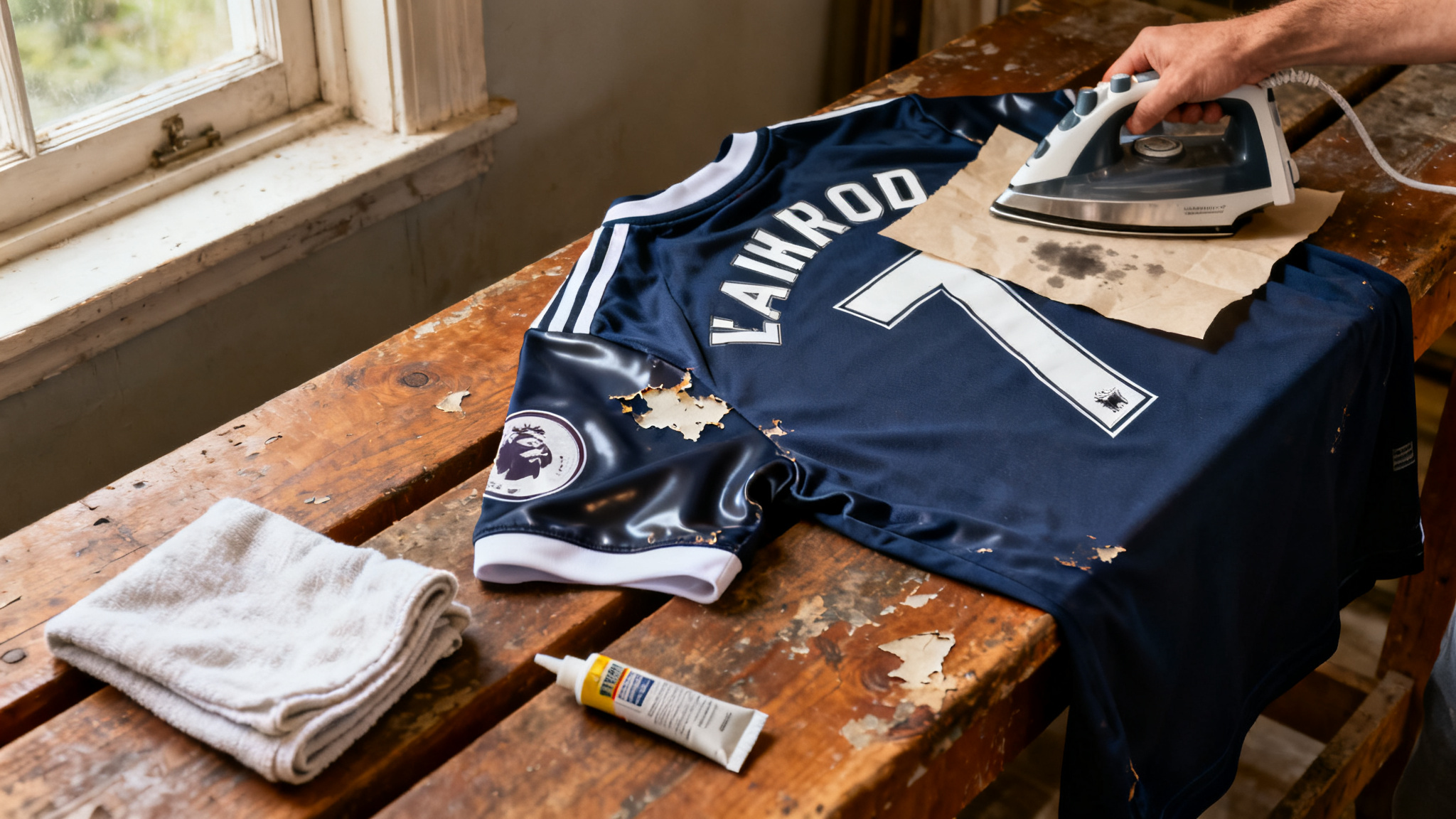
Modern washing machines, even on delicate cycles, create mechanical friction. The drum rotates, fabrics rub against each other, and the spin cycle wrings the shirt at forces that can crack heat-pressed lettering, distort embroidered crests, and stress stitched seams on older cuts.
For match-worn jerseys, signed shirts, or anything older than 2005, that friction compounds every wash. A vintage cotton-polyester blend from the early 1990s has already lost some of its fiber integrity. One aggressive spin cycle is often all it takes to start delaminating a sponsor logo or pulling the threads around a badge.
- Heat-pressed names and numbers are bonded to the fabric with adhesive layers that break down under heat and agitation.
- Embroidered crests sit raised from the fabric surface; drum friction catches those raised threads and pulls them.
- Vintage cotton weaves shrink unevenly when exposed to the wrong temperature, changing the cut permanently.
- Signed shirts carry ink that is not waterproof to extended soaking; short, controlled hand washing is far safer.
Hand washing gives you control over every variable: temperature, pressure, duration, and rinse. That control is why collectors and serious kit buyers always wash by hand first.
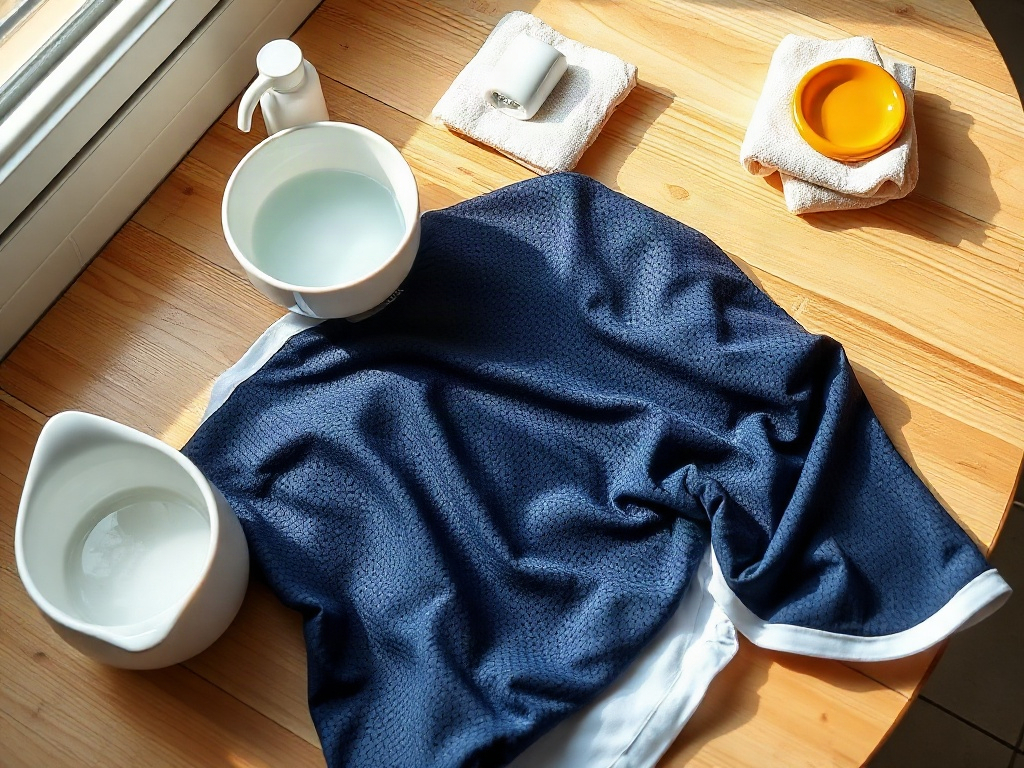
What You Need Before You Start
Keep it simple. A few specific items make all the difference.
The right basin
Use a clean sink or a plastic washing bowl. Avoid anything with residual cleaning product inside it; even small traces of bleach or bathroom cleaner can affect certain fabric dyes. Rinse the basin thoroughly with cold water first.
Water temperature: cooler than you think
Lukewarm is the target. Specifically, aim for around 86°F (30°C). Above 104°F (40°C), polyester fabric starts to change dimensionally, and adhesive layers under heat-pressed badges begin to soften and lift. Cold water is fine for a quick refresh. Lukewarm works for a proper clean. Hot water, at any point, is off the table entirely.
Detergent: gentle and pH-neutral
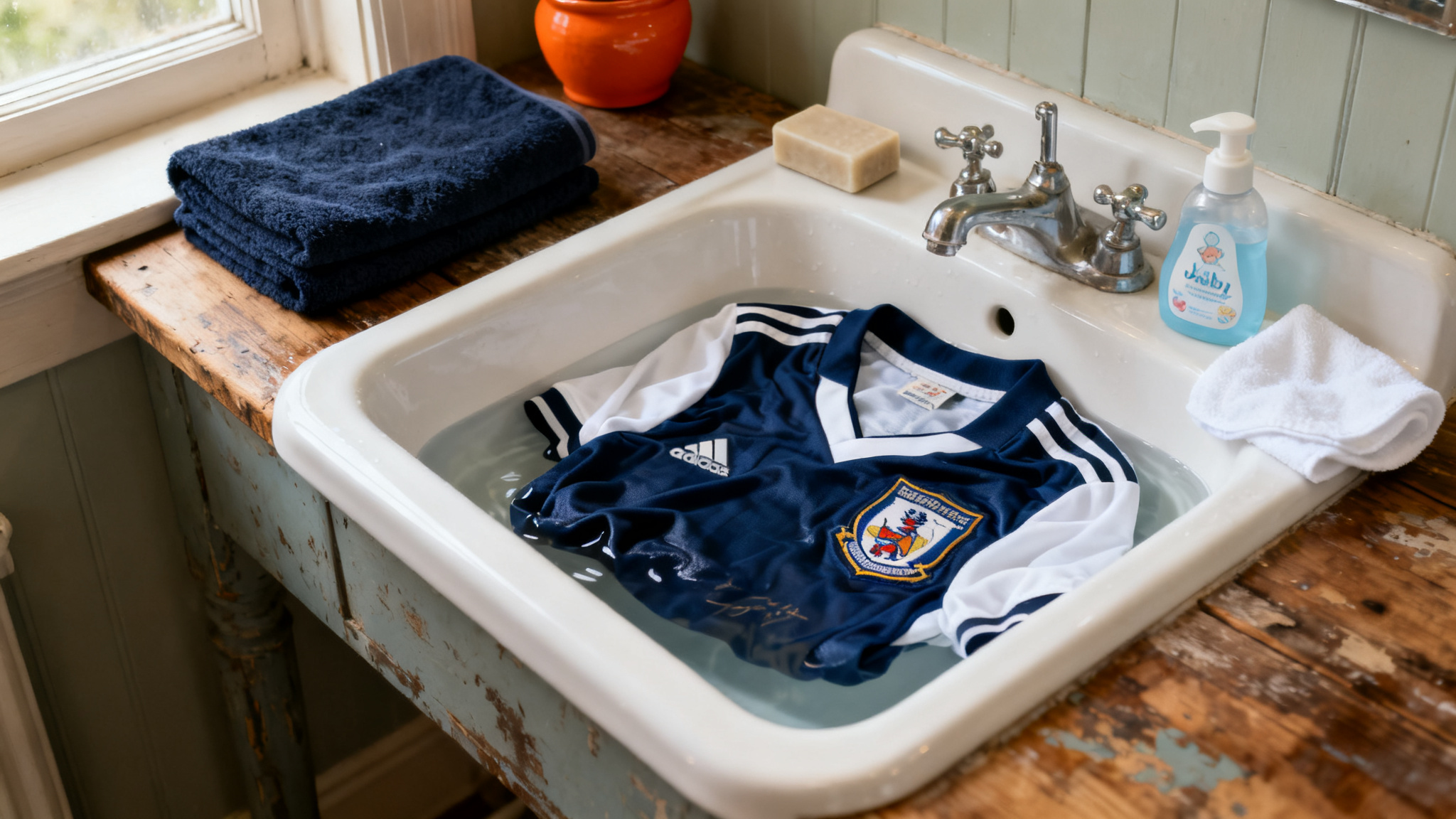
Baby laundry detergent is the collector’s standard choice. It’s pH-neutral, contains no optical brighteners (which alter color over time), and produces minimal foam. A capful in a full basin is enough. Avoid sport detergents with enzymes designed to break down protein-based stains; those enzymes work on fabric fibers as well, which is the last thing you want on a shirt you’re trying to preserve.
Wool-wash liquids designed for delicates work equally well. What you want to avoid: standard biological detergents, fabric softeners (they coat synthetic fibers and reduce moisture-wicking performance), and anything with added bleach agents.
The 7-Step Hand Washing Process
Follow these in order. Each step has a reason.
- Turn the jersey inside out. This protects the crest, any printing, and heat-pressed elements from direct contact with the basin surface and your hands during washing.
- Fill the basin with lukewarm water (around 86°F / 30°C). Test with the inside of your wrist. It should feel neutral, not warm.
- Add a capful of baby detergent or pH-neutral delicate wash. Swirl it gently into the water before adding the shirt. Don’t squeeze detergent directly onto the fabric.
- Submerge the shirt and press it gently under the water. Use slow pressing movements, working from collar to hem. Don’t rub, scrub, or twist. Let the soapy water do the work by passing through the fabric under gentle pressure.
- Soak for 5 to 10 minutes. No longer. Extended soaking doesn’t make the shirt cleaner; it increases the risk of color bleeding and ink movement on signed areas.
- Rinse twice with clean lukewarm water. Drain the basin, refill with fresh water at the same temperature, and press the shirt through it again. Repeat once more. Detergent residue left in the fabric can attract dirt faster and stiffen the weave over time.
- Remove excess water without wringing. Lift the shirt out of the water and press it gently against the side of the basin. Then lay it flat on a clean dry towel and roll the towel up around the shirt, pressing as you go. This pulls water into the towel without twisting or stressing the fabric.
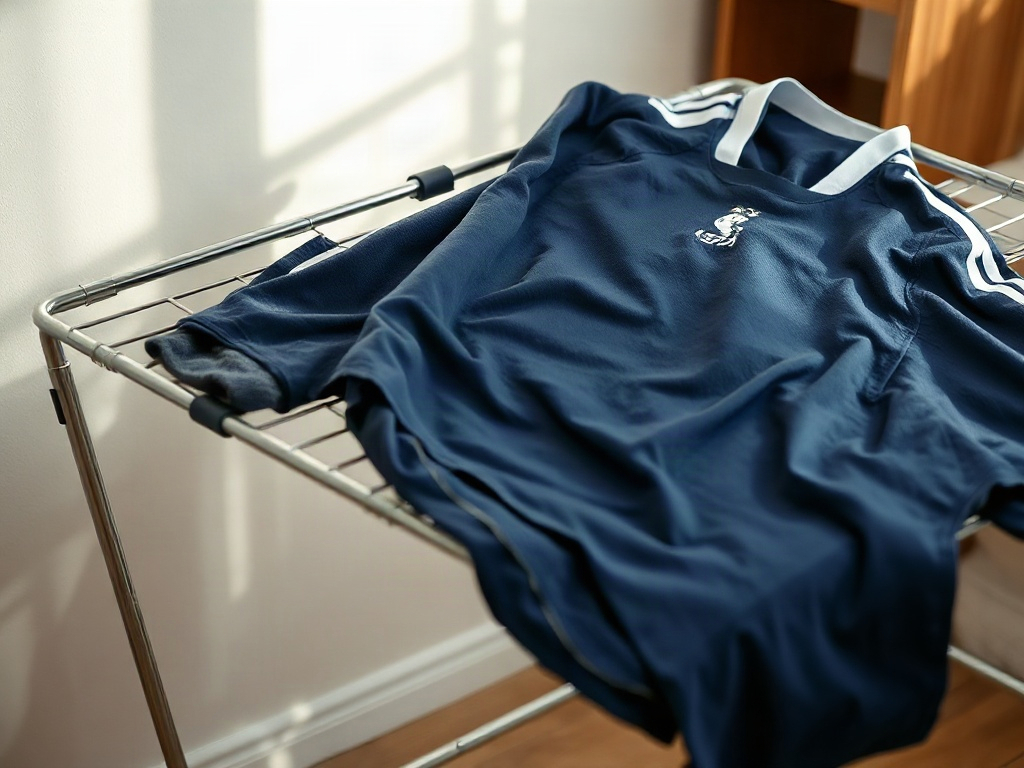
Drying a Hand-Washed Football Jersey Correctly
How you dry the shirt matters as much as how you wash it. This is where a lot of people lose ground they gained by washing carefully.
Always dry flat or hanging straight
Lay the jersey flat on a clean dry surface, ideally a drying rack with mesh support. Alternatively, hang it by the collar loop on a padded hanger or a smooth plastic one. Avoid wire hangers; they create pressure points at the shoulders that leave permanent marks in wet fabric.
Never hang a wet jersey by one corner. The weight of the wet fabric will stretch the opposite side asymmetrically. A shirt that went into the wash with a clean straight hem can come out lopsided.
Dry away from direct heat and sunlight
Radiators, tumble dryers, and direct sunlight all create uneven heating. That uneven heat causes polyester weaves to contract in patches, which produces a subtle but permanent warp in the fabric. UV exposure also fades color, especially on older dye formulas used before the late 1990s that weren’t built to resist prolonged light exposure.
Room temperature, indoors, with good air circulation. That’s the drying environment you want. Most jerseys are dry within 6 to 12 hours this way.
Check the crest and any print before storing
Once fully dry, turn the shirt right side out and run your fingers over the crest and any printed text. If any edges feel slightly lifted or tacky, leave the shirt flat for another hour before folding. Storing a jersey while a heat-pressed element is still slightly warm from the air causes those edges to re-bond at a slightly lifted angle, which eventually peels.
Specific Cases: Signed Shirts, Vintage Kits, Player Editions
General hand-washing applies to all football jerseys, but certain categories need extra thought.
Signed football jerseys
If the signature is the main thing you’re protecting, consider whether the shirt actually needs washing at all. Light surface dust can be removed with a soft dry cloth. Odor from storage can be addressed by hanging the shirt in fresh air for 24 hours. Hand washing a signed football jersey should only happen when there’s visible soiling that can’t be spot-treated.
When it does need washing: keep detergent away from the signed area entirely by protecting that zone with a folded dry cloth held loosely in place during the soak. Work the rest of the shirt.
Vintage kits from the 1980s and 1990s
These are usually 50-50 or 100% cotton, heavier than modern kits, and prone to shrinking. Use cool water, not lukewarm. Fill the basin to 68°F (20°C) max. Soaking time drops to 3-5 minutes. Cotton absorbs water heavily; press excess water out more carefully before rolling in the towel, and give the shirt more drying time (up to 18 hours flat).
Vintage shirts also tend to have sewn-on crests rather than heat-pressed ones. Those are more structurally secure during washing, but the embroidery thread itself can bleed color on the first wash if the shirt was stored in a way that never set the dye properly. Test a corner of the shirt in plain cool water before committing to a full wash.
If you’re looking to add a carefully preserved piece to your collection, our vintage football jerseys are sourced and checked for fabric integrity before they ship.
Featured
Vintage Collection Kits
1980s and 1990s cotton-blend originals. Every shirt checked for seam integrity, badge security, and dye stability before listing.
Browse Vintage Kits
| Care step | Vintage (pre-2000) | Modern (post-2010) |
|---|---|---|
| Water temperature | Max 68°F / 20°C (cool) | Max 86°F / 30°C (lukewarm) |
| Soak time | 3-5 minutes | 5-10 minutes |
| Crest type | Sewn-on or embroidered | Heat-pressed or sublimated |
| Shrink risk | High (cotton weave) | Low (polyester dominant) |
| Drying time (flat) | Up to 18 hours | 6-12 hours |
| Color bleed test needed? | Yes, always first wash | Usually not, but test if unsure |
Player edition and match-worn jerseys
Match-worn shirts often carry grass and mud staining. Pre-treat those areas by dabbing (not scrubbing) with a diluted solution of baby detergent and cool water 30 minutes before the wash. Let it sit. Then proceed with the full hand wash process. Scrubbing a dried mud stain directly drives the particles deeper into the weave; pre-treating lifts them first.
Player editions built for actual match use often feature heavier-grade embroidery on the badge and tighter heat-transfer nameset bonding than retail versions. That doesn’t make them indestructible; it means the fabric tolerates slightly firmer pressing during the wash, but the same temperature and detergent rules still apply. Our player edition kits page shows exactly which construction details to look for when you’re buying.
Player Grade
Player Edition Kits
Match-spec construction: tighter Aeroready weave, heavier badge embroidery, and authentic nameset bonding. Built to perform, built to last when cared for correctly.
See Player Editions
FAQ
Keeping Your Jersey in Good Shape Between Washes
Storage is half the equation. A well-washed jersey stored poorly will degrade faster than one washed less carefully but kept well.
Fold display jerseys acid-free, or hang them on padded hangers with the weight distributed across both shoulders. Keep them away from direct light and humidity. Plastic bags trap moisture and promote mildew; breathable cotton storage bags are far better for long-term preservation. For signed shirts in particular, UV-protective display frames are a real investment if the piece matters to you.
The fabric doesn’t lie, as I’ve said more times than I can count. How you treat a jersey between matches tells you exactly how long it’s going to hold its shape, its color, and its story. Wash it right, dry it right, store it right. That shirt will outlast the careers of everyone whose names are printed on the back.
If you’re building a collection worth protecting, take a look at our vintage football jerseys and our player edition kits, where every shirt that arrives goes through the same care process before it reaches you. For more on keeping your kit in match-day condition, the full jersey care guide covers storage, display, and long-term preservation in detail.
The shop
Find your jersey
Clubs, national teams, concept and retro designs. With your name and number, if you like.
- Free shipping from $65
- 3 jerseys = 1 free
- 14-day returns