SPECIAL OFFER BUY 3 JERSEYS = GET 1 FREE

Why Premier League Clubs Don’t Have Stars on Their Shirts
Premier League clubs skip the stars that Italian and German sides wear so proudly. Here's the history behind that choice, what England uses instead, and what a star would actually mean for a club like Liverpool or Manchester United.

In this article8 sections
- The Star System: What It Actually Means in European Football
- England’s Different Path: Champion Badges Instead of Stars
- What Happens When English Clubs Try Anyway
- What a Star Would Mean for Liverpool or Manchester United
- How Concept Jersey Designs Handle the Star Question
- The Badge as the Only Record: England’s Quiet Choice
- FAQ
- Reading the Shirt Without the Stars
Pick up a Serie A jersey from the 1980s. Hold it to the light. Above the badge, you’ll find small gold stars stitched into the fabric, each one counting a decade of league titles. Now pick up an Arsenal or Manchester City shirt from the same era. Nothing above the crest. Just the badge, clean and unadorned.
That gap between the two traditions tells you more about football culture than almost any other detail on a shirt. I noticed it the first time I handled a late-80s Juventus home shirt at a kit fair in Turin, and I’ve been chasing the question ever since. And for anyone who’s spent time with Premier League clubs’ shirts and the absence of stars on them, the question comes quickly: why doesn’t England do this?
The Star System: What It Actually Means in European Football
Stars on football shirts are not decorative. In the leagues that use them, each star represents a fixed number of top-flight titles. The system is a visual shorthand for a club’s domestic history, stitched permanently into the kit.
In Italy, the rules are specific. The stella (star) above a club’s badge is earned after ten Serie A titles. Juventus wore their second star from 1984, earned after their 20th Scudetto. Inter Milan got their second in 2021 after winning their 19th, then 20th title in the 2020-21 season. The star count is not the number of titles directly; it’s a multiplier: one star for every ten championships. The Italian Football Federation (FIGC) governs this formally, and clubs must meet the threshold to display the badge.
Germany uses a slightly different model. The Bundesliga’s Meisterstern (champion star) system awards stars based on title counts: one star for three titles, two stars for five, three stars for ten, four stars for twenty. Bayern Munich, with over 30 Bundesliga titles as of 2026, wear four gold stars above their crest. Borussia Dortmund wear two. The system is regulated by the Deutsche Fußball Liga (DFL) and printed clearly in the competition rules. It’s not optional, and clubs can’t simply add or remove stars at will.
Spain uses a hybrid approach. Real Madrid and Barcelona have both worn stars, though La Liga’s framework is less rigidly codified than Germany’s and clubs have more flexibility in how they represent their history on the shirt.
Here’s a quick reference across all three continental systems so you can see the pattern at a glance:
| League / Federation | Star threshold | Max stars | Club examples (2026) |
|---|---|---|---|
| Serie A (FIGC, Italy) | 1 star per 10 titles | Uncapped | Juventus 3 stars (30+ titles); Inter 2 stars; Milan 2 stars |
| Bundesliga (DFL, Germany) | 3=1, 5=2, 10=3, 20=4 | 4 stars | Bayern Munich 4 stars; Dortmund 2 stars; Werder Bremen 1 star |
| La Liga (RFEF, Spain) | Flexible, club discretion | Varies | Real Madrid, Barcelona (worn stars historically) |
| Premier League (FA/PL, England) | No star system | 0 | Champion badge worn one season only; no permanent stars |
England’s Different Path: Champion Badges Instead of Stars
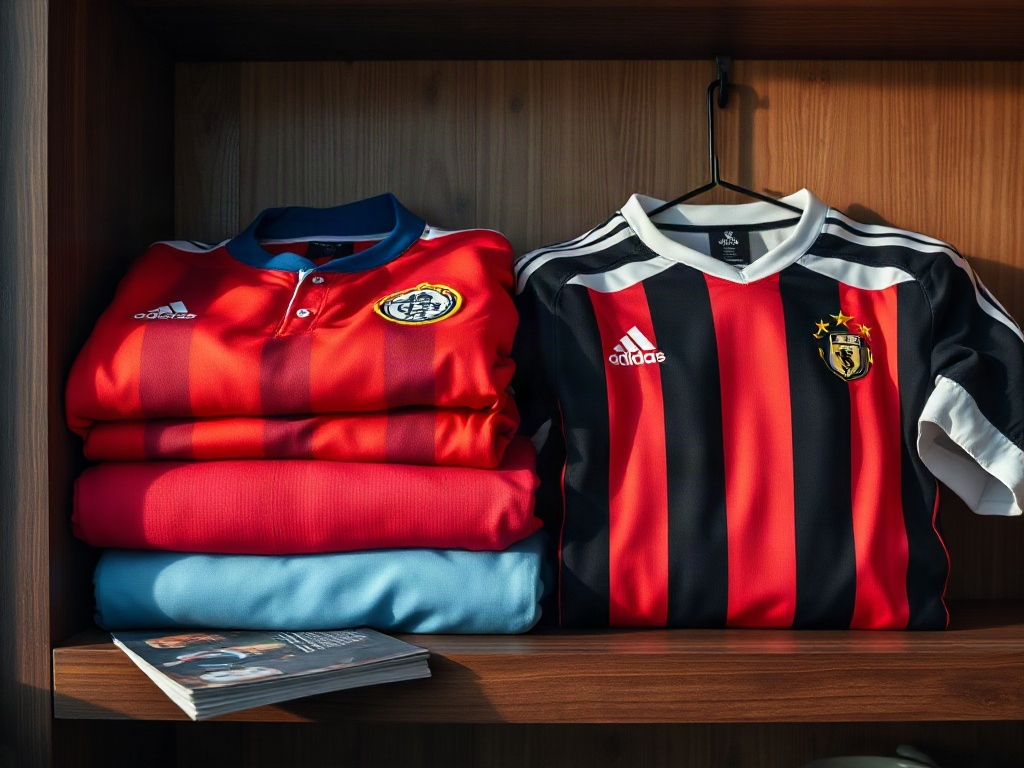
The Premier League has never adopted a star system. Not officially, not informally. There is no rule, no governing document, no tradition that maps a number of titles to a star on the shirt. The Football Association and the Premier League itself have never introduced one.
What English clubs use instead is the Premier League champion badge. When a club wins the title, they receive permission to wear the gold Premier League lion crest on their sleeves or shirt for the following season. It’s temporary. One season. Then it comes off. There’s no accumulation, no permanent record of past titles on the fabric itself.
Before the Premier League era (which began in 1992), English top-flight football was the First Division. Clubs like Liverpool, who won eighteen First Division titles before the new competition began, never built a visual vocabulary around counting those wins on the shirt. The culture simply didn’t develop in the same direction.
This isn’t accidental. English football has a long tradition of treating the shirt badge as a heraldic symbol, fixed and unchanging. The crest is about identity, about place and club DNA. Adding numerals or stars to that space was never part of the cultural conversation the way it was in Italy or Germany.
What Happens When English Clubs Try Anyway
There have been moments where English clubs gestured toward the idea. Manchester United wore a small gold star above their crest briefly during the early 2000s, a reference to their status as a European champion, not a domestic title count. It was removed quickly and never formally institutionalized. The Premier League has no record of mandating or restricting it; the club made the call themselves.
The difference matters. In Italy and Germany, the star system is regulatory. Clubs don’t choose it; the governing body enforces it. In England, there is no such rule, so the decision sits with each club’s commercial and brand team. And historically, Premier League clubs have not pushed for it. The badge itself carries the weight.
Some supporters have argued online for years that Manchester United (with 20 league titles as of 2013, their last before a sustained drought), Liverpool, or Arsenal should introduce stars unilaterally. But without a governing framework, it would look improvised. A star on a shirt only means something when everyone agrees on what it represents.
What a Star Would Mean for Liverpool or Manchester United
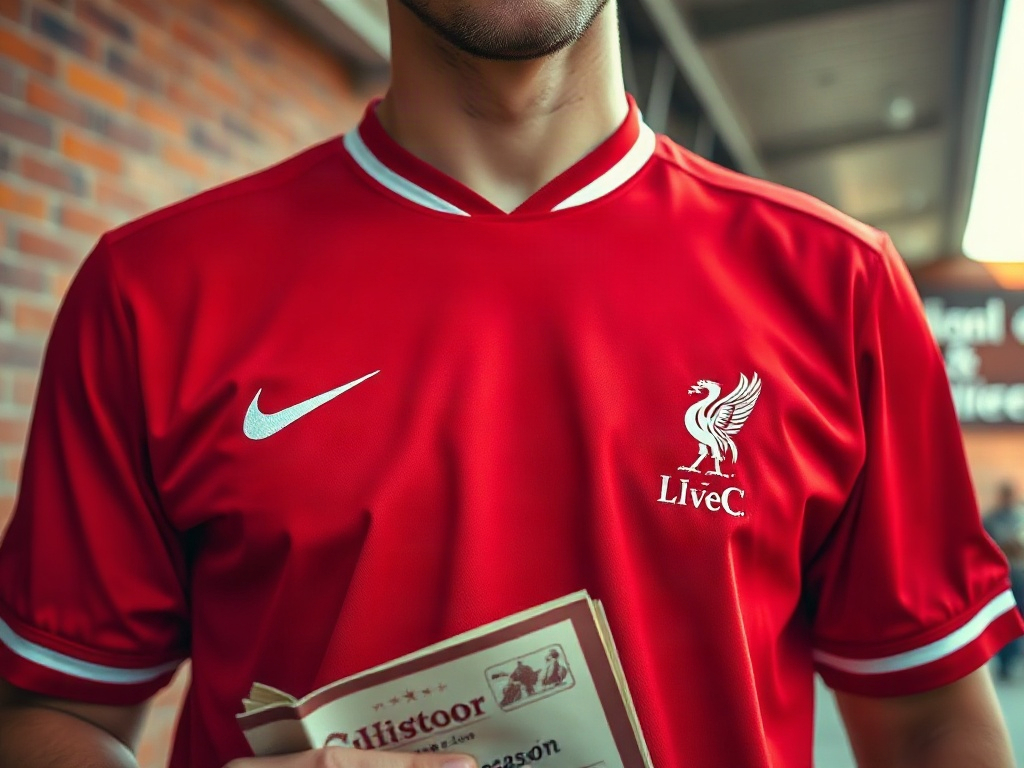
Run the hypotheticals and the numbers get interesting. If the Premier League adopted the Italian standard (one star per ten titles), Manchester United’s 20 league championships would earn them two stars. Liverpool’s 19 titles would earn one. Arsenal’s 13 would earn one. Manchester City, despite six Premier League titles, would have none yet under that system, since they have fewer than ten total top-flight wins.
Under the German model, the picture shifts. Manchester United’s 20 titles would give them four stars. Liverpool’s 19 would also reach four stars (the 20-title threshold in the German system). Arsenal’s 13 would mean three. City’s total top-flight count, depending on whether pre-Premier League titles count, hovers around ten, which would put them at three stars.
The choice of framework completely changes which clubs look historically dominant on the shirt. That’s partly why no universal English system has ever gained traction: there’s no clean political consensus on how to count, whether pre-Premier League titles qualify, and which threshold feels right for English football’s specific history. It’s a genuinely complicated question.
For collectors, this gap in the visual language means English football jerseys carry their history differently than continental equivalents. You read a Liverpool shirt through the Liver bird crest, the specific red, the details of a given era’s collar cut. Not through stars. The story is there; it just requires knowing where to look.
How Concept Jersey Designs Handle the Star Question
The concept jersey design community has been wrestling with this for years. When designers create hypothetical Premier League kits with star systems applied, the results are striking. A concept Manchester United shirt with two gold stars above the Theatre of Dreams badge looks immediately recognizable to anyone familiar with Serie A aesthetics. It reads as a club with weight.
Some of the most thoughtful work on this problem comes from designers who are genuinely embedded in kit culture rather than just chasing render views. Emre Demir, a Turkish-based freelance kit designer whose work has circulated widely on Football Kit Community and Reddit’s r/KitDesign, published a full English Premier League “star audit” series in 2024 applying each continental system to all twenty clubs. His Manchester City renders under the German model (three stars, given City’s pre-league titles) sparked a long thread about whether the Maine Road years should count. The debate ran to over 400 comments. That’s the kind of conversation these designs unlock when they’re grounded in real historical logic.
Closer to home, the Footy Headlines forum regularly surfaces concept work by UK-based designers reimagining classic English kits. The Arsenal concepts that apply a single Italian-style star above the cannon badge are consistently among the most-shared pieces on the site, not because fans want the rule changed, but because the design makes you think about what that clean space is actually saying.
But the best concept designers working in this space are careful about this. Stars without an agreed framework look like decoration, not history. The most compelling concept kits treat the star question as a cultural statement: if this club existed in the Italian or German system, here is what they would wear. The “if” is always explicit. That honesty is what separates serious design work from wishful branding.
The same logic applies to Premier League concept kits that reimagine existing clubs. When a designer keeps the badge clean and lets the kit’s other details carry the club’s identity, that choice is as deliberate as any color decision. Removing the star is a cultural statement, not an omission.
The Badge as the Only Record: England’s Quiet Choice
There’s something honest about the English approach, even if it frustrates fans who want the shirt to shout its history. The badge is constant. It doesn’t expand with victories or shrink with relegations. It holds the club’s name and symbol in fixed form, generation after generation. That constancy has its own meaning.
Italian and German fans would argue their stars make history visible, accessible, readable on sight. And they’re right; a Juventus shirt tells you immediately that this club has spent over a century accumulating title after title. An English fan would counter that you know who Liverpool are before you look at the shirt. The history precedes the garment.
Both arguments are genuinely defensible. They reflect different philosophies about what a football shirt is for: a document of achievements, or a symbol of identity. England chose identity. Italy and Germany chose documentation. Neither is wrong, and that difference is exactly why kit culture across these countries produces such distinct visual languages.
For anyone building a serious jersey collection that spans leagues, understanding this gap is fundamental. It changes how you read a shirt. A Bayern Munich home kit with four gold stars above the crest is a different kind of object than a Manchester City home kit with none, even if City have more recent domestic dominance. The fabric doesn’t lie; it reflects the tradition it was sewn inside.
If you want to see both traditions side by side on your shelf, a mid-90s Premier League vintage English kit next to a same-era Serie A piece is one of the most instructive comparisons you can make as a collector. The construction details, the badge placement, the weight of the crest embroidery: everything reflects a different idea of what the shirt is supposed to say. Browse our vintage Premier League collection and check the product notes for badge and sleeve detail descriptions; we list embroidery type and patch condition on every listing.
FAQ
Has any Premier League club ever officially worn stars for league titles?
No Premier League club has officially adopted a star-for-titles system for domestic league championships. Manchester United briefly wore a single gold star in the early 2000s, but this referenced European achievement and was not part of any regulated domestic tradition. No English governing body has introduced a formal star framework.
How many stars would Liverpool have if England used the Italian system?
Under the Italian system (one star per ten titles), Liverpool’s 19 top-flight titles would earn them one star. Under the German system (four stars for 20 or more titles), Liverpool would be close to but not yet at four stars. The answer depends heavily on which counting framework and whether pre-Premier League First Division titles count.
Why does Italy use stars on football shirts but England doesn’t?
The Italian star system (called the stella) is a formal regulation set by the FIGC, Italy’s football federation. It developed organically as part of Serie A’s visual culture and became official policy. English football never developed an equivalent tradition, and neither the FA nor the Premier League has introduced one. The cultures simply diverged on this point.
What does the gold badge on Premier League champion shirts mean?
When a club wins the Premier League, they’re permitted to wear a special gold version of the Premier League lion badge on their shirt for the following season only. It’s a single-season honor, not a permanent record. After that season, the badge returns to the standard version. It marks the defending champion, not accumulated history.
Could the Premier League introduce a star system in the future?
It’s technically possible but has never been seriously discussed in public by either the Premier League or the FA. Any such system would require agreement on whether pre-1992 First Division titles count, which threshold triggers a star, and how to handle clubs that have been relegated and promoted across different eras. The political complexity has kept it off the table. Most observers expect English clubs to continue using the existing badge-only approach.
Which English club would benefit most from a star system?
Manchester United, with 20 top-flight titles, would benefit most under either the Italian or German model: two stars under the Italian framework, four under the German one. Liverpool (19 titles) and Arsenal (13 titles) would also gain visible recognition. The clubs that would gain least are the newer Premier League powers, since their title counts still fall below most continental thresholds.
Reading the Shirt Without the Stars
The next time you hold an English football jersey, look at what’s not there. That clean space above the badge isn’t a gap in tradition. It’s a deliberate expression of one: the idea that the club’s identity speaks for itself, without a tally. Continental kits encode their history in gold thread. English football jerseys carry it in different ways, in the weight of the crest, the particular shade of red or blue, the cut of a collar that thousands of supporters have worn to the match season after season.
Neither approach is superior. Both are worth understanding, especially if you’re building a collection that crosses borders. The shirt tells you where it comes from, and how that place keeps score. That’s always the real story.
The shop
Find your jersey
Every England jersey, with your name and number on the back if you like.
- Free shipping from $65
- 3 jerseys = 1 free
- 14-day returns