SPECIAL OFFER BUY 3 JERSEYS = GET 1 FREE

What the Star on the England Shirt Means: The 1966 Story
The single star above the Three Lions badge on every England shirt stands for one thing: the 1966 World Cup. Here is the full story behind that gold emblem, from the Wembley final to the debate over a second star.
In this article8 sections
- One Star, One Moment That Changed English Football
- What Happened at Wembley on July 30, 1966
- When the Star First Appeared on the England Shirt
- How England’s Star Compares to Other Nations
- The Debate Over a Second Star
- What the Star Means on a Collector’s Shelf
- Frequently Asked Questions about the Star on the England Shirt
- The Gold Thread That Holds Sixty Years of Waiting
One Star, One Moment That Changed English Football
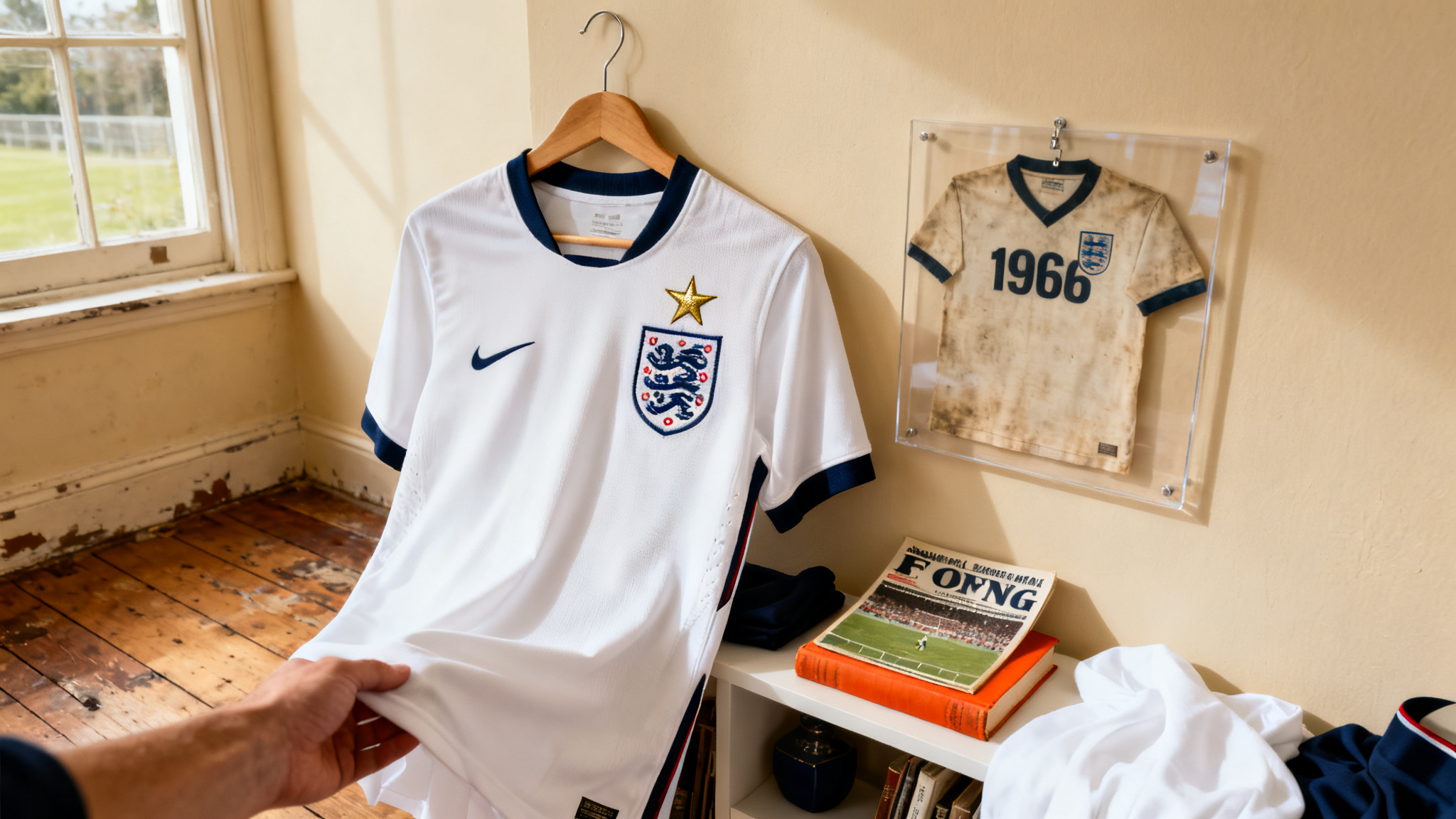
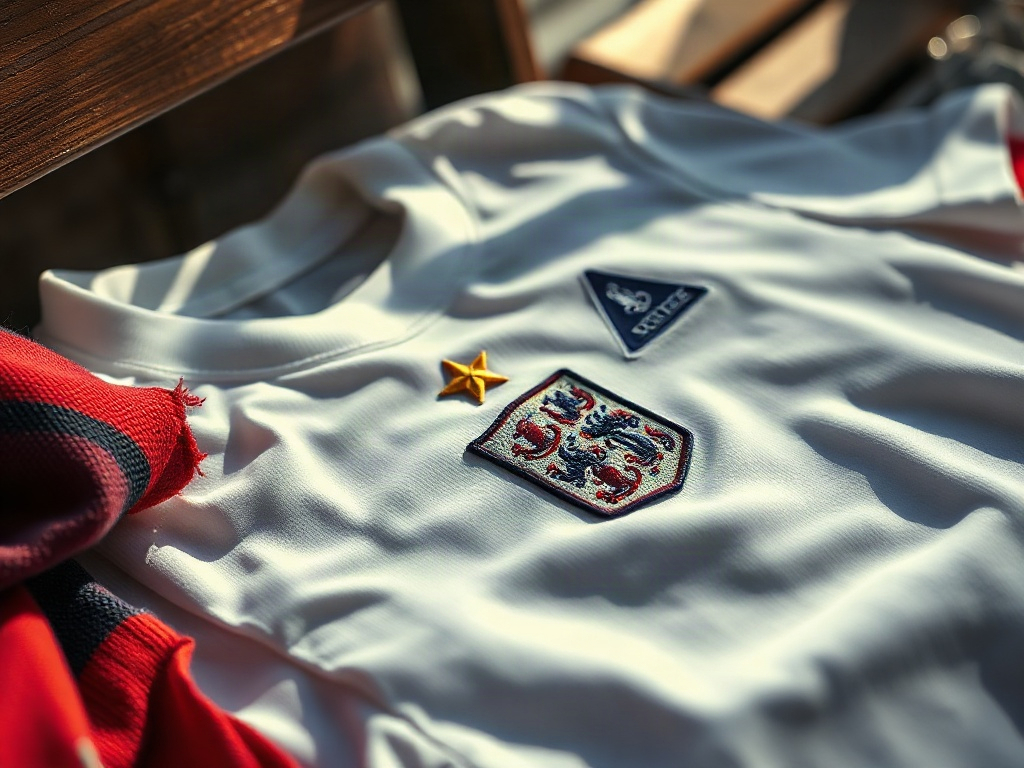
Pick up any England shirt and look above the Three Lions crest. You will see a single gold star sitting quietly at the top of the badge. No fanfare, no inscription. Just one small emblem that carries the entire weight of English football history.
What does the star on the England shirt mean? It marks England’s solitary World Cup title, won on home soil at Wembley Stadium on July 30, 1966. That is the only occasion the national team has lifted a major international trophy. The star is not decoration. It is a record.
For collectors and supporters hunting an authentic England jersey, understanding that star changes how the shirt feels to wear. It is not a stylistic choice by a kit designer. It is a permanent entry in the historical ledger, stitched directly onto the fabric.
What Happened at Wembley on July 30, 1966
England faced West Germany in the final. The match finished 2-2 after 90 minutes, sending it into extra time. That is where Geoff Hurst wrote his name into football folklore.
Hurst already had a goal to his name. In the 101st minute, his shot struck the underside of the crossbar and bounced down. The linesman Tofiq Bakhramov signalled goal. West Germany disputed it immediately, and the debate has never fully died. But the referee gave it, and England led 3-2.
With seconds remaining, Hurst collected a long ball and drove it into the top corner. 4-2. The only hat-trick ever scored in a World Cup final. Commentary from BBC’s Kenneth Wolstenholme captured it perfectly: “Some people are on the pitch. They think it’s all over. It is now.” That line has been quoted more times than almost any other in British sporting history.
Bobby Moore lifted the Jules Rimet Trophy. Hurst scored three. Bobby Charlton and his brother Jack were both in the side. Manager Alf Ramsey had built a system, the 4-4-2 “wingless wonders” shape, specifically for that tournament. England won every knockout game, conceding only three goals across six matches.
When the Star First Appeared on the England Shirt
England did not immediately start wearing a star after 1966. The practice of adding stars above a national crest to mark World Cup wins was already common in South America, but English football culture took longer to adopt it formally.
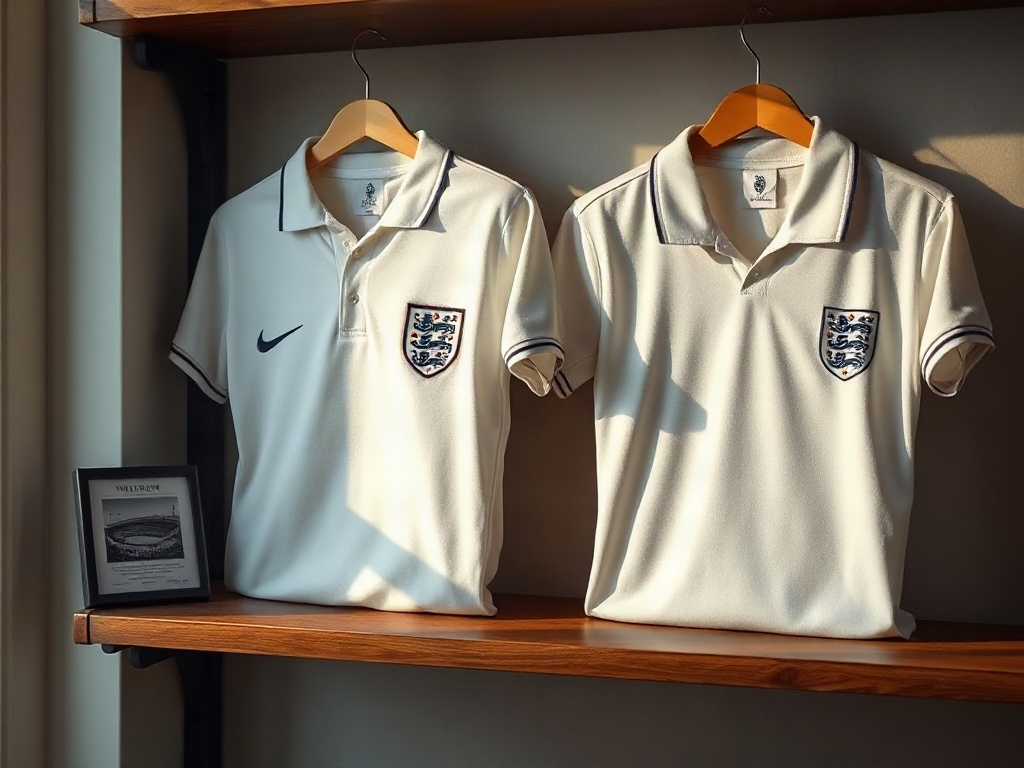
The star became a consistent feature on the official England shirt during the 1990s. The Football Association confirmed its use as the kit became more commercially standardized through that decade. By the time Umbro and then Nike took over manufacturing deals, the single gold star had settled into a fixed position above the Three Lions.
On modern England kits, the star sits centered above the badge, rendered in gold thread. The placement is clean and deliberate. The single star above the England badge is now as much a part of the shirt’s identity as the crest itself. Remove it and the shirt looks incomplete to any supporter who grew up watching England play.
If you are looking at retro England shirts from the 1970s or 1980s, you will notice the star is absent on many period-accurate reproductions. That is historically correct. The star was not yet a fixture in those decades, even though the title was already 10 or 20 years old by then.
How England’s Star Compares to Other Nations
Stars above national crests follow a broadly consistent logic across international football. Each star represents one World Cup title. The table below shows where every major star-wearing nation stands today, and where England sits in that company.
| Nation | Stars | World Cup wins | Most recent |
|---|---|---|---|
| 🇧🇷 Brazil | ⭐⭐⭐⭐⭐ 5 | 1958, 1962, 1970, 1994, 2002 | 2002 |
| 🇩🇪 Germany | ⭐⭐⭐⭐ 4 | 1954, 1974, 1990, 2014 | 2014 |
| 🇮🇹 Italy | ⭐⭐⭐⭐ 4 | 1934, 1938, 1982, 2006 | 2006 |
| 🇦🇷 Argentina | ⭐⭐⭐ 3 | 1978, 1986, 2022 | 2022 |
| 🇫🇷 France | ⭐⭐ 2 | 1998, 2018 | 2018 |
| 🏴 England | ⭐ 1 | 1966 | 1966 |
England sit with one. That fact is not lost on supporters or players. In press conferences over the years, England managers have been asked about the gap. The star is both a source of pride and a quiet reminder of what has not been repeated in six decades.
What makes England’s situation unusual is that no other nation with a single star has spent as long at the top of club football’s global influence while remaining stuck on one international title. The Premier League is the most-watched football league on earth. English clubs have won the Champions League multiple times across different eras. But the national team’s star count has not moved since Harold Wilson was Prime Minister.
The Debate Over a Second Star
Every time England reaches a major final, the conversation starts. Social media floods with mockups. Fans design concept shirts with two stars. Kit manufacturers get asked about it in interviews.
The rules are clear. FIFA guidelines state that national teams may display one gold star above their badge for each World Cup won. UEFA has similar conventions for the European Championship, though the implementation varies by federation. England would need to win either the World Cup or, depending on FA policy, the Euros to revisit the star count.
England reached the final of Euro 2020 (played in 2021) and lost to Italy on penalties at Wembley. They reached the final of Euro 2024 and lost to Spain in Berlin. Both times, the discussion around a second star briefly became almost real. The shirt designs were already in circulation in concept form before the final whistle put the conversation back on pause.
The question of whether a European Championship win would earn a second star on the England shirt depends on FA policy, not FIFA rules. Several national federations choose to mark only World Cup wins with stars. The FA has not publicly committed to adding a star for a Euros title, but the pressure to do so would be enormous if England won. The Euro 2024 England home kit carried that single star into Berlin, same as always.
What the Star Means on a Collector’s Shelf
For anyone who collects England shirts across eras, the star on the England shirt tells a very specific story about where English football has been and what it is still chasing. Shirts from the 1960s carry no star. Shirts from the mid-1990s onward carry one. The count has not changed in 30 years of modern kit releases.
That gives the star a particular weight for collectors. It is not a moving target. You know exactly what you are holding when the shirt has one star: a piece of kit from a national team that won once, in 1966, and has been trying to repeat it every summer since.
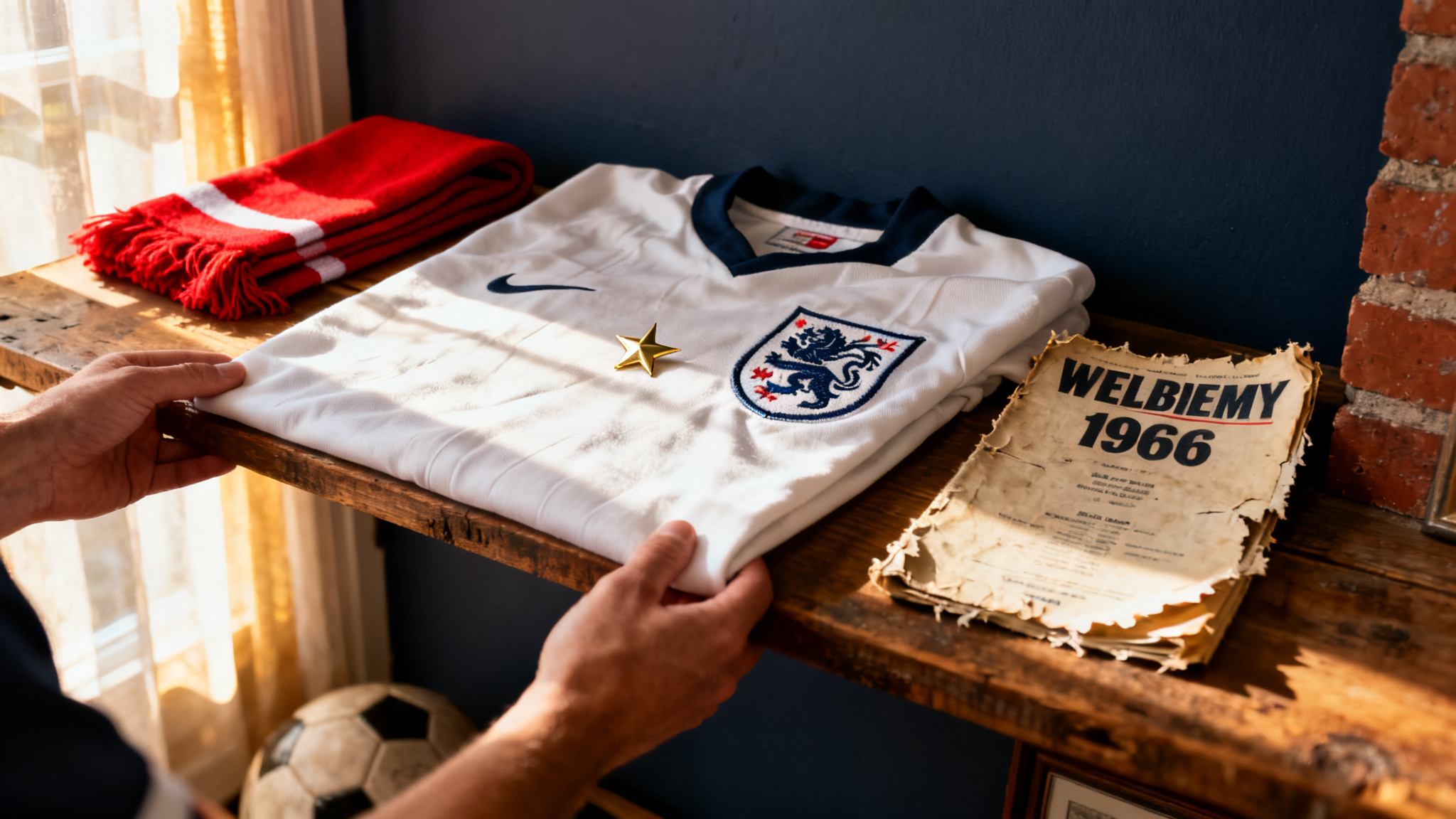
The fabric doesn’t lie about history, and neither does a star. When I hold up an England shirt to the window on a Thursday morning before the shop opens, that gold embroidery above the badge is the first thing the light catches. It is a small detail that grounds the whole garment in something real. Not hype, not marketing. A fact.
For supporters who want to wear that history, our range of England shirts covers the key eras, each with the correct badge and star placement for the period. The detail matters as much as the colorway.
Frequently Asked Questions about the Star on the England Shirt
The Gold Thread That Holds Sixty Years of Waiting
One star. Sixty years. No other number in English football carries as much meaning or as much frustration packed into a single embroidered shape.
The shirt you buy today, the one you wear to Wembley or watch from your sofa, carries that same mark. It connects you directly to Bobby Moore lifting the Jules Rimet Trophy, to Geoff Hurst’s shot bouncing down off the bar, to a summer afternoon in London when English football reached the top of the world and has been trying to get back there ever since.
That is what the star on the England shirt means. Not a branding decision. Not a design flourish. A single fact, stitched in gold, sitting above the Three Lions and waiting for company. ⚽
The shop
Find your jersey
Every England jersey, with your name and number on the back if you like.
- Free shipping from $65
- 3 jerseys = 1 free
- 14-day returns