SPECIAL OFFER BUY 3 JERSEYS = GET 1 FREE

Real vs. fake Adidas jersey: how to tell the difference
Adidas soccer jerseys: how to tell an original from a fake in 2026? Fabric, tags, customization, patches, price... all the clues to never get fooled again.
In this article7 sections
- The Counterfeit Adidas Soccer Jersey Market Is Exploding
- The first red flags that never lie
- Fabric and fit: what your hands feel
- Printing and badges: the details that make the difference
- Where to buy an authentic Adidas jersey with confidence
- Frequently asked questions about real vs. fake Adidas jerseys
- Why choosing authentic is always the right call
The Counterfeit Adidas Soccer Jersey Market Is Exploding
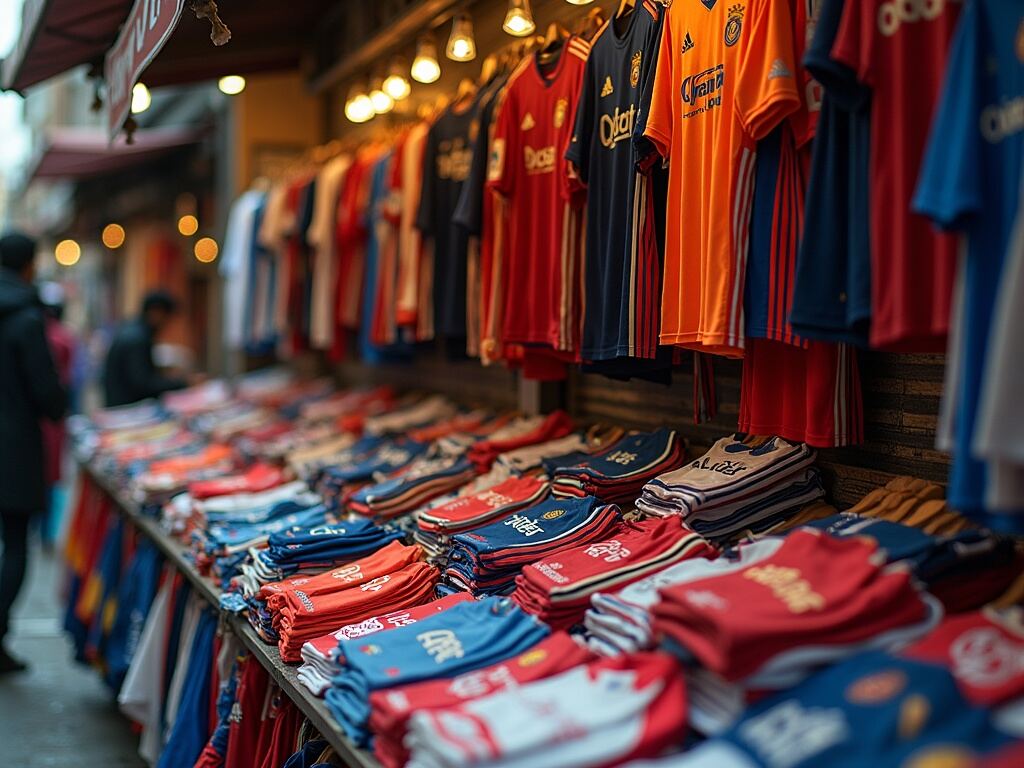
Every season, millions of Adidas soccer jerseys flood the global market. Among them, a growing share are unofficial replicas sold at unbeatable prices on dubious platforms or in some street shops. In 2026, counterfeiters have leveled up: stitching is cleaner, logos more precise, packaging nearly identical to the real thing.
Still, differences remain. They’re sometimes tiny, but they’re there. Knowing how to spot them protects your investment, supports your club, and ensures you’re wearing a technical garment truly built for the game.
The first red flags that never lie
Even before you touch the fabric, several visual clues can raise doubts about a jersey presented as authentic.
The price tag
An authentic Adidas jersey, in the player version (aka “Authentic”), runs between $137 and $182 depending on the club and edition. The official “replica” version goes for around $91 to $114. Any jersey listed at $23, $28, or $34 is automatically a counterfeit. This isn’t an opinion—it’s an economic reality that materials, manufacturing tech, and licensing make unavoidable.
Packaging and labels
An official Adidas jersey comes with a neatly finished interior label. You’ll find the Adidas logo, product reference, fabric composition, country of manufacture, and, for club jerseys, the license badge. On a fake, these labels often have spelling errors, slightly different typography, or missing info. The label’s stitching itself might be uneven.
QR codes and holograms
For several seasons now, Adidas has included a QR code or license hologram on official jerseys for major clubs (Real Madrid, Bayern Munich, Arsenal, Manchester United…). On fakes, this code either doesn’t exist or links to a dead or generic page.
Fabric and fit: what your hands feel
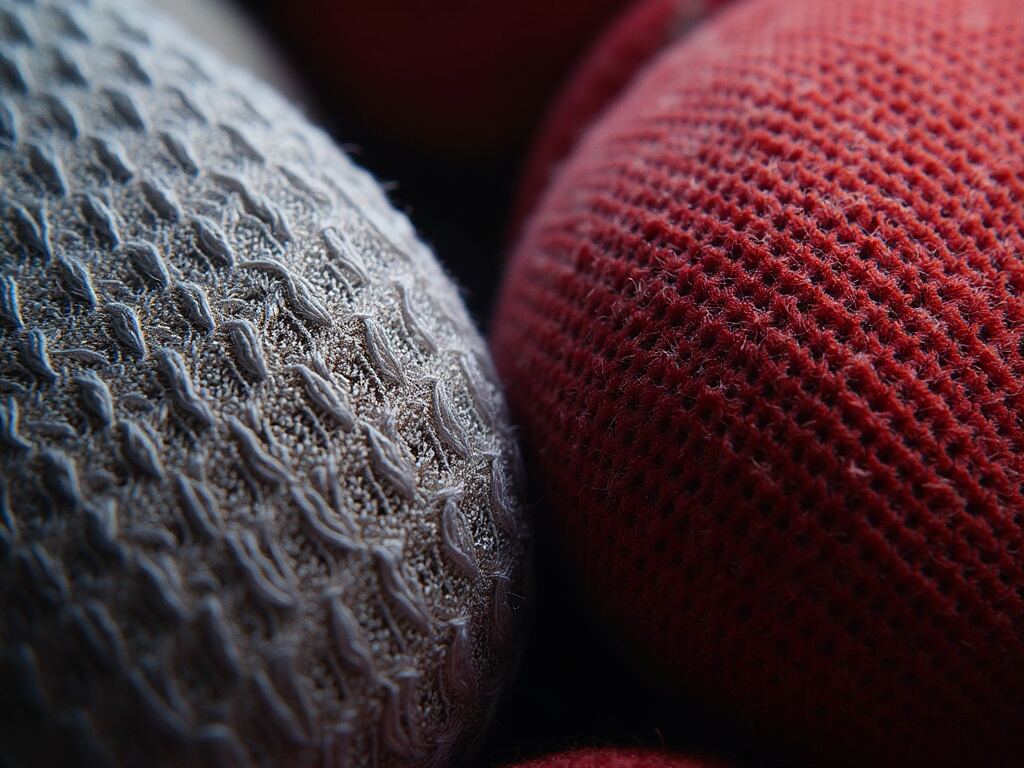
Touch is one of the most reliable tests to tell a real from a fake. Adidas uses proprietary, highly technical materials for its official jerseys.
HEAT.RDY and AEROREADY tech
Adidas jerseys for top clubs feature HEAT.RDY or AEROREADY fabrics, designed to wick sweat and maintain stable body temperature. These materials are lightweight, almost sheer in spots, with a very fine, even weave. A fake typically has thicker, heavier fabric with a noticeably different feel—either too smooth and plasticky or too rough.
Fit and stitching
Official jerseys are cut with precision. Stitching is flat, even, with no loose threads. The fit follows Adidas’ ergonomic standards for movement comfort. On a non-official replica, stitches can be bulky, slightly crooked, or have unsightly reinforcements at the armholes and neckline.
Adidas stripes
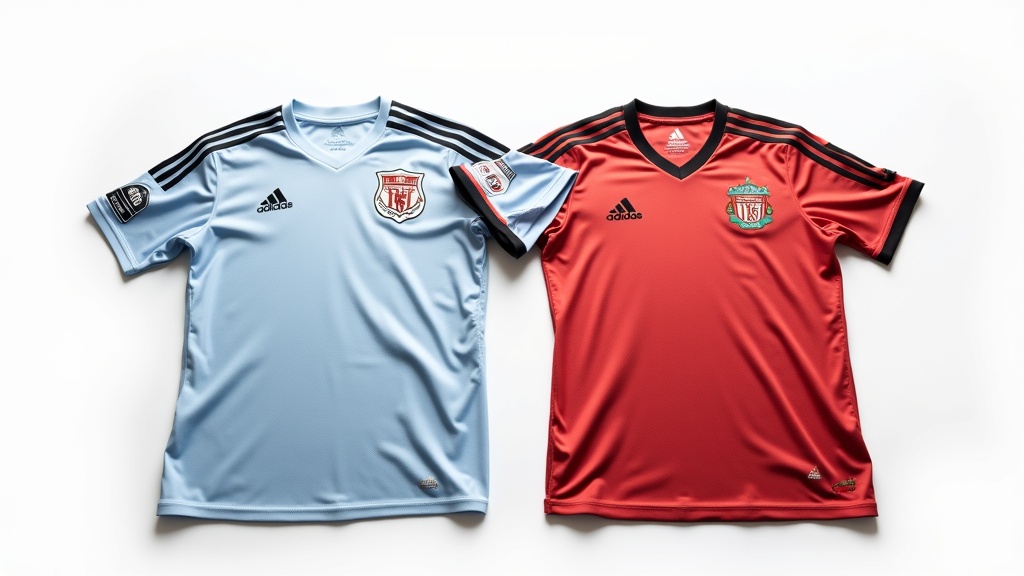
Adidas’ iconic three stripes must be perfectly straight, uniform in width, and firmly anchored into the fabric (either sewn or integrated depending on the model). On many fakes, they’re slightly curved, uneven in width, or merely printed when they should be stitched.
Printing and badges: the details that make the difference
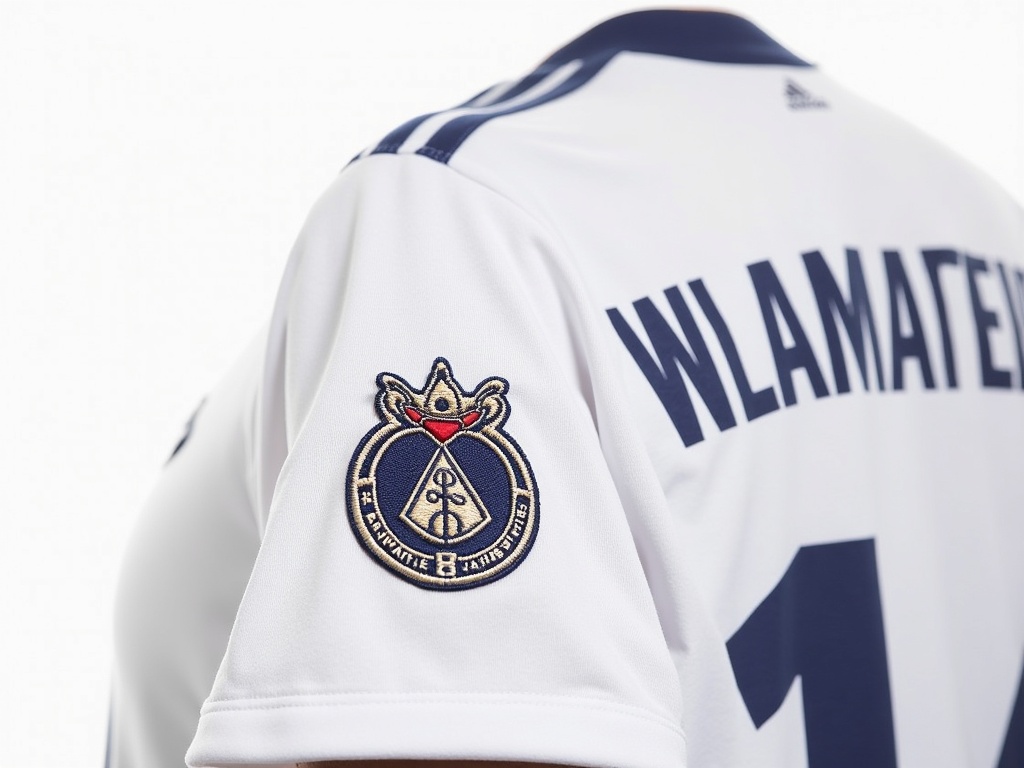
The printing—meaning the name and number heat-pressed on the back—is another revealing area. On an official jersey, the printing is done with high-quality heat-transfer materials, with clean edges and standardized height. On a fake, the letters might be slightly puffy, the edges uneven, or the font subtly different from the one mandated by the club.
The club badge
The club crest is embroidered on official jerseys. The embroidery must be precise, dense, with no loose threads or bleeding colors. On a fake, the crest is often printed (not embroidered) or roughly embroidered with colors that don’t exactly match the club’s official colors.
The Adidas logo
The Adidas logo (the three stripes or the trefoil depending on the line) must be perfectly symmetrical. Even a few millimeters of misalignment can indicate a counterfeit. Some fakes go as far as slightly altering the angle of the stripes to bypass legal protections, resulting in a logo that “doesn’t quite look right” compared to the original without you being able to pinpoint why at first glance.
Where to buy an authentic Adidas jersey with confidence
The golden rule is simple: stick to official channels. That means the Adidas website, official club stores, authorized retailers (major national sporting goods chains), or reputable specialty shops that work directly with official distributors.
Secondhand marketplaces can offer genuine authentic jerseys, especially rare or vintage editions. In that case, detailed photos, seller reputation, and the authentication elements discussed above remain your best allies.
Be especially wary of sites with names similar to official brands, Instagram shops without a verifiable physical address, and cheap “limited edition” deals. By 2026, some counterfeit sites have pushed mimicry to the point of creating fake tracking numbers and AI-generated fake customer reviews.
Frequently asked questions about real vs. fake Adidas jerseys
Everything you’re wondering (click to expand).
How can you tell a real Adidas jersey by touch?
An authentic Adidas jersey is lightweight, almost airy, with a fine, even technical weave. It doesn’t “crinkle,” warp, or feel overly thick. If the fabric feels too stiff, too plasticky shiny, or too heavy, that’s a serious red flag.
Can an Adidas jersey be official and sold cheaper?
Yes, during official sales or clearance of previous seasons, authentic jerseys can be sold with significant discounts. The difference from a fake: these sales go through authorized retailers with receipts, and the jersey retains all original tags and intact authentication elements.
Are fake jerseys dangerous to wear for playing?
Not dangerous per se, but definitely less functional. Counterfeit jerseys use materials that don’t wick sweat properly, trap heat, and can cause skin irritation during extended play. If you’re playing seriously, an authentic technical jersey makes a real difference.
Does the QR code on the tag prove authenticity?
It’s a good indicator, but not absolute proof. Check that the QR code redirects to an official Adidas or club page with the correct product info. When in doubt, cross-check this with other physical features: fabric, embroidery, stitching.
Do “semi-official” or “AAA-grade” jerseys exist that match the real ones?
No. These are just marketing terms used by counterfeit sellers to justify a slightly higher price than low-end fakes. There’s no middle ground: a jersey is either an official licensed Adidas product or a counterfeit, regardless of build quality.
Why choosing authentic is always the right call
Beyond fabric quality and finishing, buying an official soccer jersey means directly supporting your club. A portion of the sale price goes back to the club through licensing agreements. It’s also about durability: a well-maintained authentic Adidas jersey can last multiple seasons without fading or losing its shape, while a fake degrades quickly.
In 2026, with counterfeits getting more sophisticated, an educated eye remains your best defense. The clues are all there—you just have to know where to look: price, tags, fabric, stitching, badge, and printing. Every detail tells a story, and real Adidas jerseys have no reason to lie.
The shop
Find your jersey
Clubs, national teams, concept and retro designs. With your name and number, if you like.
- Free shipping from $65
- 3 jerseys = 1 free
- 14-day returns