SPECIAL OFFER BUY 3 JERSEYS = GET 1 FREE

How to Value a Collectible Jersey: The Complete Guide
<p>Authentication, grading, rarity, player value: discover all the methods and criteria to properly estimate a collector soccer jersey in 2026 and know its true market value.</p>
In this article5 sections
Why Valuing a Collector’s Jersey Is an Art Form in Itself
A vintage football jersey isn’t worth just whatever someone is willing to pay. Its real value comes from the intersection of dozens of factors: the era, the club, the player associated, the condition of the fabric, and the rarity of the edition. In 2026, the collectible jersey market has exploded, pushing some pieces to prices comparable to contemporary art. Correctly estimating a jersey means knowing how to read all these variables together.
Whether you’re looking to resell, insure your collection, or just find out what you own, here’s how to do it methodically.
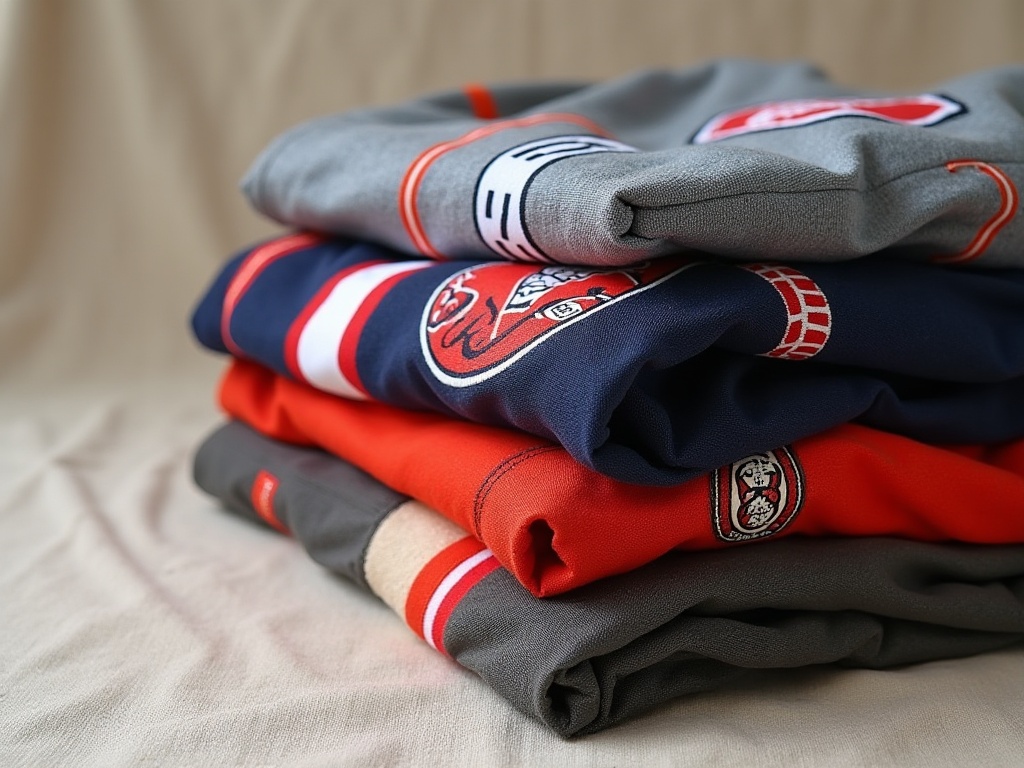
The Five Core Criteria That Determine Value
1. Authenticity and Provenance
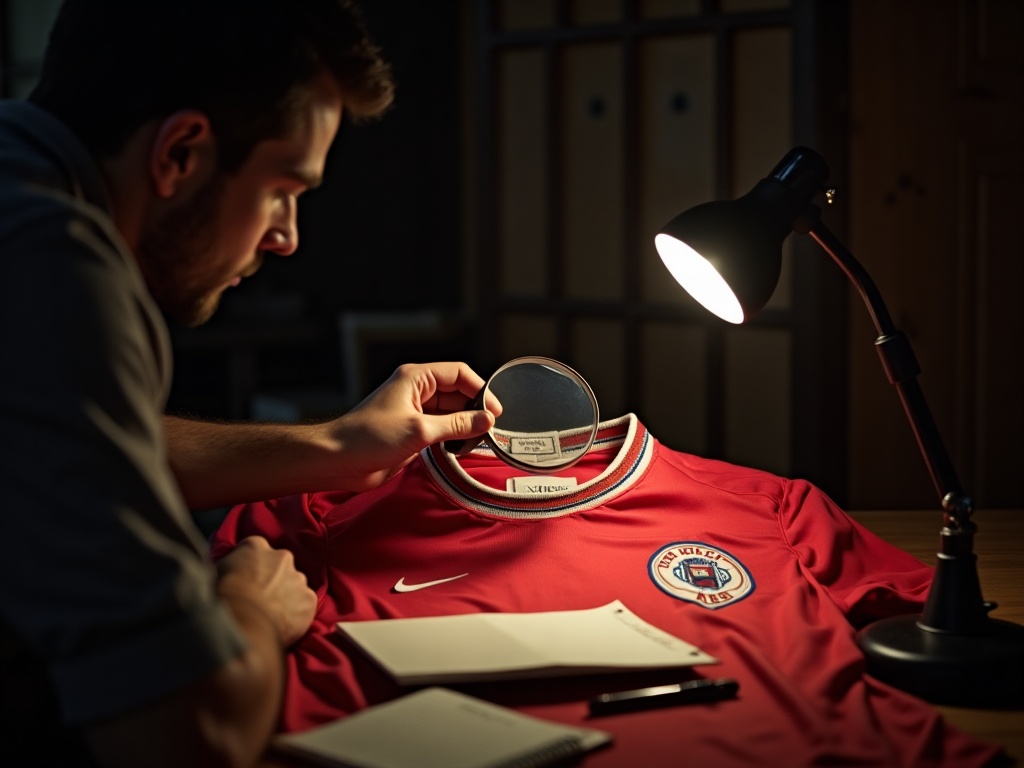
This is the first filter. A match-worn jersey can be worth ten to twenty times more than an identical replica in appearance. Provenance is proven with:
- A letter of authenticity signed by the club or a certified organization
- Archive photos or videos showing the player in that specific jersey
- A purchase receipt or auction certificate (Christie’s, Sotheby’s, Classic Football Shirts Auctions)
- Consistent signs of wear: grass stains, microscopic tears at the seams, oxidized sweat on the collar
Without documented provenance, a supposedly match-worn jersey remains a replica on the official market. No serious buyer will accept paying the match-worn premium without tangible proof.
2. Condition (Grading)
The field has adopted a grading scale inspired by the sports card world. In practice, we distinguish:
- Mint / Near Mint: never worn, original tags intact, no visible defects
- Excellent: very light signs of wear, vibrant colors, perfect print/patches
- Very Good: minor discoloration, slightly cracked but legible print/patches
- Good: visible wear, small holes or snags, value reduced by 40 to 60%
- Fair / Poor: significant damage, value essentially sentimental or for parts
A jersey in Mint condition can easily be worth double an identical example in Very Good condition. Preservation is often the simplest lever to maintain a piece’s value.
3. Rarity and Edition
Not all jerseys are produced in the same quantities. A limited-edition third jersey numbered to 500 copies has nothing in common with a home jersey sold at 500,000 copies in stores. Among the elements that boost rarity:
- Anniversary editions (club centenary, title commemoration)
- Jerseys worn during historic matches (World Cup finals, Champions League semifinals)
- Prototypes or pre-season jerseys never officially released
- Jerseys from clubs now defunct or merged
4. The Associated Player and Their Cultural Value
A jersey with a living or deceased legend’s name is structurally worth more than a blank jersey, even from the same season. A player’s value fluctuates based on:
- Their recent performances or historical legacy
- Their cultural popularity (documentaries, social media, films)
- Their retired status: a retired player freezes the value of their jersey, which will never be “new” on the market again
In 2026, jerseys from the 1998-2006 generation are in particularly high demand, driven by the nostalgia of a clientele of thirty- to forty-somethings now with significant purchasing power.
5. The Brand, Sponsor, and Vintage Typography
Certain manufacturers have a special aura with collectors. Admiral jerseys from the 70s, Umbro from the 90s, or early Nike in Serie A are sought after precisely for their period-accurate aesthetics. The shirt sponsor can also pinpoint a specific era: a unique sponsor that was only featured for two seasons can help authenticate an exact timeframe.
Proven Methods to Get a Reliable Valuation
Analyze Past Sales
The most rigorous method is to study recent real transactions for comparable jerseys. Platforms to watch in 2026:
- eBay (filter by “sold items”): a massive amount of data, but seller quality can vary
- Classic Football Shirts: The professional reference with standardized grading
- Specialized sports auction houses: Christie’s, RR Auction, Julien’s Auctions
- Facebook Groups and Specialized Forums: For niche pieces not found on major platforms
The goal is to find at least three comparable sales (same club, same season, similar condition) to establish a credible price range.
Consult an Independent Expert
For pieces valued over $500, an independent expert’s opinion is highly recommended. Some professional collectors offer paid appraisal services. Their value lies in understanding manufacturing nuances by era, official authenticization variations, and identifying the most common fakes in circulation.
Use Specialized Insurance Appraisers
If your collection’s estimated value exceeds a few thousand dollars, a specialized “collectibles” insurance policy requires a formal appraisal. These appraisals have the advantage of being updated every two to three years, allowing you to track your collection’s growth over time.
Frequently Asked Questions About Valuing a Collection Jersey
Everything you want to know (click to expand).
Does a jersey without a tag lose a lot of value?
Yes, the absence of the original tag generally reduces the value by 20% to 35%, depending on the collector. The tag is a key marker for authenticity and dating. Some buyers will simply refuse to buy without it, especially for the most expensive pieces.
How can you tell an authentic jersey from a high-quality fake?
Several physical clues betray a fake: fabric quality (weight, texture), stitching (regularity, stitch type), the badge (heat, rigidity of heat-pressed letters), and the micro-details of the manufacturer’s logo. When in doubt, a side-by-side comparison with a certified example is the most reliable method.
Does washing damage a collection jersey’s value?
A poorly executed wash can damage the badge, fade the fabric, and destroy the tags. For high-value pieces, dry cleaning by a textile professional is the only acceptable option. A jersey that has been machine-washed and deformed can lose 50% of its estimated value.
Is it better to frame or store a collection jersey?
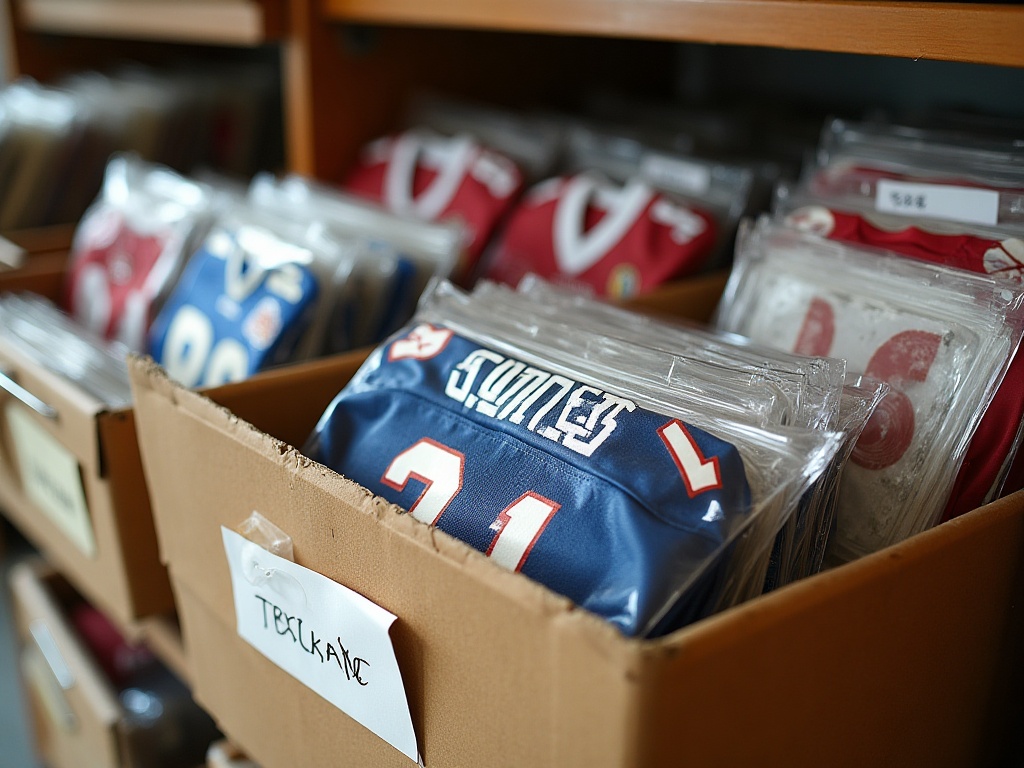
Framing under UV-protective glass protects against light damage but exposes the jersey to humidity variations. Flat storage in a protective sealed sleeve, away from light in a stable-humidity space, is the safest way to preserve long-term value.
Can a concept jersey (limited-edition creator series) have collection value?
Absolutely. Limited editions produced in very small numbered runs by independent creators or specialized shops are already a distinct market segment. Documented scarcity, the storytelling behind the piece, and quality of execution are the three key drivers of their future value.
Building and tracking your collection’s value over the long haul
Valuing a jersey is a one-time step. Managing a collection is ongoing work. Each piece deserves a profile sheet: high-definition photos on a neutral background, condition at purchase, purchase price, source, and an updated valuation every two years.
Tools like shared spreadsheets or collector-specific apps let you track your collection’s total value in real time, spot undervalued pieces to strengthen, and identify those that have plateaued.
The collectible soccer jersey market follows cycles. Major international tournaments (World Cup, European Championship) create demand spikes for historic pieces linked to participating nations. Anticipating these cycles means buying at the low point and potentially selling at the peak, just like any mature collectible market.
A well-documented, well-preserved, and regularly appraised collection isn’t just a passion. It’s an asset.
The shop
Find your jersey
Clubs, national teams, concept and retro designs. With your name and number, if you like.
- Free shipping from $65
- 3 jerseys = 1 free
- 14-day returns