SPECIAL OFFER BUY 3 JERSEYS = GET 1 FREE

How to Wash a Printed Football Shirt Without Ruining the Name and Number
Printed and embroidered football shirts need specific care to keep names, numbers, and crests looking sharp. Here's exactly how to wash them without cracking the vinyl, warping the embroidery, or shrinking the fabric.
In this article9 sections
- Why Printed and Embroidered Shirts Need Different Treatment
- The Inside-Out Rule: First and Non-Negotiable
- Temperature: 30°C Maximum, Cold Preferred
- Choosing the Right Detergent (and What to Avoid)
- How to Handle Stubborn Stains Without Damaging the Print
- Drying: No Tumble Dryer, No Direct Sun
- Long-Term Storage for Collectible Shirts
- Frequently Asked Questions about Washing Printed Football Shirts
- The Shirts That Last Longest Are the Ones Washed Right
You paid good money for that shirt. Maybe it’s a printed football shirt with your player’s name on the back, heat-transfer lettering that took three weeks to ship. Maybe it’s an embroidered crest you saved up for. Either way, the washing machine is where most of those shirts go to die early. Cracked vinyl, peeling letters, puckered stitching – all of it preventable with a few consistent habits.
This is the care routine I’ve followed for every shirt I’ve owned since the late 90s, refined by watching thousands of jerseys pass through our hands at every condition from box-fresh to completely wrecked. The principles are straightforward. The execution just takes a minute of attention each time.
Why Printed and Embroidered Shirts Need Different Treatment
Printed and embroidered football shirts fail in the wash because their base fabric is a lightweight polyester engineered for moisture-wicking, not heat resistance, and the decorative layer on top is even more heat-sensitive than the weave beneath it. Standard cotton or linen can take a 40°C machine wash without drama. A modern football jersey is a different object.
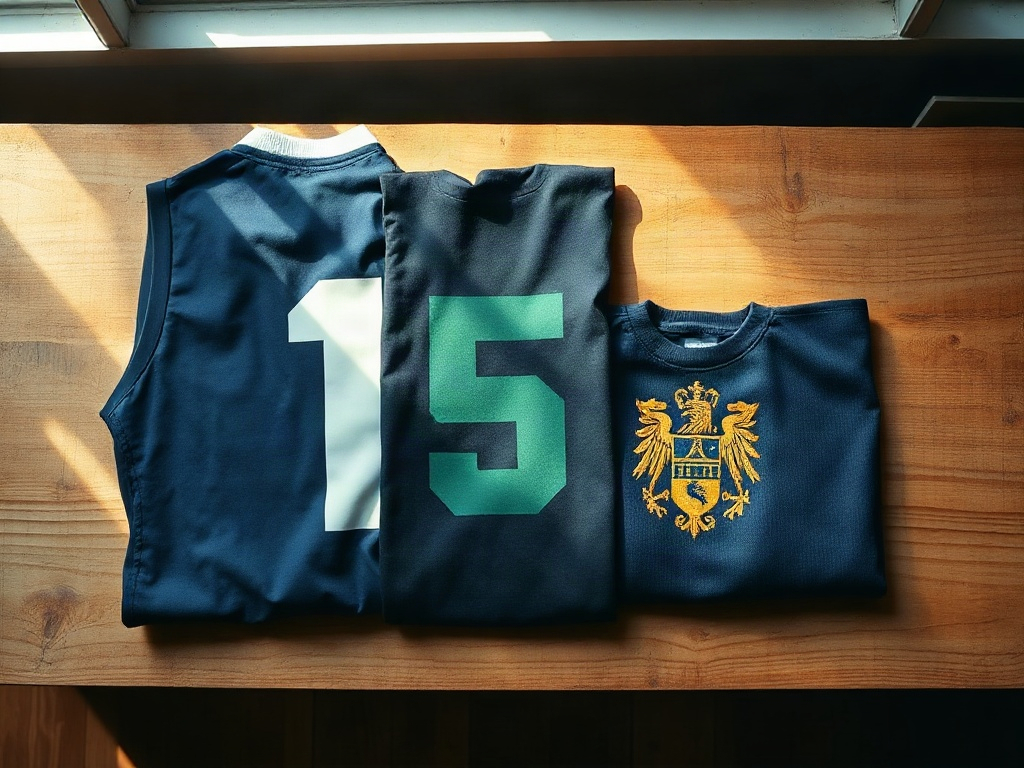
The base fabric is almost always a lightweight polyester or polyester-nylon blend. Put that in a hot wash and the fibres start to relax and stretch unevenly. The decorative layer on top is the real vulnerability. There are three main types you’ll encounter on today’s shirts, and knowing which one you’re dealing with changes how careful you need to be:
| Print type | How to identify it | Durability under washing | Biggest risk |
|---|---|---|---|
| Heat-transfer vinyl (HTV) | Slight gloss, raised edge at letter borders, smooth surface | Moderate, bonds loosen from the edges inward with repeated agitation | Heat + mechanical friction causes delamination |
| Sublimation printing | Matte, flush with fabric surface, no raised edges | High, ink is dyed into the polyester fibres, not sitting on top | Hot water causes colour migration and fading |
| Embroidery | Textured thread, three-dimensional feel, visible stitching underside | High in most conditions, no crack or peel risk | Thread loops pull loose under hard agitation; backing fabric puckers when dried under tension |
Check your Haaland or Salah number up close: if it has a slight gloss and you can feel a raised edge at the letter borders, that’s HTV and it deserves the most careful handling of the three. If the letters look matte and the surface feels almost flush with the fabric, it’s likely sublimation and a bit more forgiving. Embroidered crests are usually obvious from the texture alone.
The Inside-Out Rule: First and Non-Negotiable
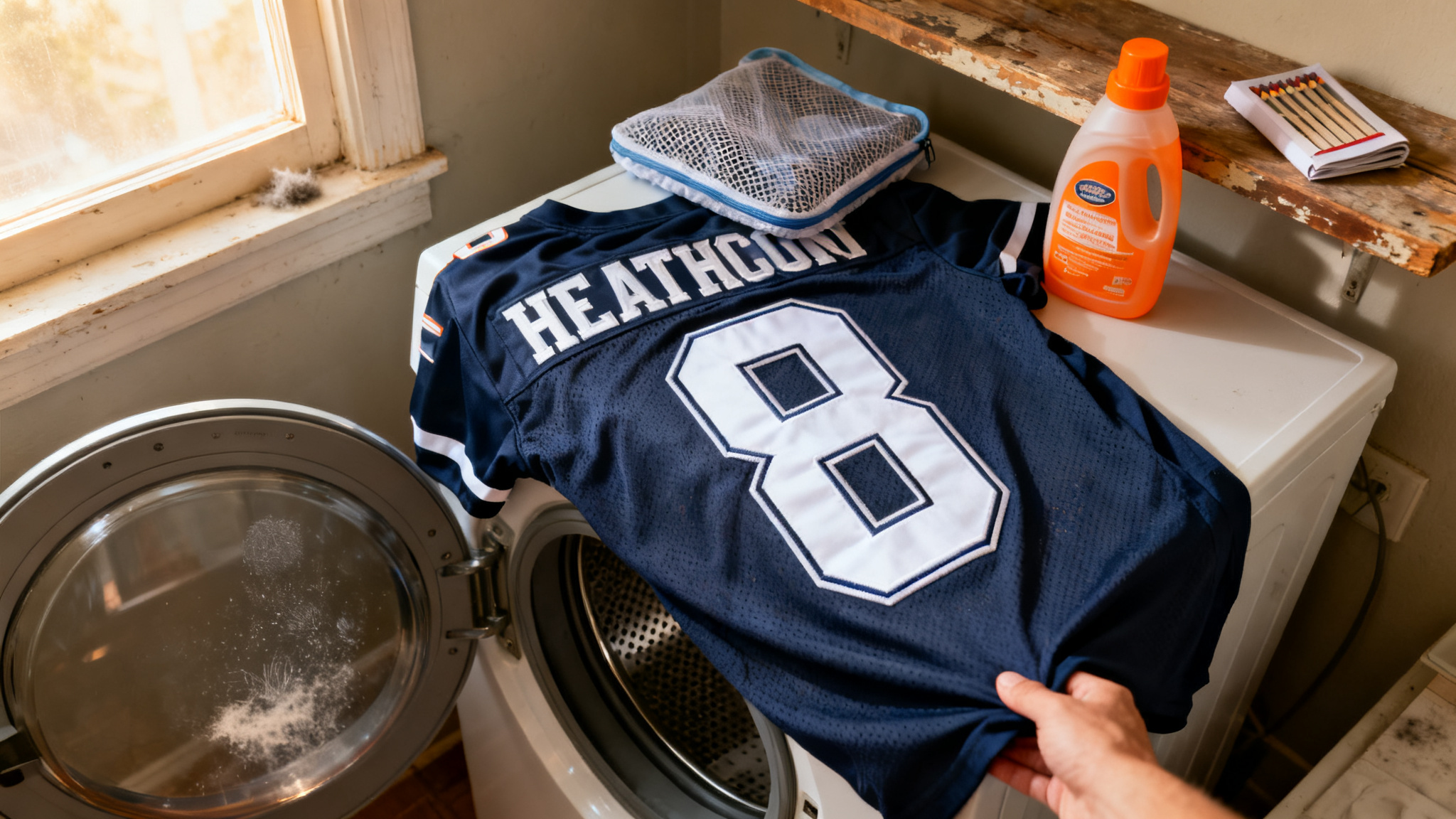
Turning your shirt inside out before every wash is the single highest-impact step you can take: it redirects thousands of micro-abrasion events per cycle away from the print surface and onto the plain fabric interior instead. Do it every single time, without exception.
The drum’s paddles and the friction from other items in the load create those abrasion events continuously. With the shirt right-side out, every micro-abrasion hits the print or embroidery directly. Inside out, the plain fabric interior takes the friction instead.
The same logic applies to hand washing: if you’re rubbing the fabric to shift a stain, work from the inside. Never scrub directly over a heat-transfer print.
🧺
Fine Mesh Laundry Bag (2-pack)
30 cm x 40 cm fine-weave bag with drawstring zipper. Fits a folded jersey with room to spare. Prevents tangling and direct drum contact on every cycle.
View care accessories
Temperature: 30°C Maximum, Cold Preferred
Wash your printed football shirt at 30°C or cold every time: there is no scenario where heat improves the outcome, and even a single 40°C cycle can begin loosening HTV bond lines at their weakest edges. Heat is the enemy of heat-transfer vinyl, which sounds ironic given how HTV is applied, but it makes sense once you understand the process.
HTV is pressed on at controlled high heat with a heat press, creating an even bond. A washing machine at 40°C or above applies uncontrolled heat combined with mechanical agitation, stressing the edges of each letter at the weakest points. Cold is better than warm. Warm is better than hot. It really is that simple.
If your shirt smells from a match or a sweaty session in the stands, a 30°C wash with a proper sports detergent handles that fine. Bacteria that cause odour are neutralised at 30°C with the right detergent. You don’t need heat to get a jersey clean.
Choosing the Right Detergent (and What to Avoid)
Use a non-biological or sports-specific detergent for any shirt with printed or embroidered decoration: biological enzymes that break down proteins work on fabric fibres too, and over repeated washes they degrade the adhesive layer of HTV as well as the polyester weave beneath it. The detergent choice matters more than most people expect.
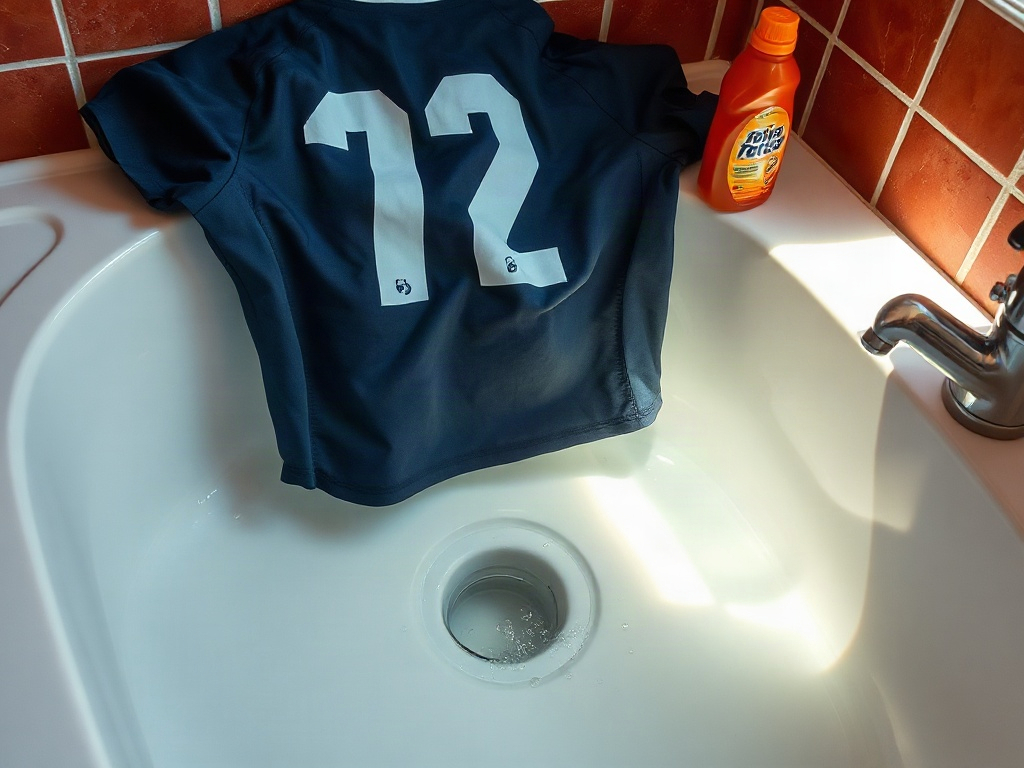
A few specific points worth remembering:
- Fabric softener: skip it entirely. Fabric softener coats polyester fibres with a lubricating layer that prevents them from wicking moisture properly. It also softens the bond between HTV and fabric over time. There’s no upside to using it on a football shirt.
- Bleach and any product containing chlorine are an immediate no. They’ll strip colour from sublimation prints within one cycle and can cause yellowing on white polyester.
- Specialist sportswear detergents (Nikwax BaseWash, Grangers Performance Wash, Sport Suprème) are designed for synthetic fabrics and preserve both the technical properties of the weave and the integrity of surface treatments. They’re worth the modest extra cost if you’re washing regularly.
Use the recommended dose, not more. Excess detergent leaves residue that attracts dirt and puts unnecessary chemical stress on the fabric between washes.
🧴
Non-Bio Sportswear Detergent (500 ml)
Enzyme-free formula safe for HTV, sublimation, and embroidered crests. Effective at 20-30°C. No optical brighteners, no fabric softener agents. One bottle covers approximately 25 washes.
View care accessories
How to Handle Stubborn Stains Without Damaging the Print
When you’re dealing with a stubborn stain on a printed jersey, always treat from the reverse side of the fabric and keep any stain remover at least 2 cm away from every print edge: direct product contact with heat-transfer vinyl is one of the fastest routes to print damage there is. The temptation to scrub directly is understandable. Resist it.
Work from the back of the fabric when possible. Apply a small amount of diluted non-bio liquid to the reverse side and work it gently through the weave with your fingertip. Let it sit for ten minutes before washing. For stains on the plain fabric sections of the shirt, standard pre-treatment is fine. Just keep the product well away from any printed area.
Mud is better dealt with dry. Let mud dry completely before you touch it: brush off the solid material, then wash. Wet mud rubbed into a printed surface embeds the pigment deeper and risks lifting a print edge during scrubbing.
Drying: No Tumble Dryer, No Direct Sun
Air dry your printed football shirt every time: a single tumble dryer cycle combines heat and tumbling action in a way that causes rapid HTV delamination, taking a shirt from perfect condition to visibly cracked lettering in thirty minutes flat. It’s not reversible, and no amount of careful washing beforehand compensates for one bad drying session.
Hang the shirt on a hanger or lay it flat on a clean surface. If you hang it, use a wide plastic hanger rather than a thin wire one, which can leave permanent shoulder marks on lightweight polyester. Smooth out the print area gently with your hand before leaving it to dry so it dries flat rather than with a crease pressed into the lettering.
Direct sunlight bleaches sublimation prints over time. A shirt hung in full sun every time it’s washed will have noticeably faded colours within a season. Dry in a well-ventilated space out of direct UV. A shaded outdoor line or an indoor drying rack works perfectly.
Never iron directly over a heat-transfer print. If the shirt needs pressing, use a clean cotton cloth between the iron and the fabric and keep the iron on the lowest polyester setting. Better still, don’t iron football shirts at all: they’re designed to be worn without it, and the wrinkles from washing drop out within minutes of putting the shirt on.
Long-Term Storage for Collectible Shirts
For collector-grade kits, the right storage approach is to wash the shirt before storing it (not after a long period in the drawer), fold along natural seams rather than across printed areas, and keep it away from heat, humidity, and direct light simultaneously. These three conditions are what degrade a stored shirt over years, not the print technique itself.
If you’re storing a shirt you’re not wearing regularly, fold along natural seams rather than across printed areas where possible, so any crease line falls on plain fabric. Store flat in a drawer or on a shelf rather than hanging for extended periods: hanging under its own weight causes the polyester to stretch slightly around the shoulder seams over months.
For shirts with significant value, a shirt frame or display case is genuinely worth it. Proper shirt storage for collector-grade kits means keeping them away from humidity, heat, and direct light simultaneously. A sealed frame on a north-facing wall is about as good as it gets without specialist archival boxes.
Perspiration and organic material left in the fabric during storage accelerates fibre degradation. A clean, dry shirt in cool storage will stay sharp for decades. A shirt put away after a match worn damp and then left for six months is a different story.
🖼️
Football Shirt Display Frame
Shadow-box style frame with UV-filtering acrylic front panel and acid-free backing board. Fits adult jerseys up to XL without folding. Designed to mount flat against a wall and keep the shirt away from humidity and direct light.
View display frames
For more on caring for rare and vintage pieces, the approach to storing a football shirt collection properly covers the full spectrum from a few shirts in a wardrobe to a serious collector’s archive. And if you’re building out your collection alongside the care routine, our range of authentic and concept football shirts gives you plenty worth protecting.
Frequently Asked Questions about Washing Printed Football Shirts
Can I machine wash a shirt with embroidered lettering?
Yes, but use a gentle or delicate cycle at 30°C or cold, place the shirt inside out in a mesh laundry bag, and spin at low RPM. High-speed spin cycles create centrifugal stress on embroidery backing fabric that can cause puckering over time. Embroidery is more durable than heat-transfer vinyl in most conditions, but it still benefits from gentle treatment.
My Salah number is starting to peel at one corner. Can I fix it?
Sometimes, yes. Heat-transfer vinyl that’s lifting at an edge can be re-pressed with a household iron if caught early. Place a thin cotton cloth over the peeling section, apply firm even pressure with the iron on a low polyester setting for 10-15 seconds, then let it cool completely under a flat weight (a book works fine). Don’t peel the lifting section further to inspect it, as this separates more of the adhesive layer. If the lifting is extensive, a specialist kit printing service can replace the name and number entirely for around $15-25.
How often should I wash my football shirt?
After every wear where you’ve been active or sweated in it. Perspiration left in polyester fabric causes an ammonia-type odour that becomes harder to shift the longer it sits, and the salts in sweat degrade synthetic fibres over time. For a shirt worn in the stands on a cold day with a coat over it, you can get two or three wears before washing. The fabric doesn’t lie: if it smells, wash it. If it doesn’t, you can wait.
Does washing powder damage printed shirts more than liquid detergent?
Powder can. Undissolved powder granules can abrade the surface of heat-transfer prints during the wash cycle, particularly in cold water where powder dissolves more slowly. Liquid non-bio detergent dissolves instantly at any temperature and distributes evenly through the drum. For printed or embroidered shirts, liquid is the safer consistent choice.
Can I wash a football shirt with other clothes?
Yes, with caveats. Keep it away from items with zips, hooks, or Velcro, all of which snag on the fabric weave and catch on print edges. Washing with other synthetic sportswear or soft items is fine. Washing with heavy denim or anything with exposed metal fastenings risks physical damage to the print surface and fabric in the same load.
What is the best way to store a football shirt long-term without it yellowing?
Wash it first with a non-bio detergent, dry it completely, and store it flat in a cool, dark, low-humidity environment. Avoid plastic bags that trap moisture; a breathable cotton garment bag is better. White and light-coloured polyester jerseys are most vulnerable to yellowing from oxidation and sweat residue, which is why washing before storage matters more than washing before wearing after storage.
The Shirts That Last Longest Are the Ones Washed Right
Every printed football shirt you own will eventually show its washing history: the ones treated with care from the first cycle hold their print sharp for years; the ones put through hot washes and tumble dryers start showing cracked letters and bobbled fabric within a season. None of this requires effort, just consistency.
Inside out, cold or 30°C, no softener, no tumble dryer, air dry out of direct sun. Those five points, done consistently, will keep a heat-transfer print sharp for years instead of one season. I’ve got shirts from 2008 with original printing intact because someone treated them right from the first wash. I’ve seen shirts from last season with cracked lettering and bobbled fabric because they went through a hot wash three times.
The fabric doesn’t lie, as I’ve always said. How a shirt looks after two years tells you exactly how it was cared for. Treat the print with the same attention you gave to choosing the right name and number in the first place, and the shirt will hold its meaning for a long time. ⚽
The shop
Find your jersey
Clubs, national teams, concept and retro designs. With your name and number, if you like.
- Free shipping from $65
- 3 jerseys = 1 free
- 14-day returns